
Soil Testing Kits
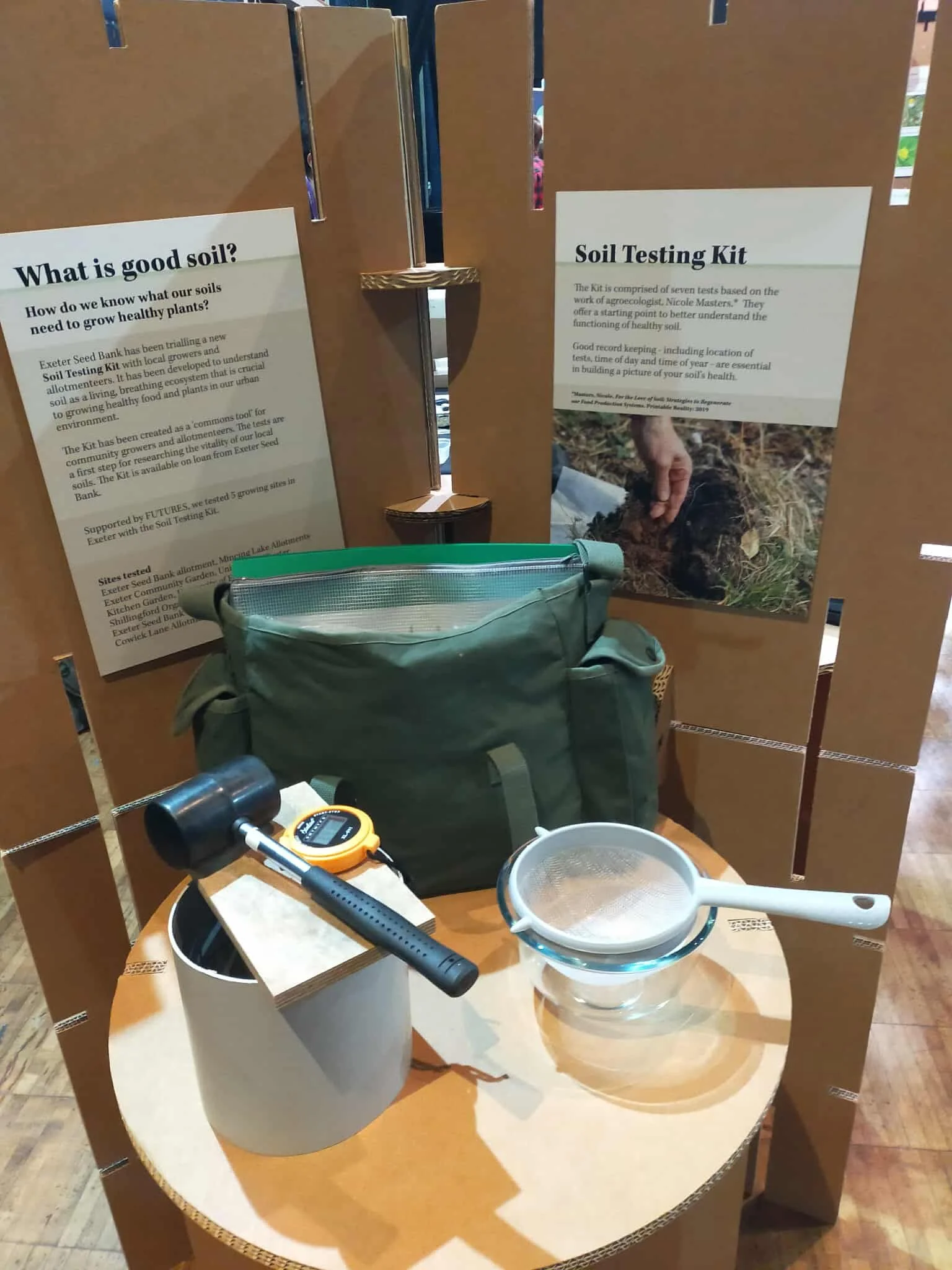
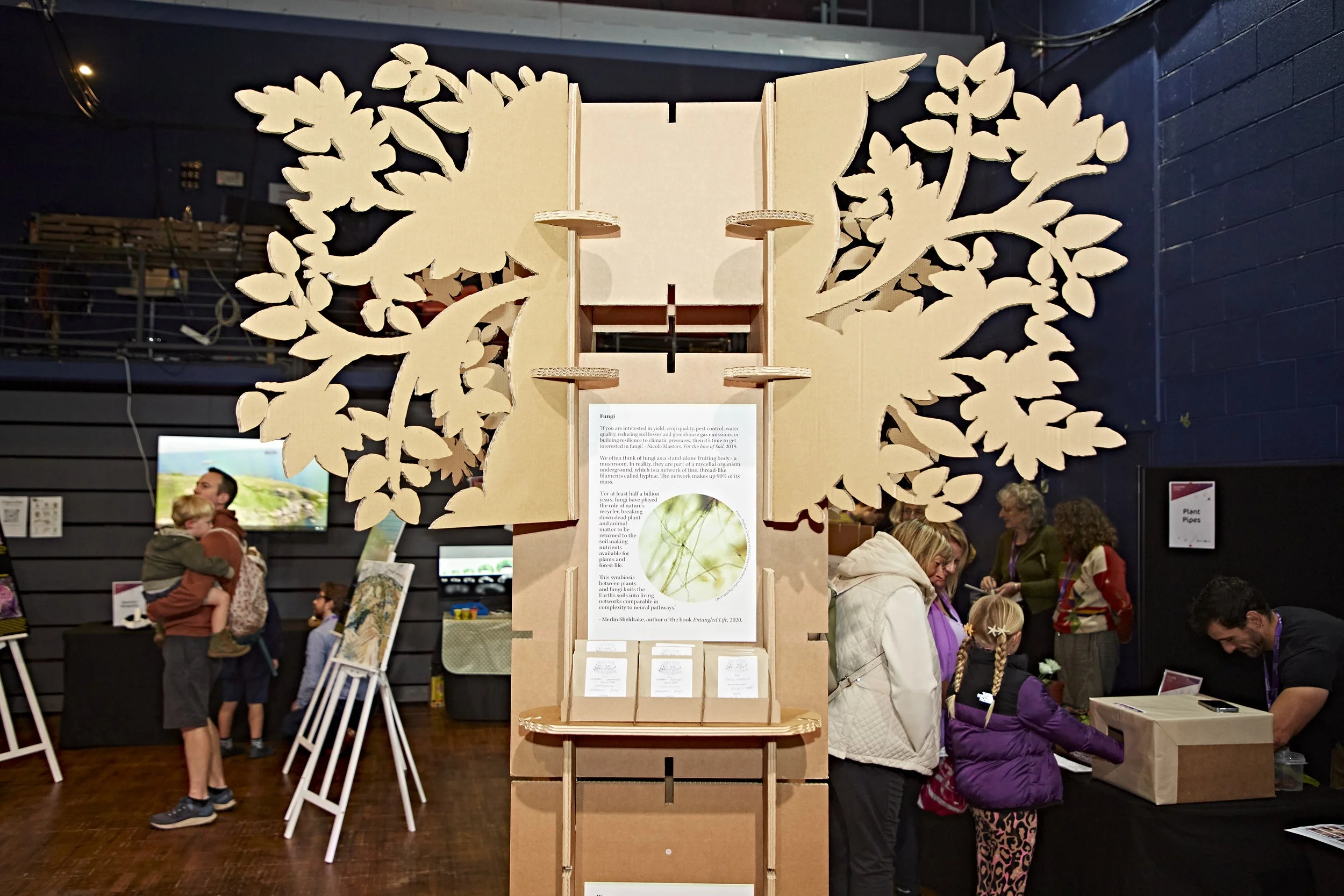
In 2025, Exeter Seed Bank received support from University of Exeter’s FUTURES Festival – SPARKS funding programme, to develop a community soil testing kit. This new resource helps growers begin their journey of discovery into what makes a soil healthy for growing plants. It encourages a paradigm shift from soil seen simply as an inert growing medium to one that is a dynamic, living ecosystem, working in close relationship with plants.
Why This Matters
While our primary focus at Exeter Seed Bank is the craft of seed saving, we cannot ignore soil. The relationship between soil and seed to growing plant is intrinsic.
Healthy soil underpins everything we care about:
seed sovereignty, biodiversity, climate resilience, food production and security, carbon sequestration and ecological repair.
Through this project, we aim to support growers with ways to test their soils and to offer environmentally sustainable approaches for improving soil carbon storage, nitrogen fixing, and healthier plants without reliance on harmful inputs such as chemical fertilisers and pesticides.
Project Development
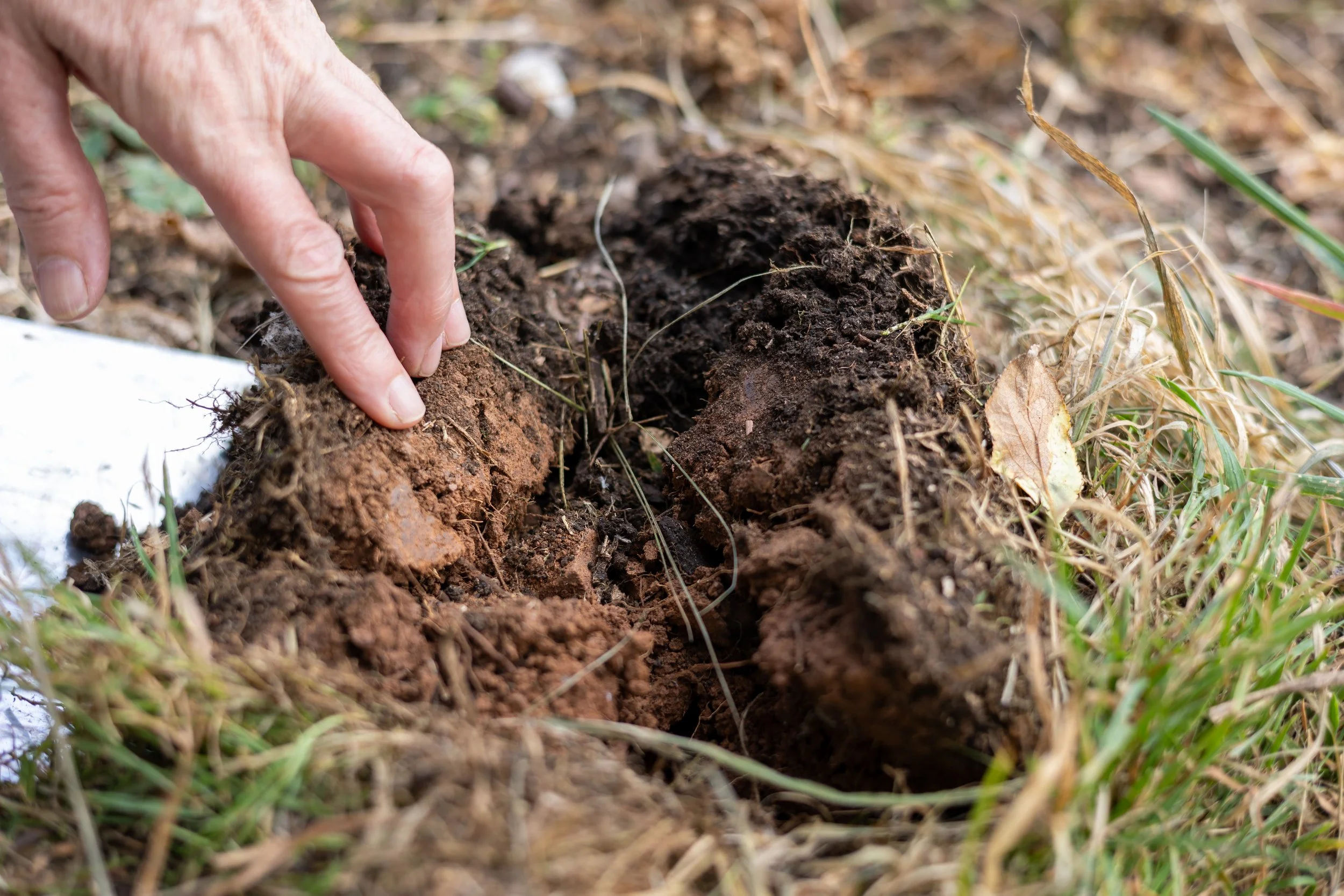
The soil testing kits were developed through visits to community gardens, allotments, and small organic holdings across Exeter and the surrounding area. Working directly with growers shaped the kit to be:
Simple, practical; learning through observation
Easy to understand without specialist training.
Useful for real-world growing conditions
This work is deeply inspired by Dr Elaine Ingham’s Soil Food Web, which emphasises soil as a living community of organisms: bacteria, fungi, protozoa, nematodes and worms all playing essential roles in nutrient recycling, plant health and carbon storage.
Throughout the project, we were struck by how often urban growing spaces sit on land with complex histories of use, frequently resulting in poor soil quality or contamination. At the same time, the potential for regeneration is enormous. Across the city, growers are already doing quiet, vital work to heal soil, increase biodiversity, and grow food in challenging conditions.
What’s in the Soil Testing Kit?
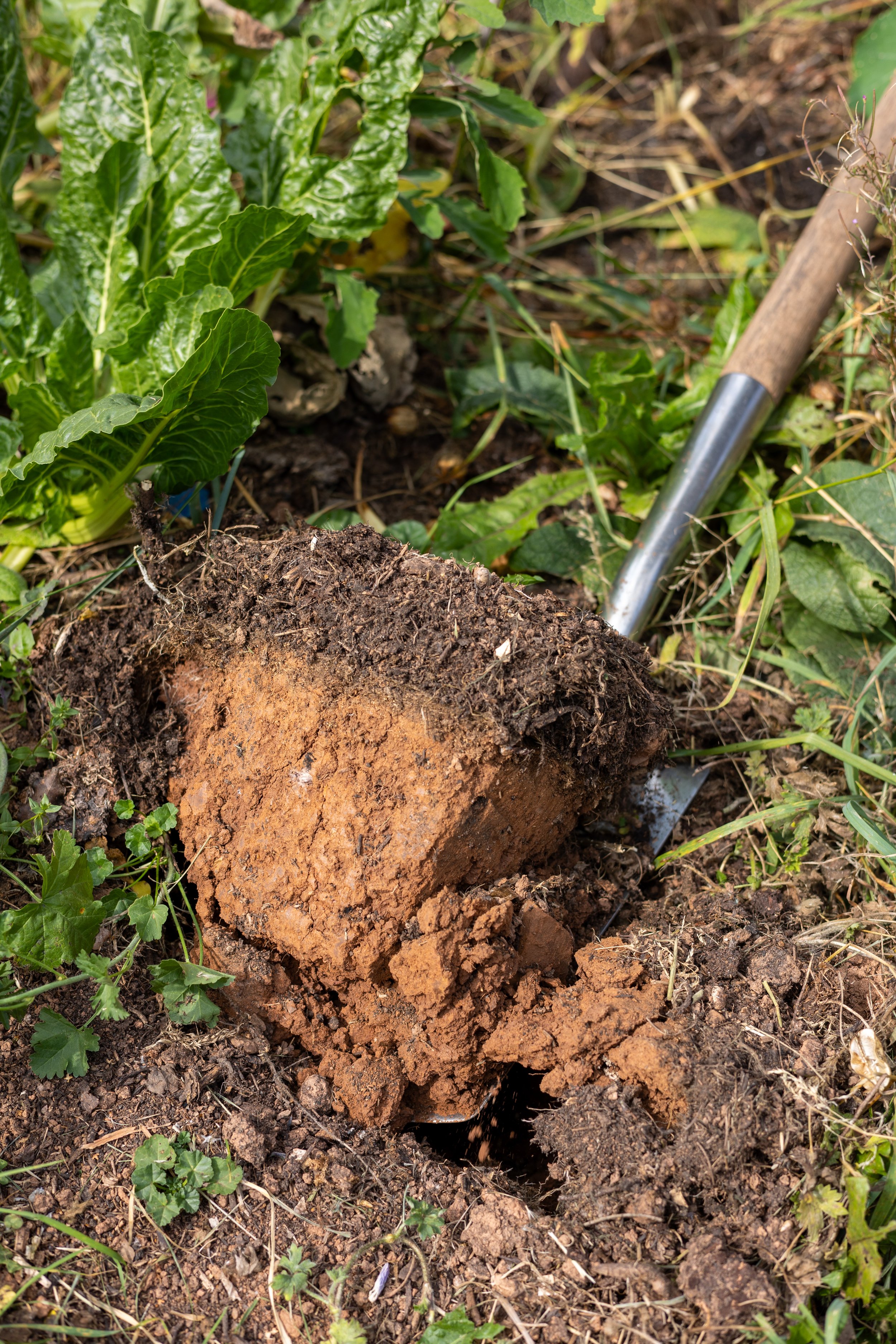
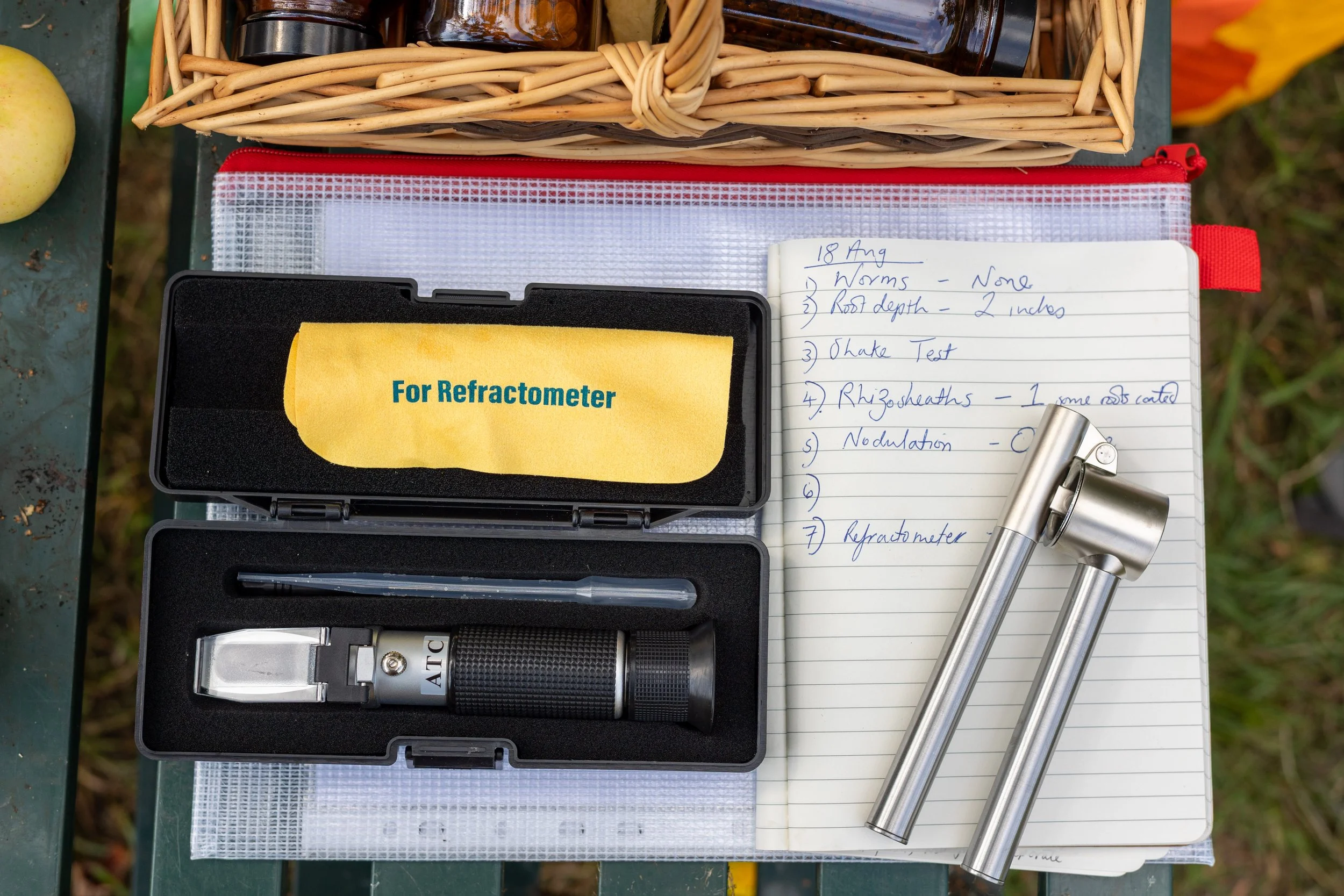
Each kit contains eight simple tests, designed to kickstart curiosity and observation rather than deliver a pass/fail result. Together, they help growers build a picture of soil health.
The tests explore:
Soil structure and aggregation
Organic matter and carbon indicators
Biological activity and life in the soil
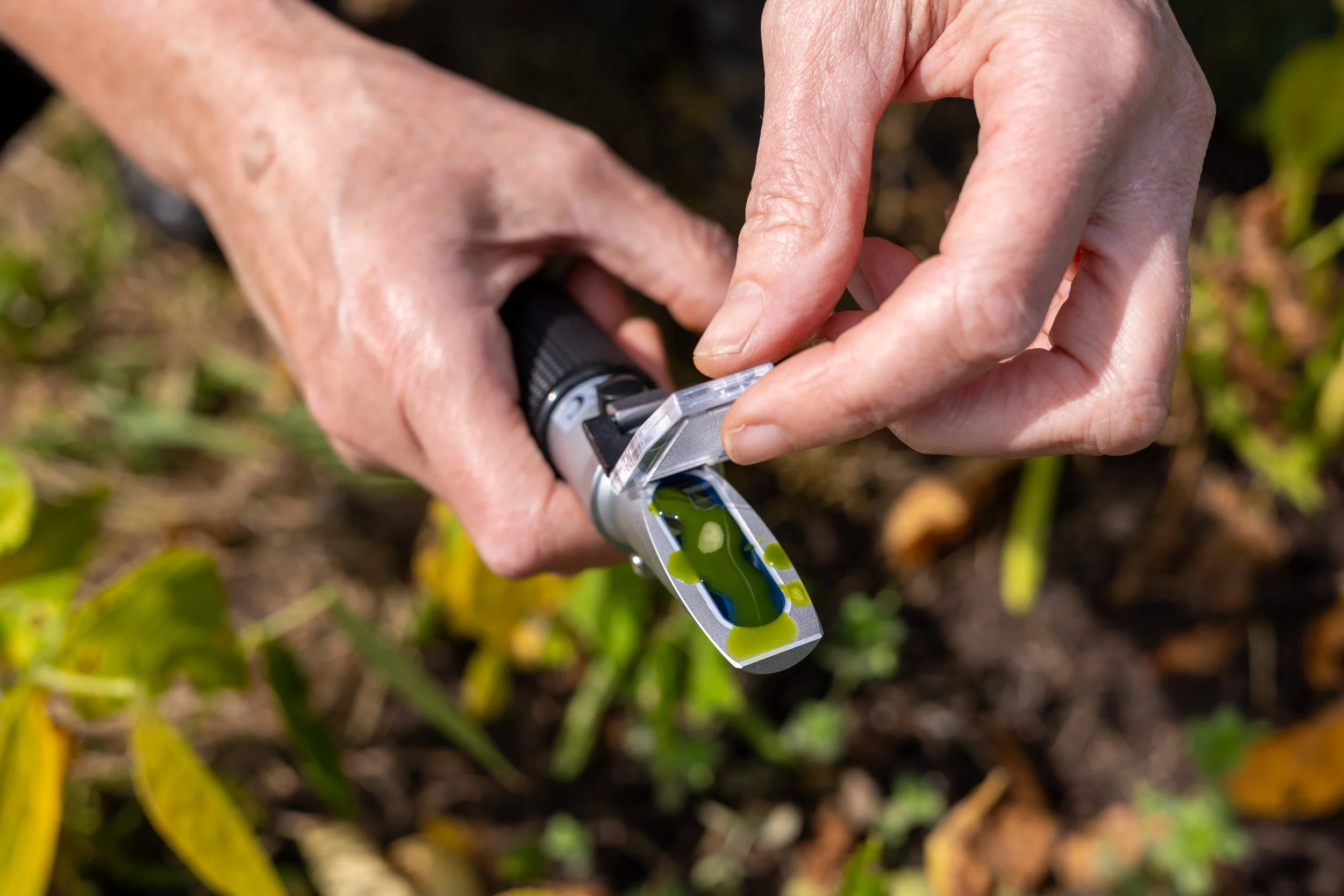
Nutrient density in plants
Water infiltration and drainage
Basic nutrient recycling indicators
Evidence of the Nitrogen fixing capacity of plants
The Ph of soil – a neutral Ph will best support life in the soil
Rather than lab-based analysis, these tests are hands-on and observational, encouraging growers to spend time with their soil, notice changes over time, and respond with regenerative practices.
Alongside the tools, the kits include clear guidance and explanations so that results can be interpreted in a meaningful way.
Online resources
You can access copies of the test PDFs:
You can access information panels about the project and kit [here]
What is the Soil Food Web? | Dr. Elaine Ingham | Soil Biology
There are lots of Webinars online by Dr. Elaine Ingham covering this subject.
Following on from the above this is a Webinar from Dr. Elaine’s Soil Food Web School
Soil health principles | Soil Carbon Coalition
Cat Buxton from growmorewasteless.com is hosted here by soilcarboncoalition.org She talks about 7 soil health principles and why we should all be following these to improve our soil health by increasing the microbiology within it. At the end she covers a couple of the tests that we have in our soil testing kits. Lots of references here to other work being done if you want to geek out.
Didi Pershouse | Water, Water, Water And The Soil Carbon Sponge | 037
This is from the Real Organic Podcast which you can get in a filmed and spoken version
Further reading
Nicole Masters, ‘For the Love of Soil’, 2019.
William Bryant Logan, ‘Dirt, The Ecstatic Skin of the Earth’, 1995.
Jon Stika, ‘A soil Owner’s Manual, How to restore and Maintain Soil Health’, 2016.
Accessing the Kits
We have three soil testing kits, which are available on loan to home gardeners, community growers, allotment holders, and small-scale growers in Exeter and the surrounding areas.
The kits are shared resources, designed to circulate through the community. Borrowers are encouraged to:
Use the kit with their growing group or site
Share learning and observations with others
Think collectively about soil improvement strategies
We organise ad hoc sessions demonstrating the kit. Please email to join our list (include our email with subject heading ‘interested in soil testing’
Long Term Aims
This project is a starting point. In the future, we would like to:
Expand learning resources and workshops around soil ecology
Collect data to better understand urban soil health across Exeter
Strengthen connections between soil health, seed saving, and climate action
Support community-led regeneration of degraded and contaminated land using simple soil health principles
Link the health of urban soils and growing spaces across the city, creating a joined-up vision for Exeter’s green spaces and positioning soil health as an indicator of the city’s overall wellbeing
We hope to encourage people into a joyful and informed relationship with the living soil beneath our feet and the billions of microbes and organisms that create it.