The Exeter Seed Bank Allotment
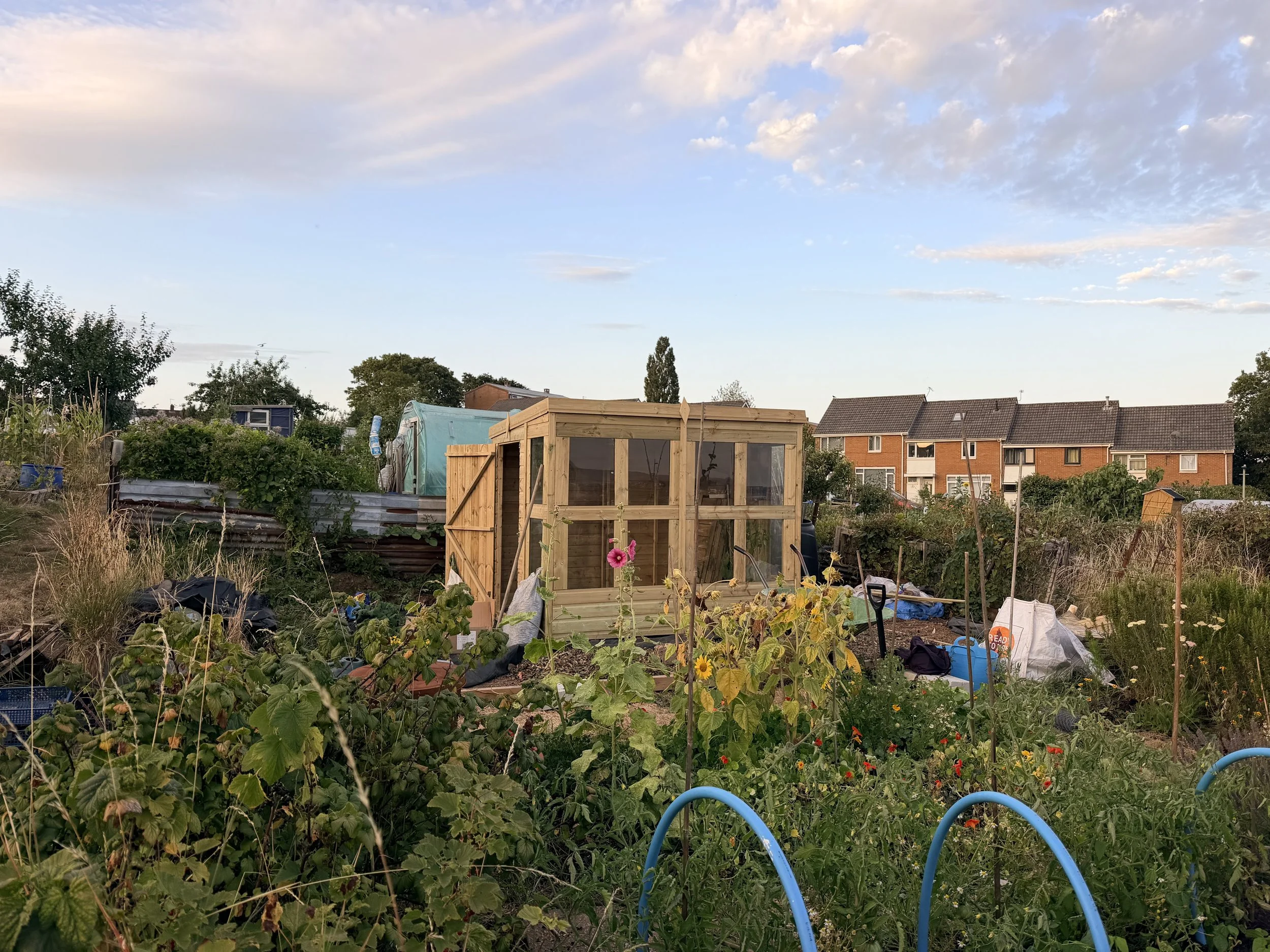
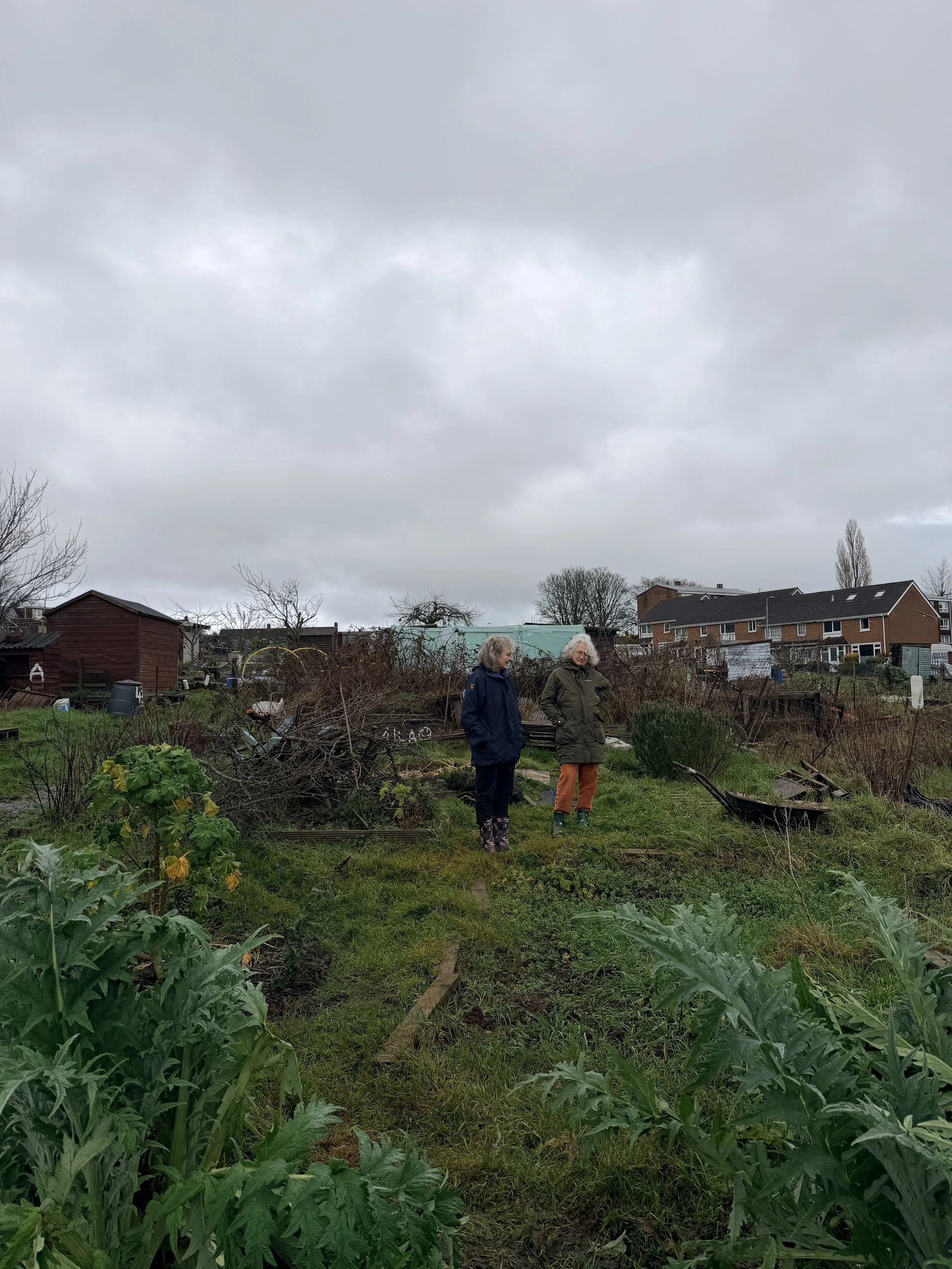
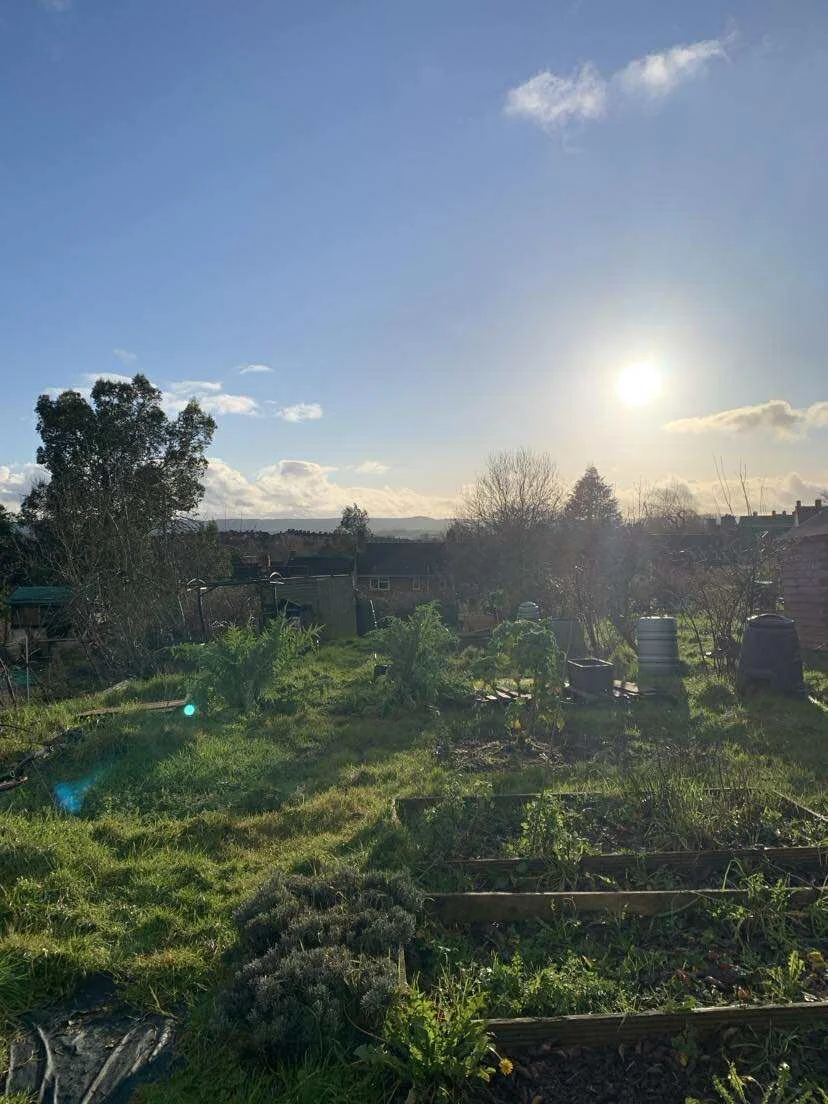
In January 2026, Exeter Seed Bank was offered a new allotment site, a slightly larger and sunnier location where we could scale up our growing and seed-saving activities for sharing with the community and we accepted.
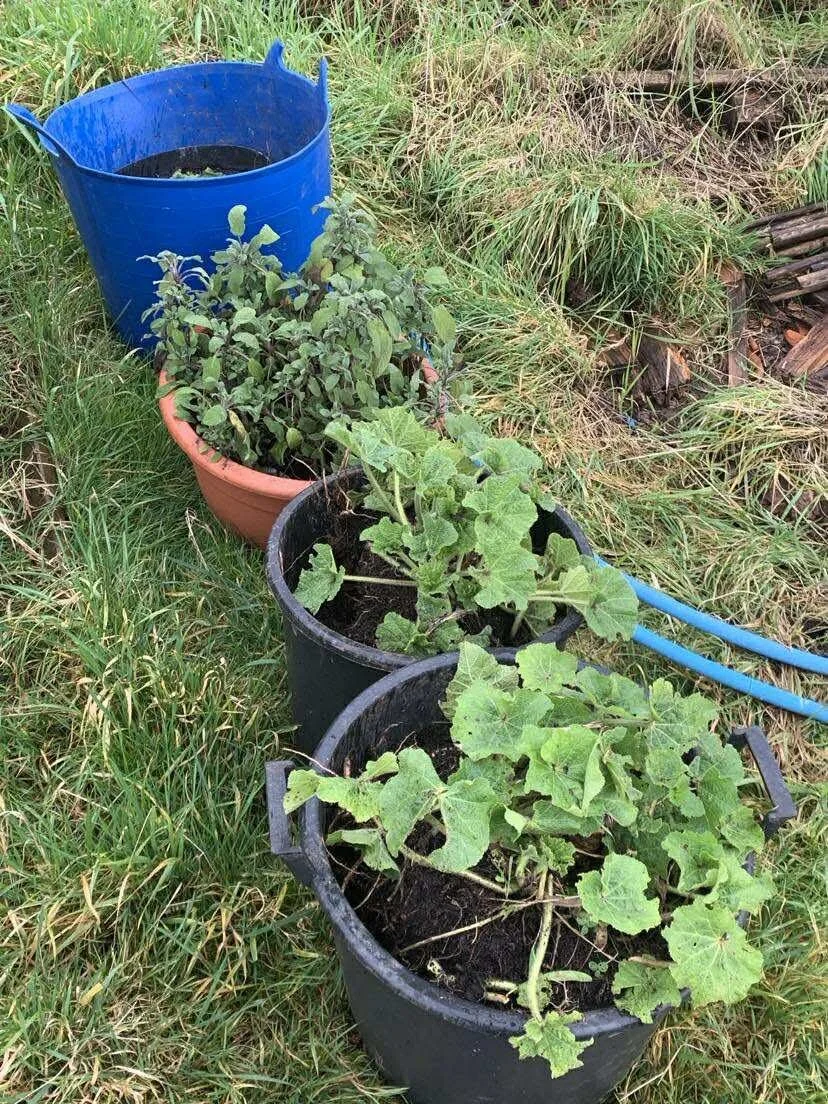
We moved most of our plants with us from our old plot, as well as our shed, which has become a very handy place to store tools, seeds and other materials, while also providing a much-needed dry space.
January 2026
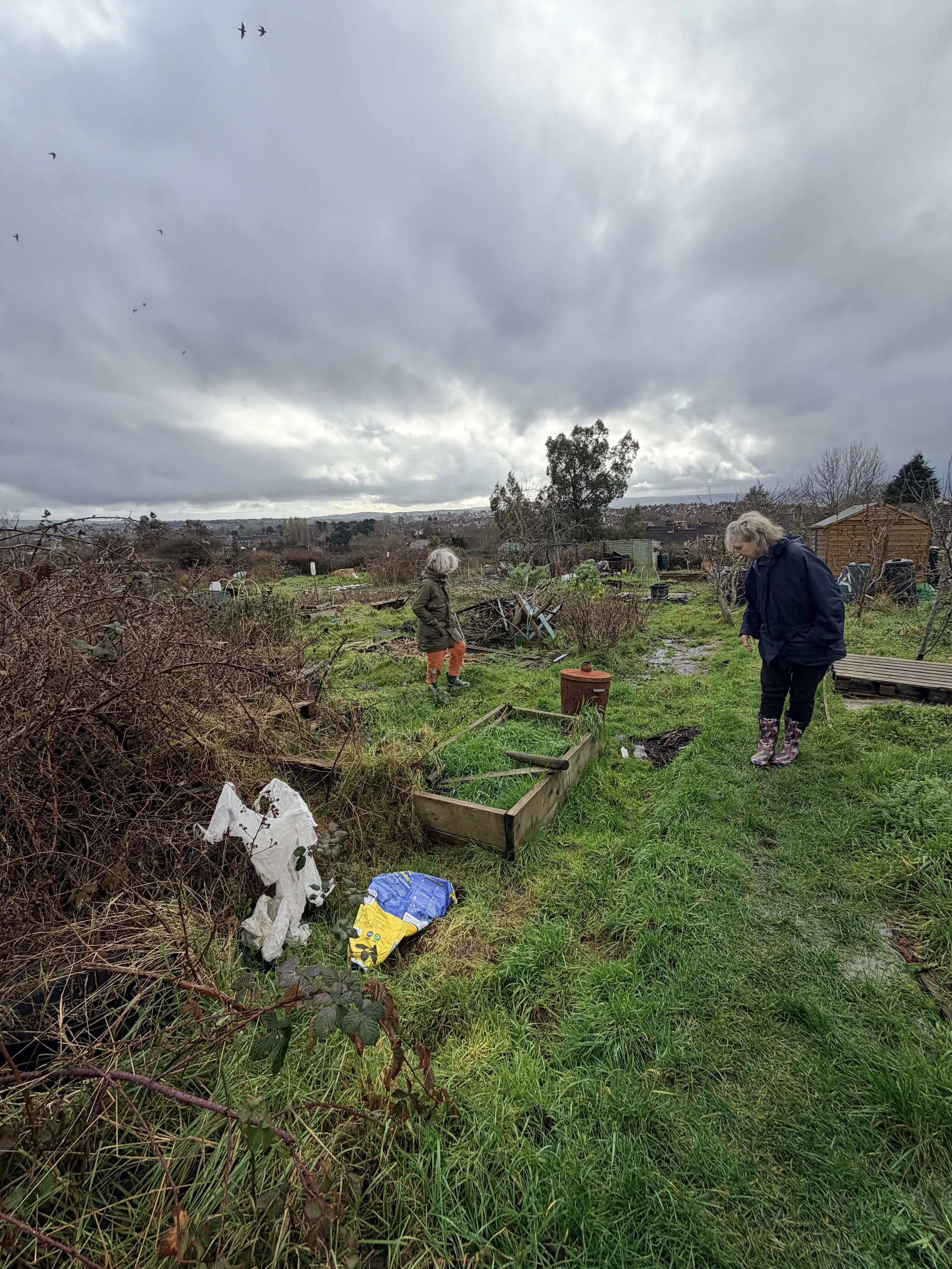
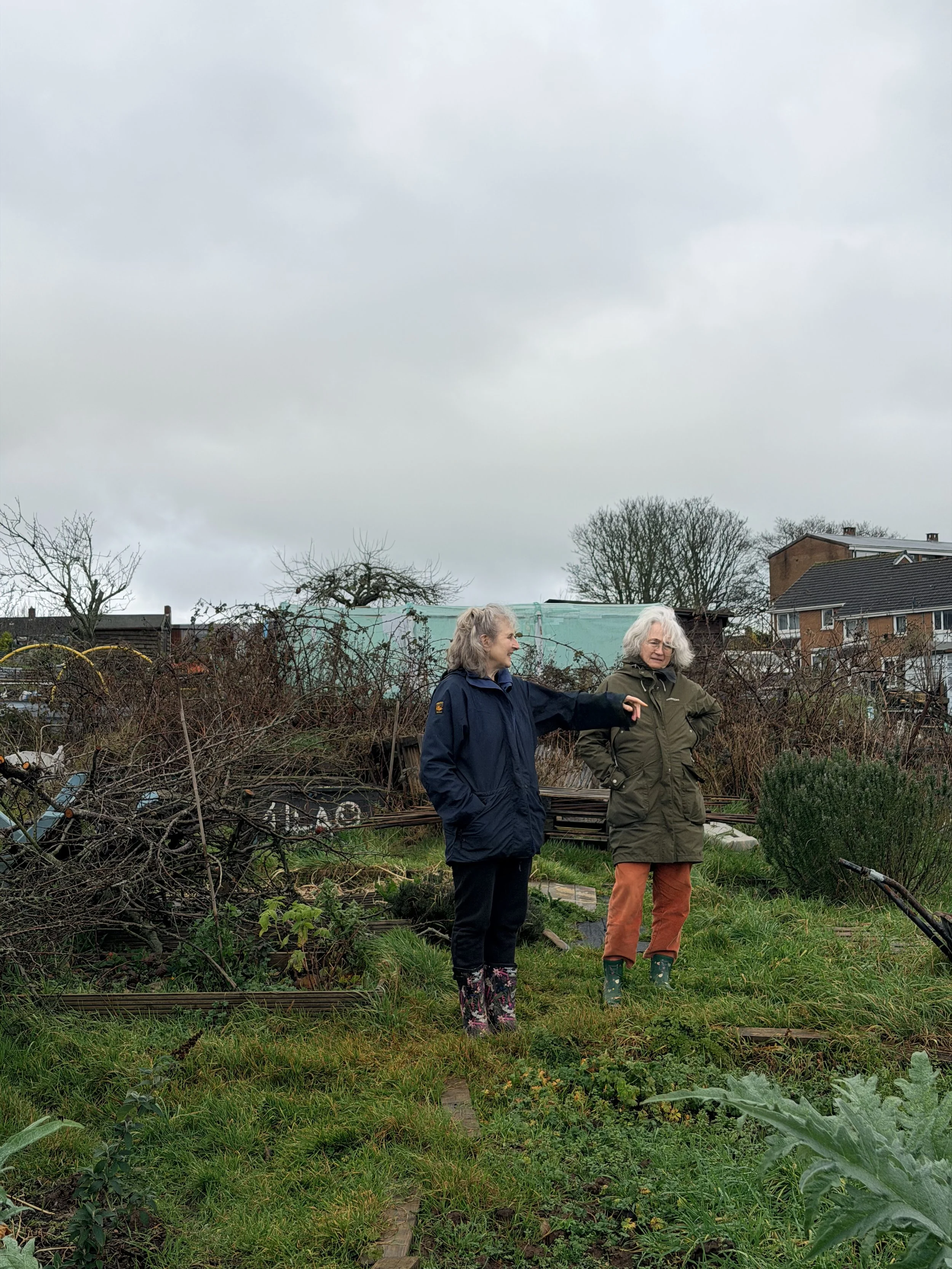
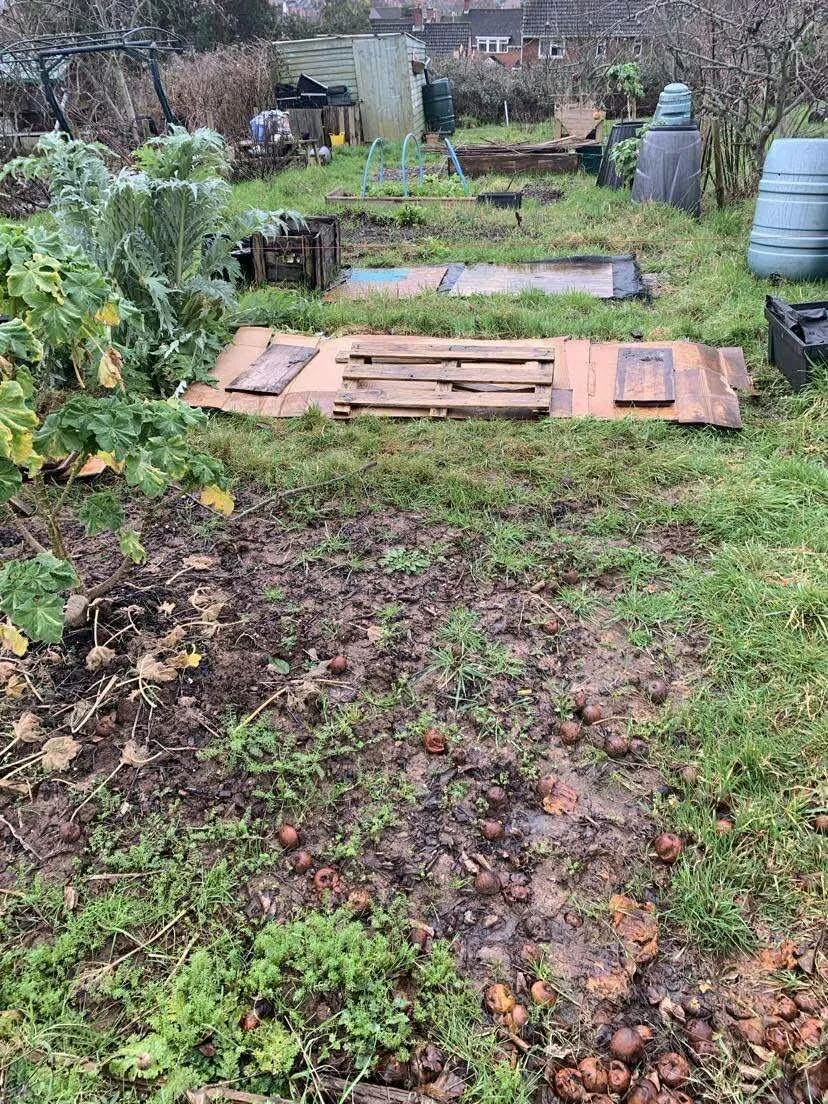
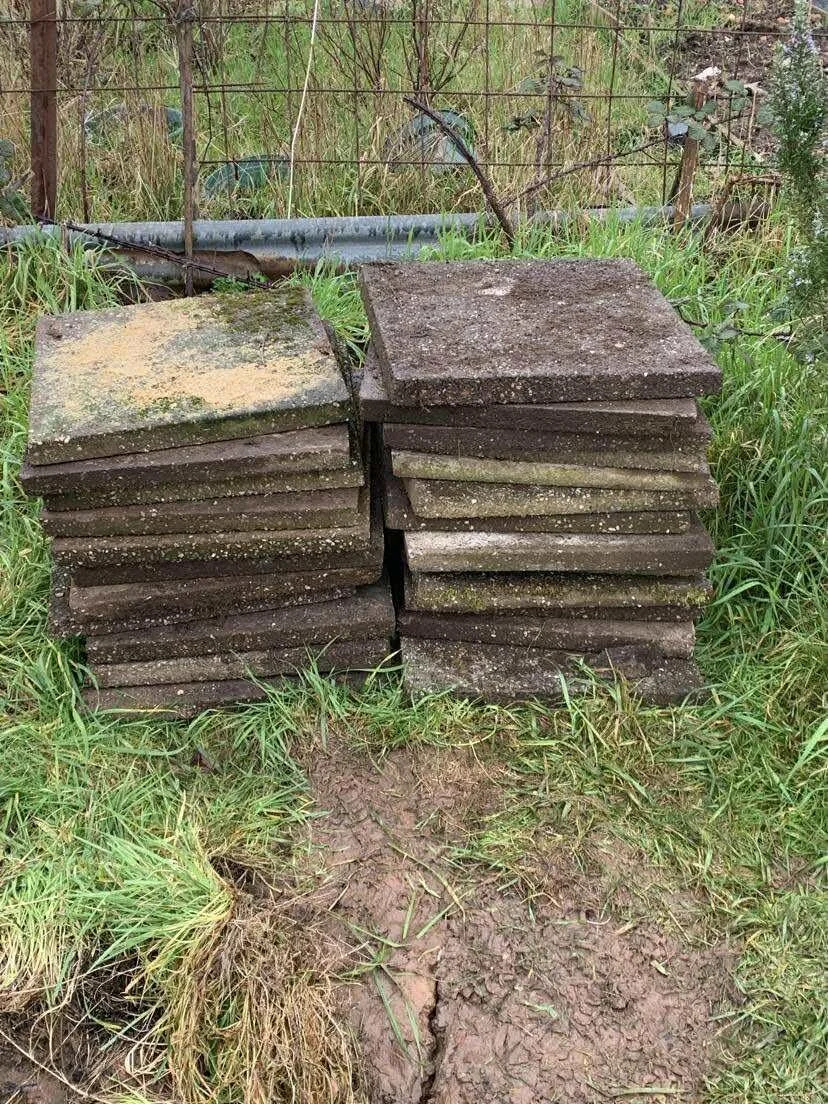
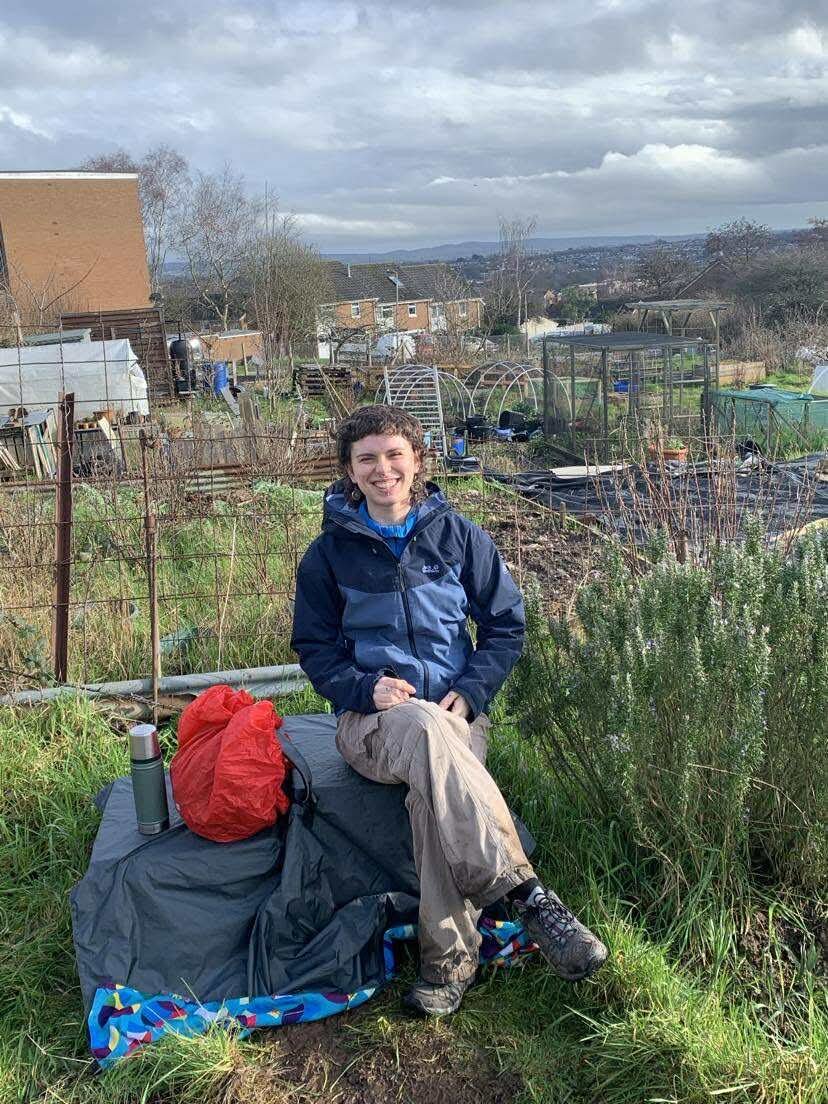
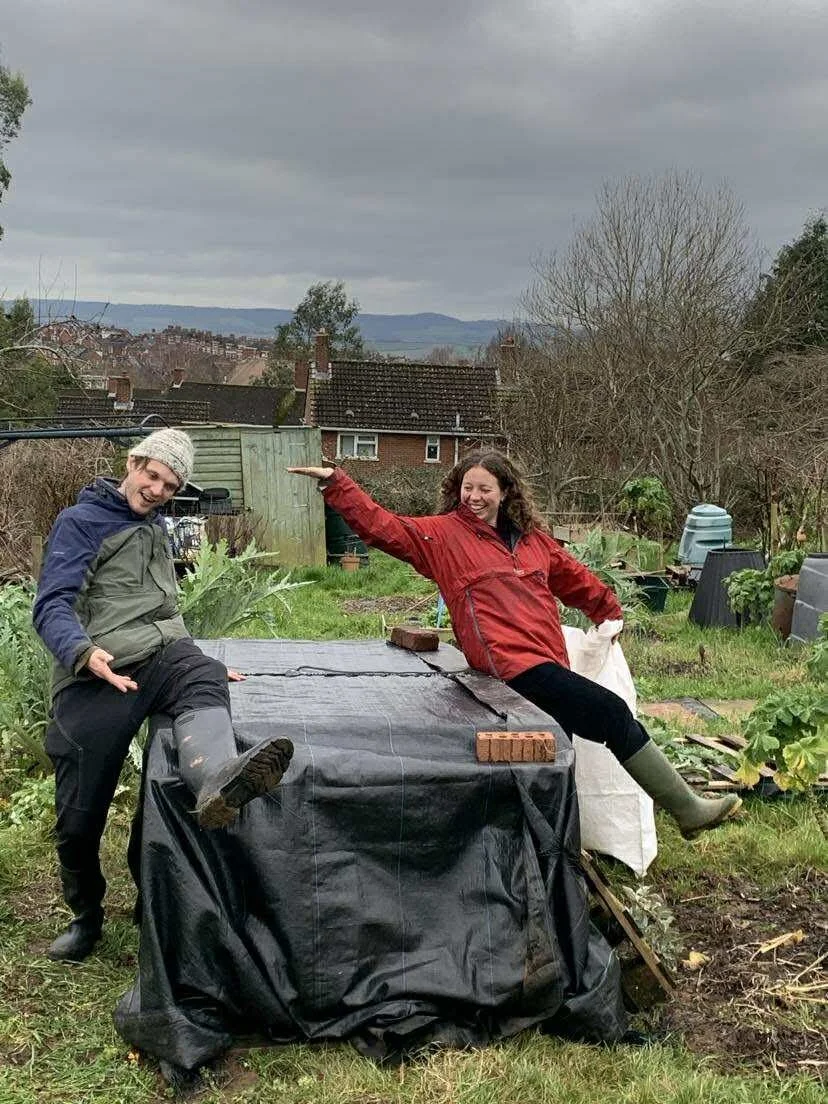
There was a lot of work to do to getting the new plot established. We started by moving slabs, plants and tools to the new location. We first removed and cleared lots of plastic that had previously been used to cover the soil. We’re thankful to Yogi and the allotment team for helping out. Our intern Kat came and helped too, getting things established and beginning to turn the new plot into a productive growing space.
February 2026
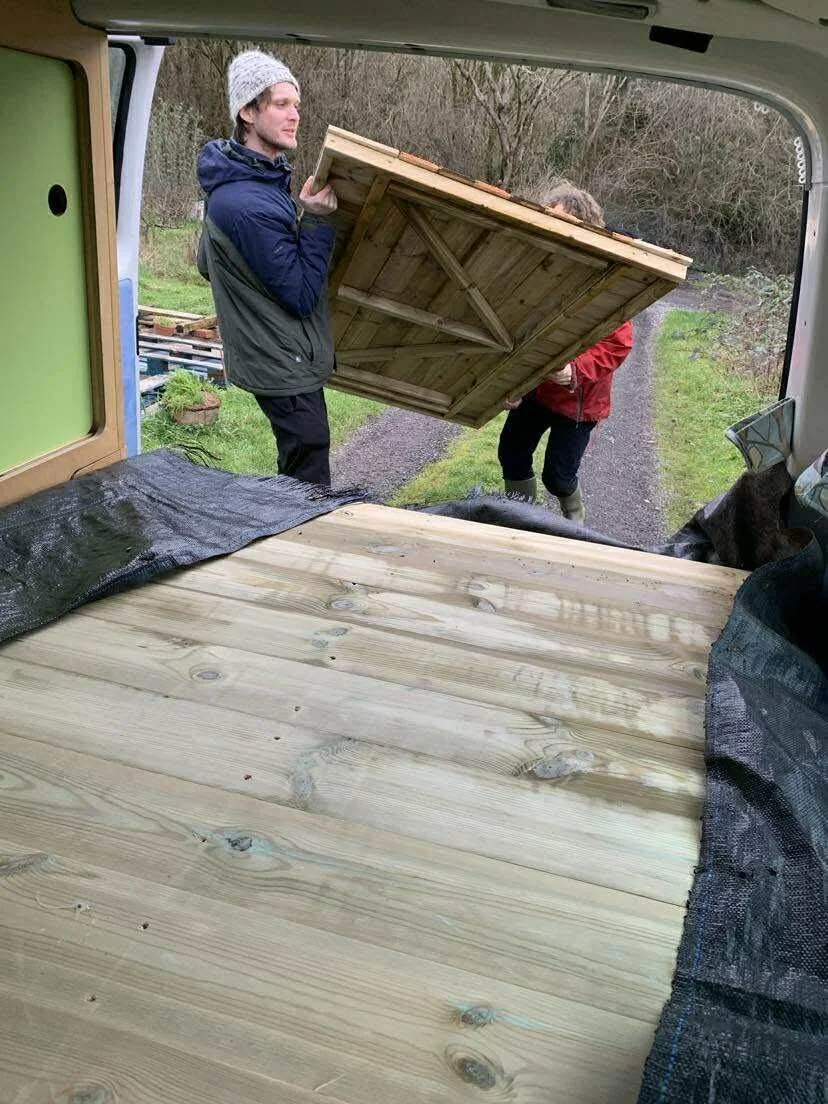
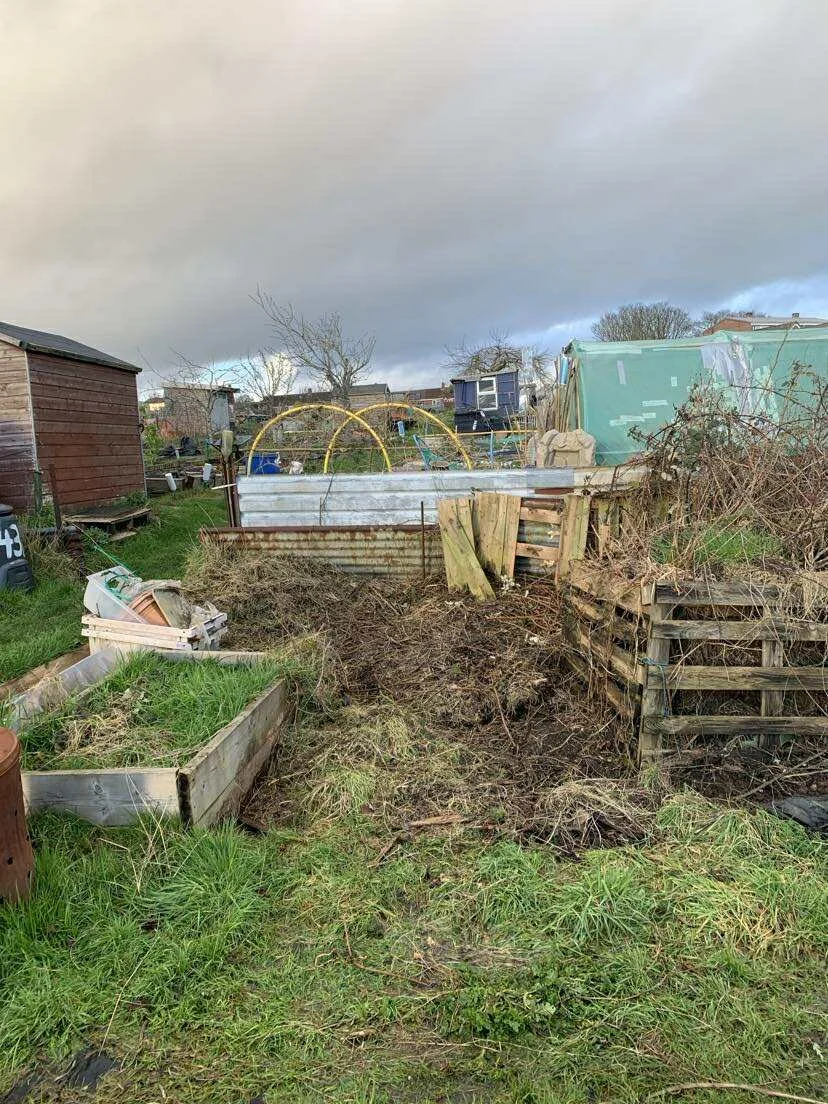
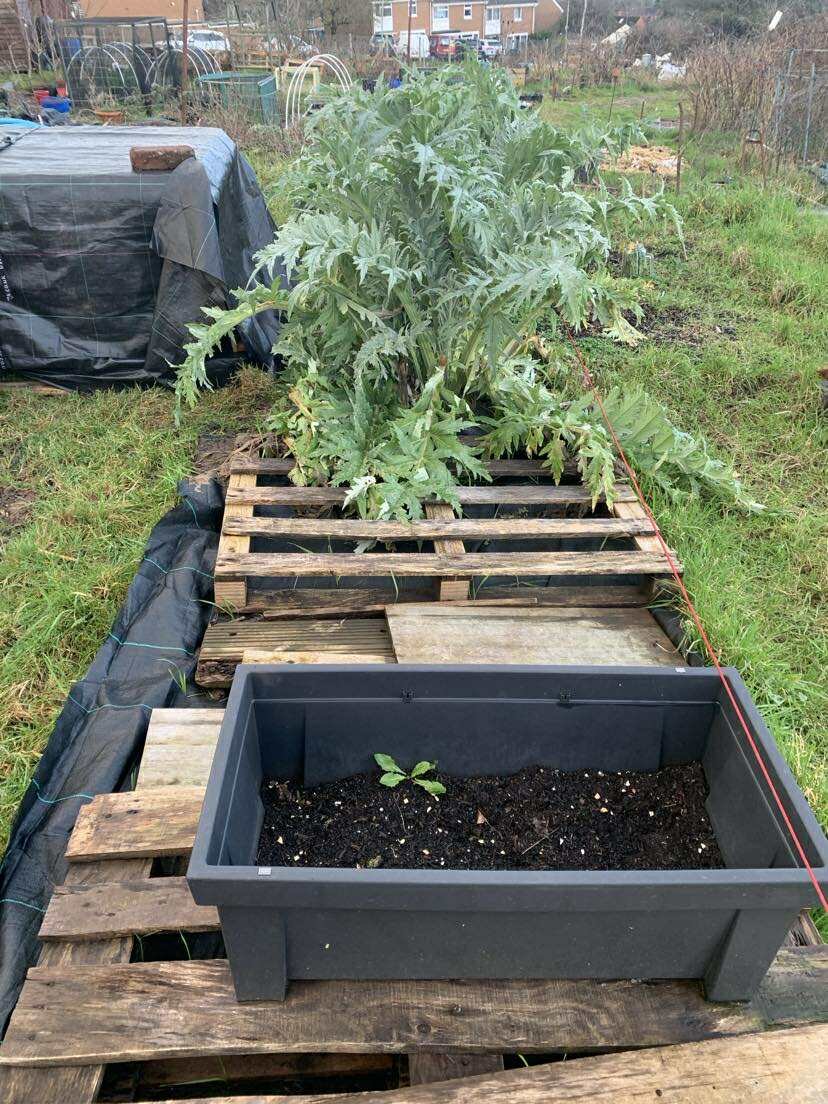
Lots more clearing and moving materials, including moving our shed. We temporarily repurposed some agricultural plastic to start layout and creating new growing beds.
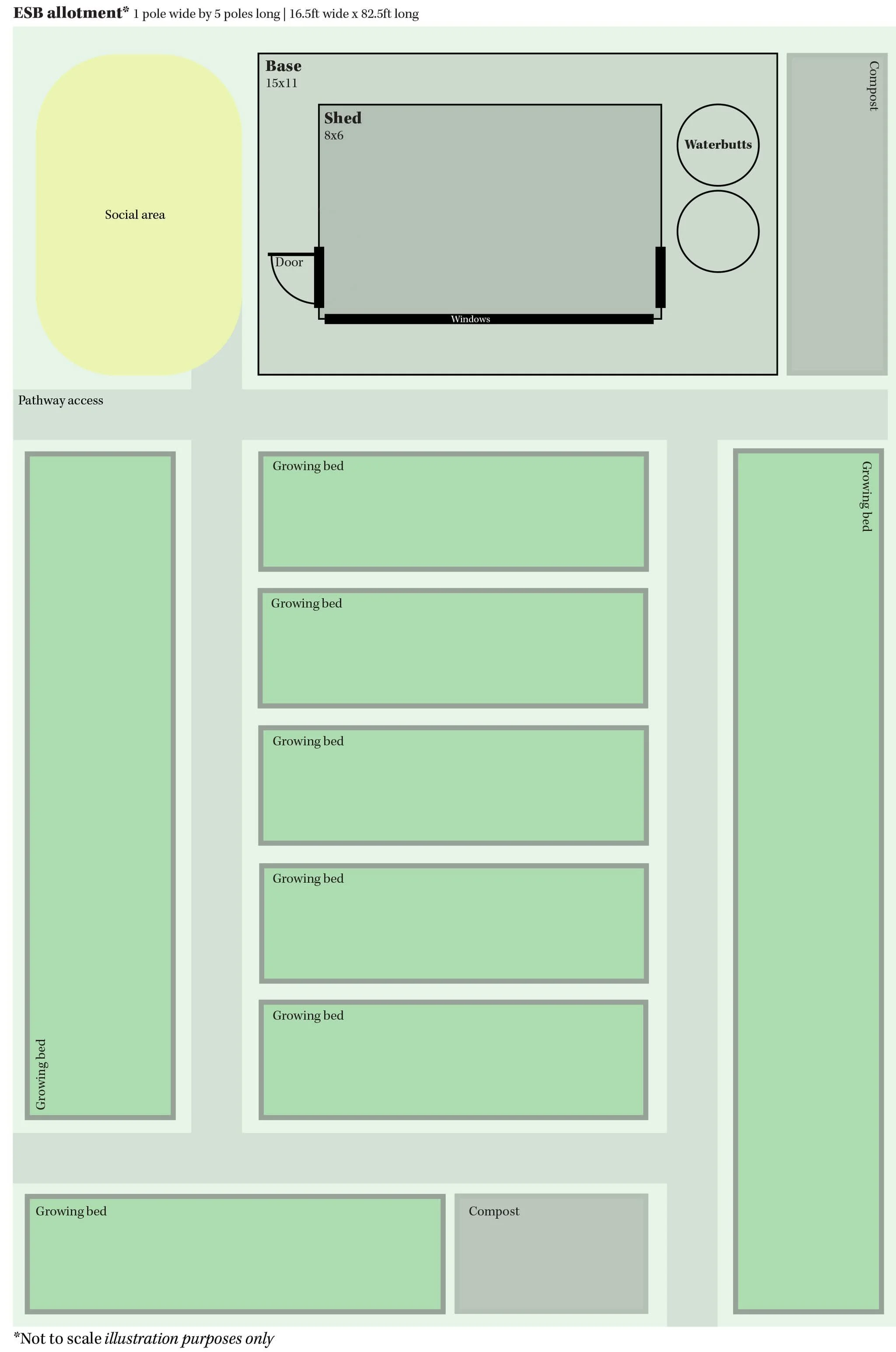
Yogi pruned the dwarf stock apple trees too which run down the side of the plot. We also drafted a layout and checked our new shed plans with Exeter City Council.
March 2026
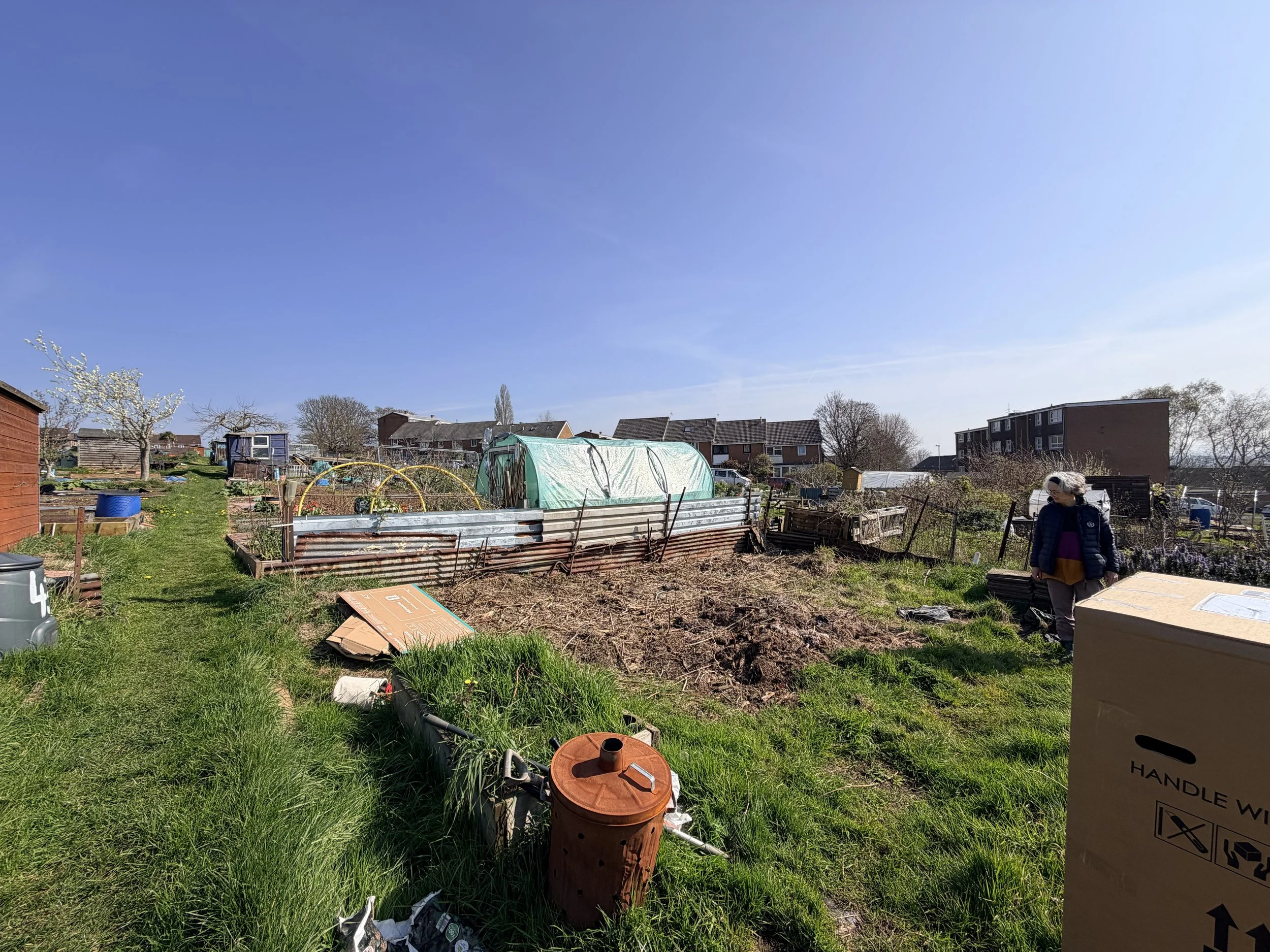
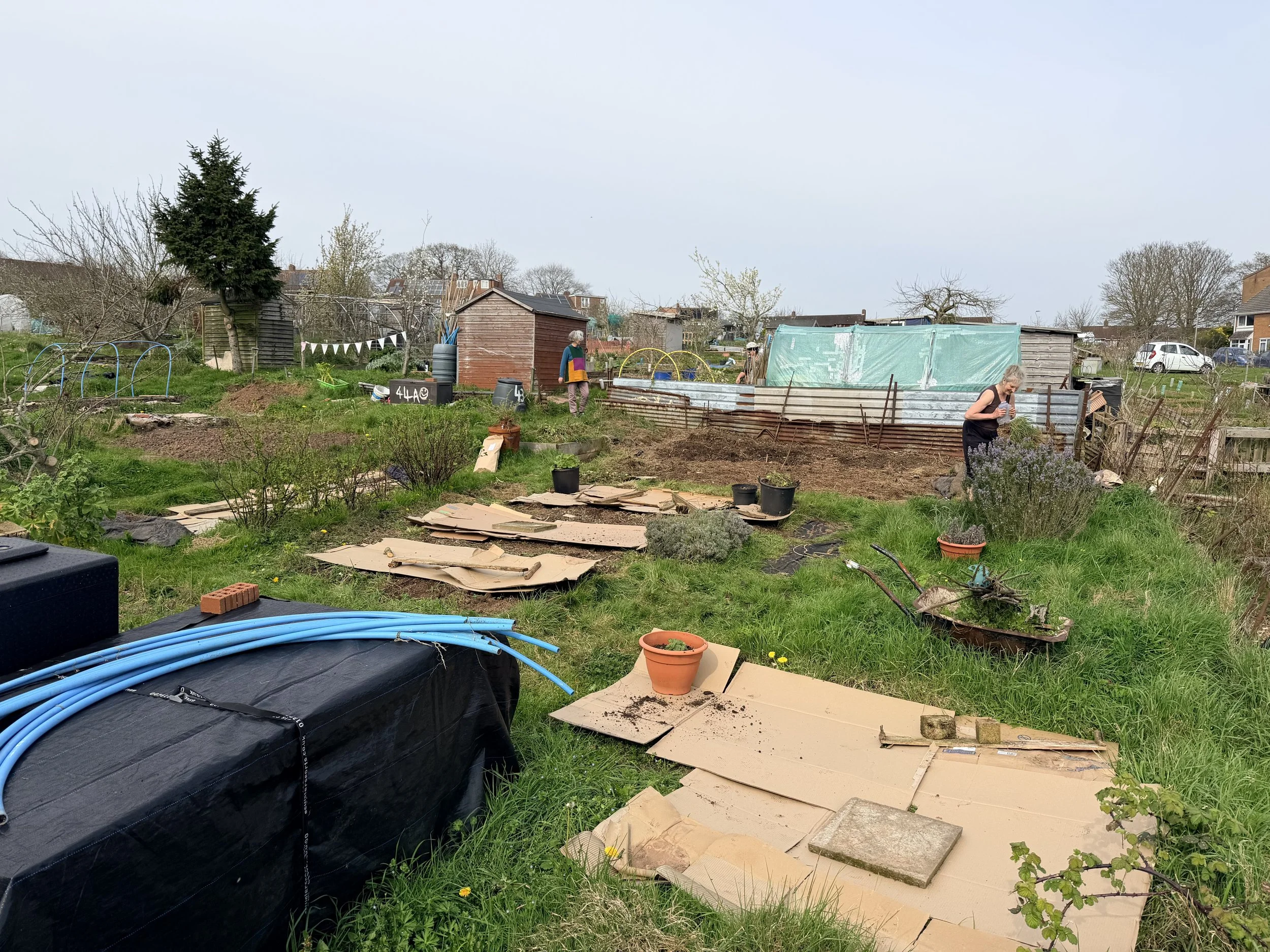
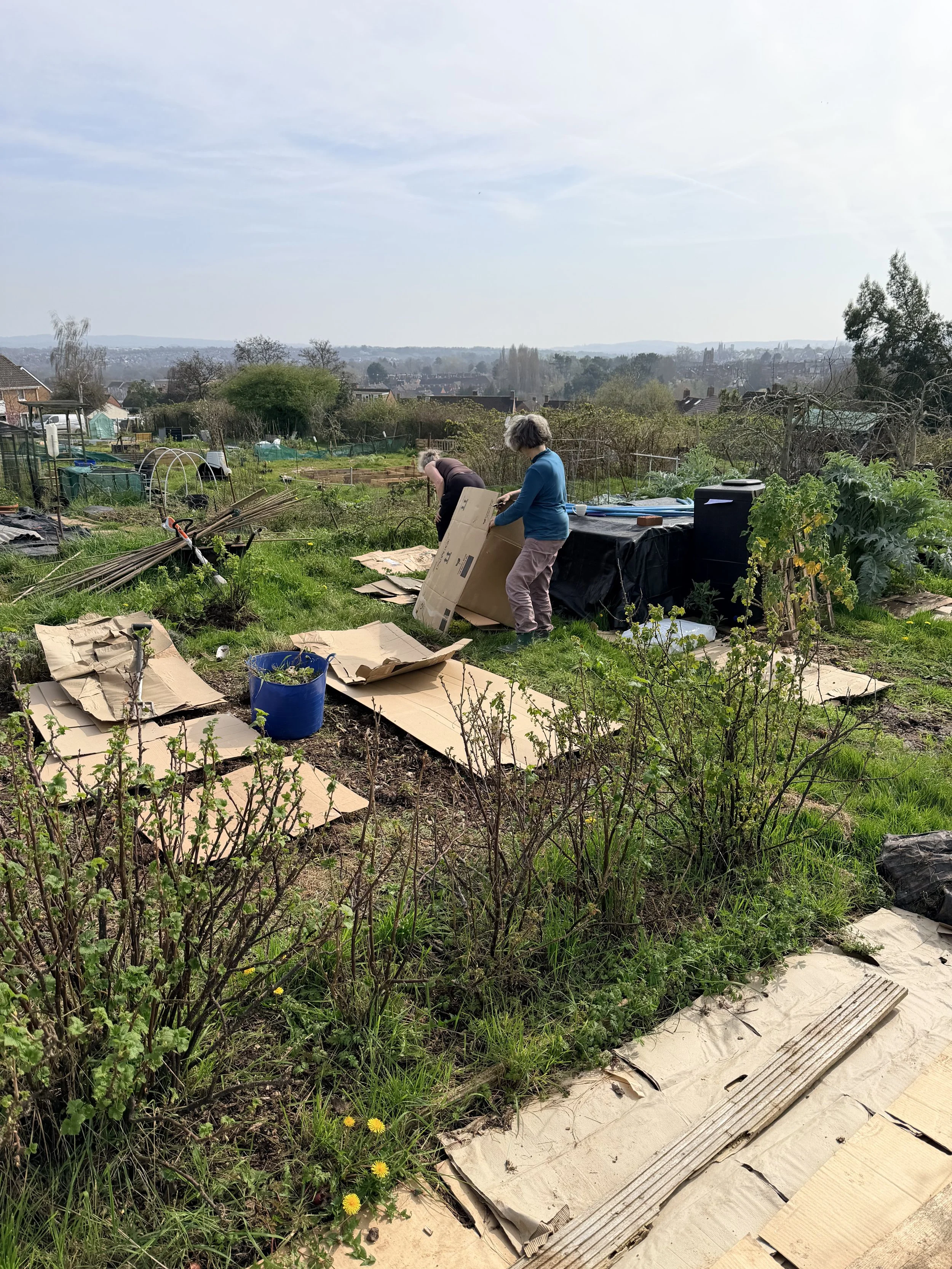
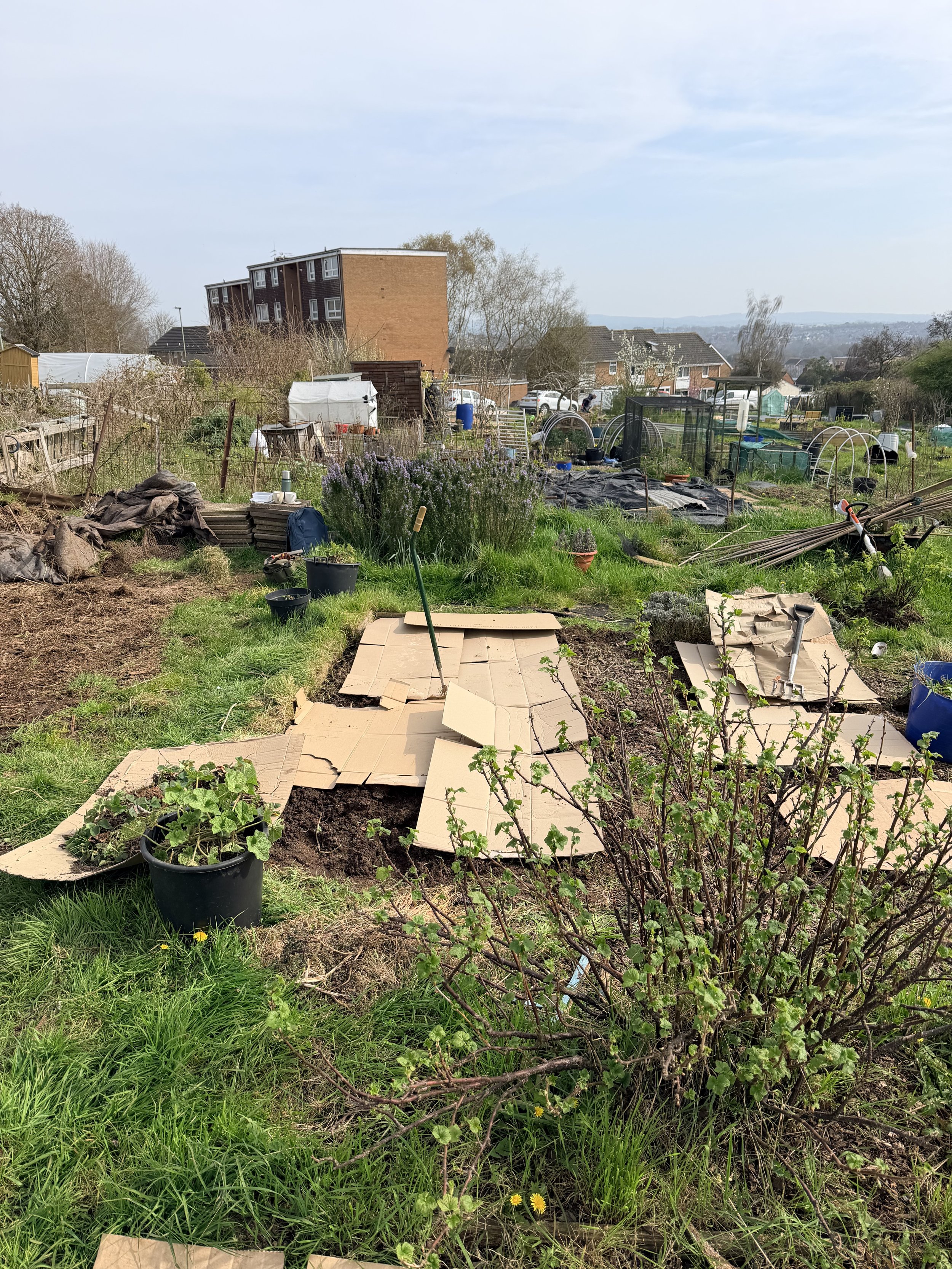
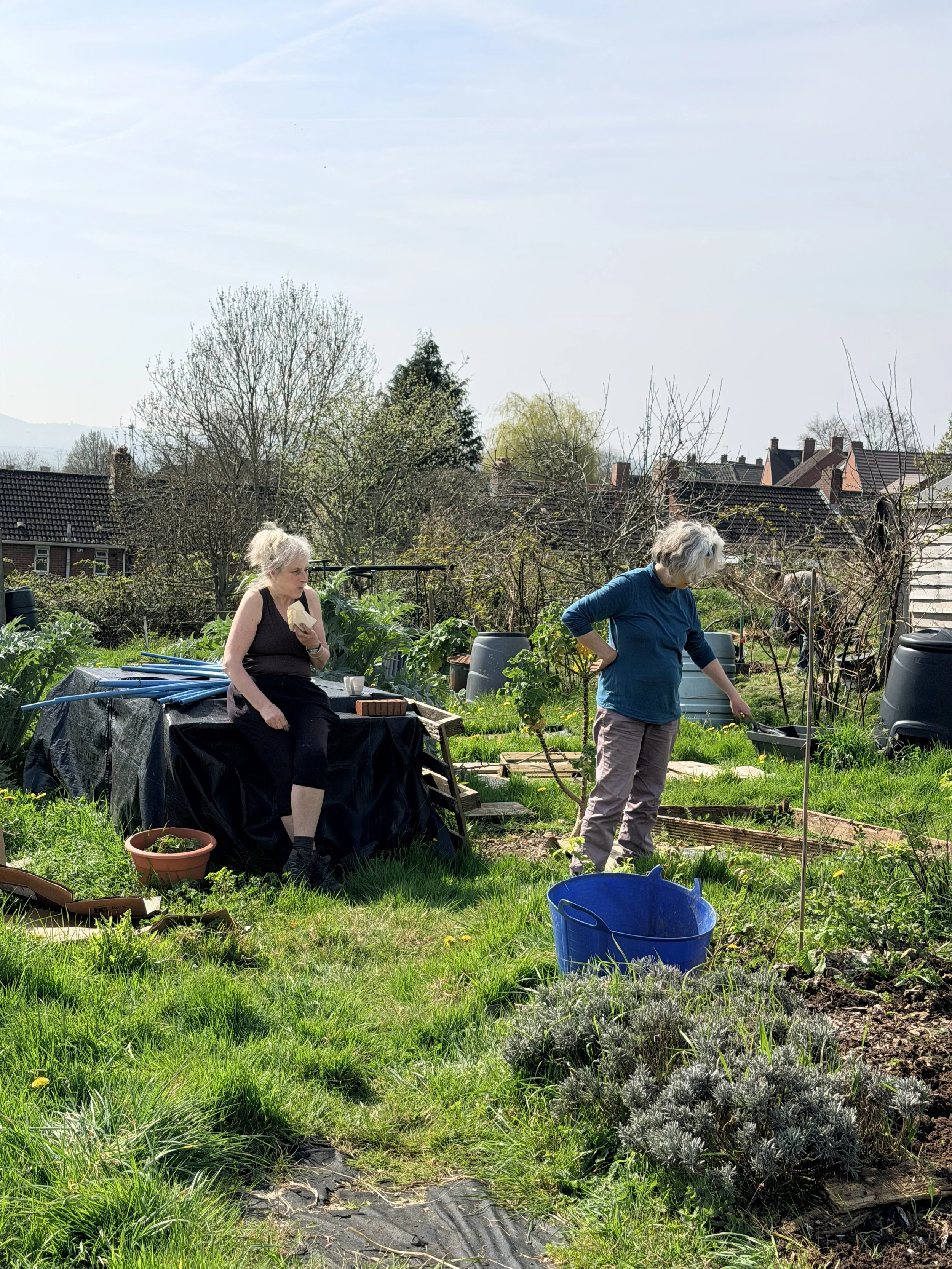
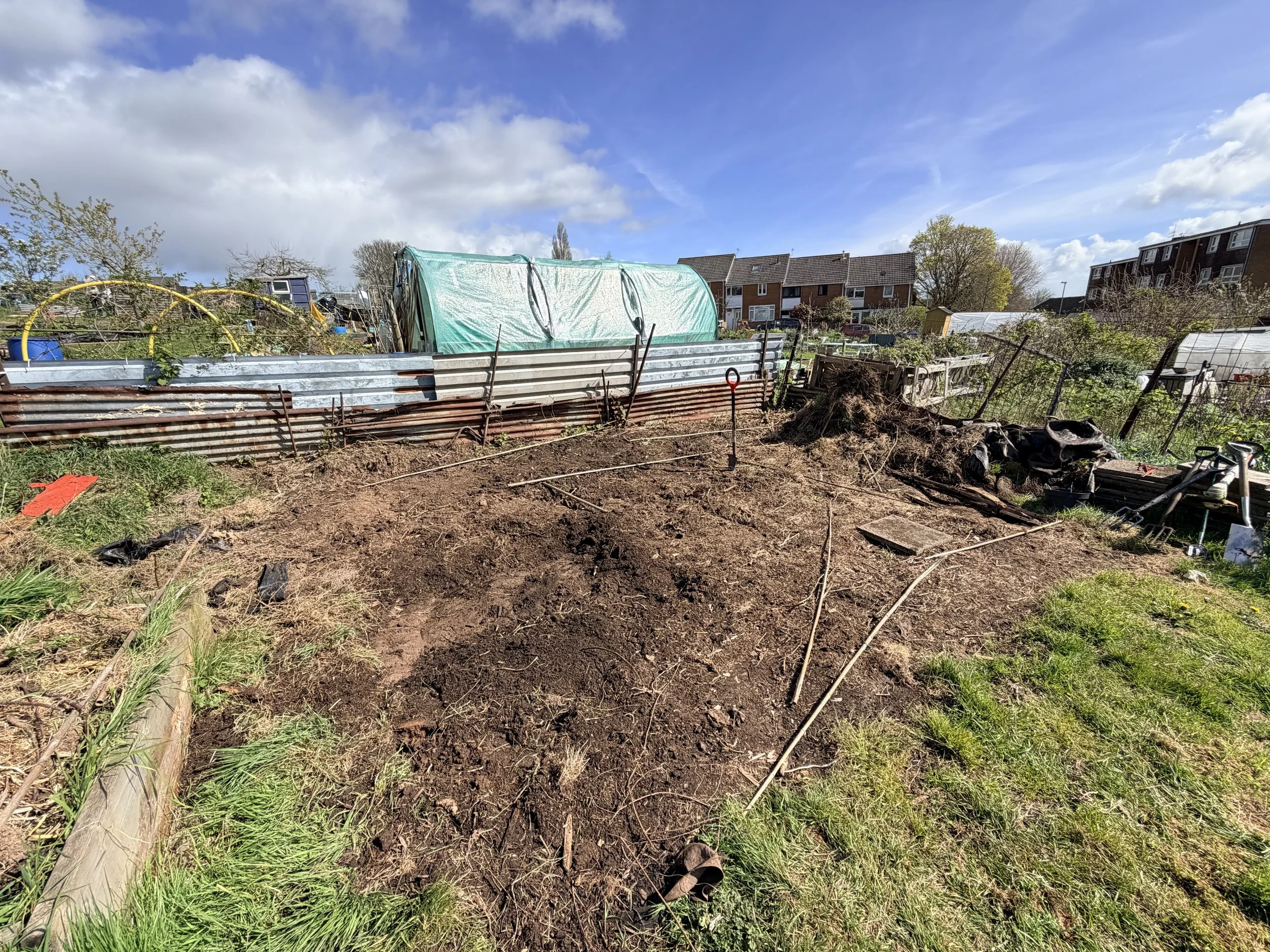
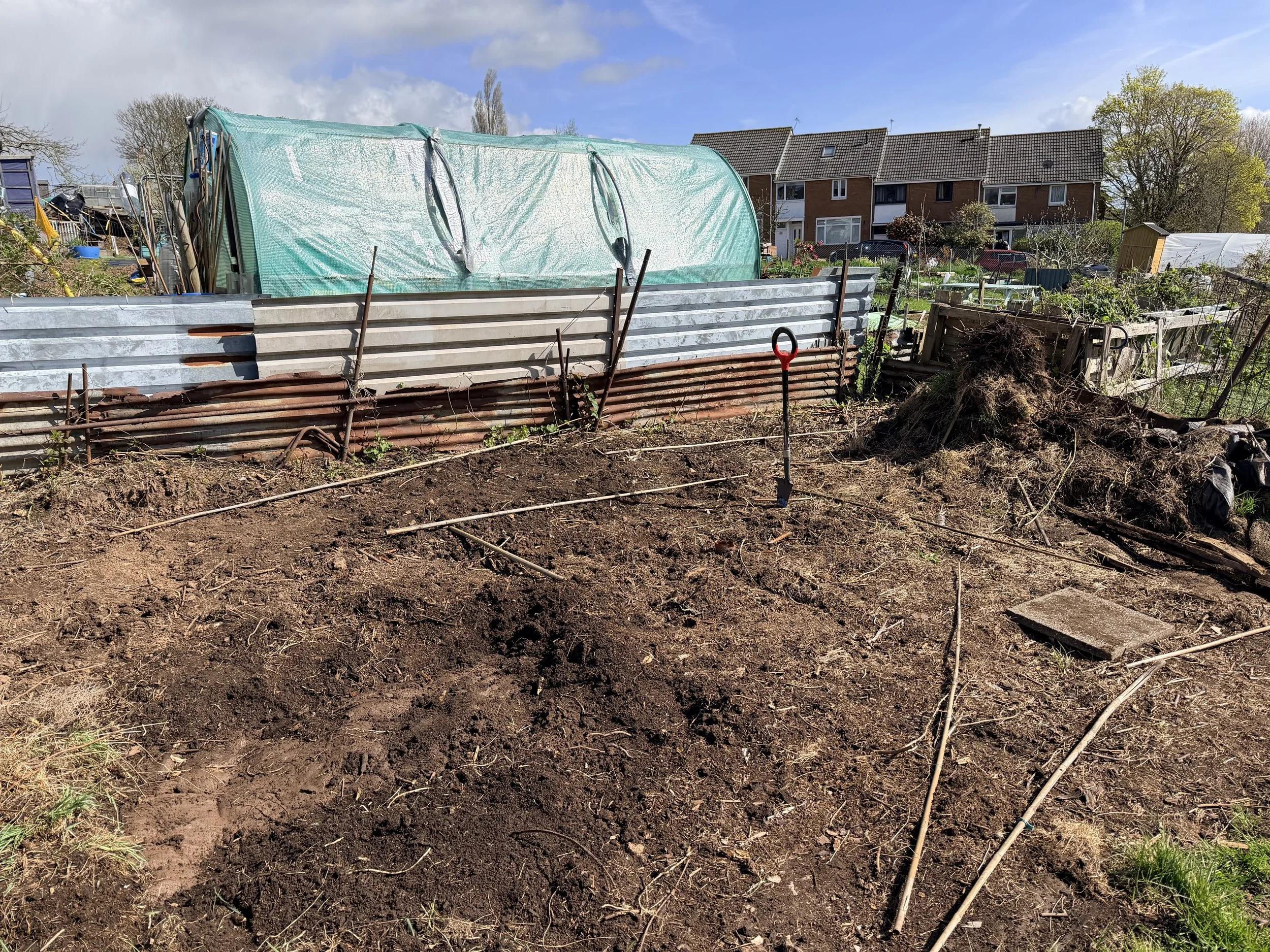
Preparation continued, including getting the area ready for the shed, more clearing and laying cardboard for the new beds. There was also much anticipation for the arrival of our compost delivery!
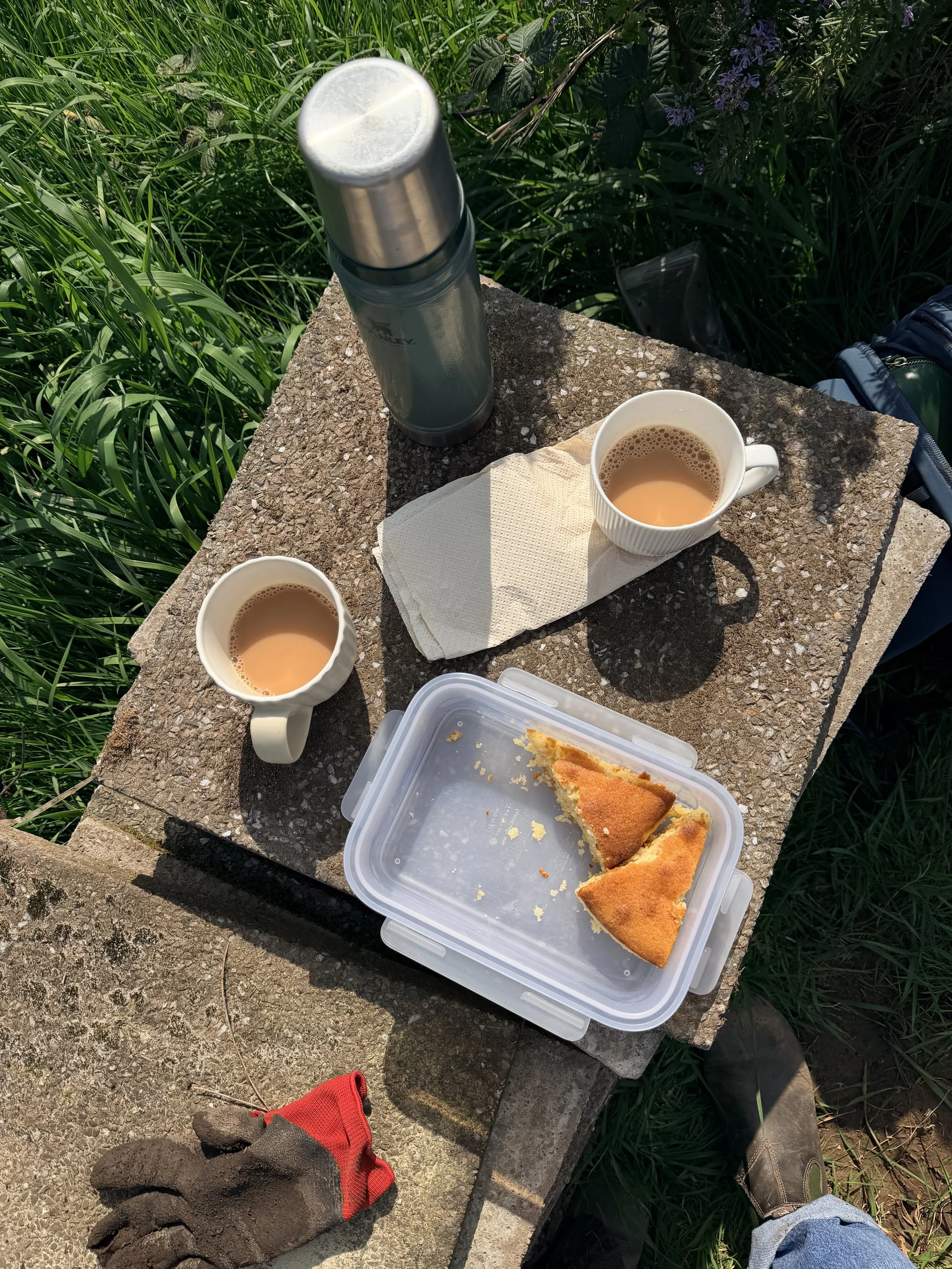
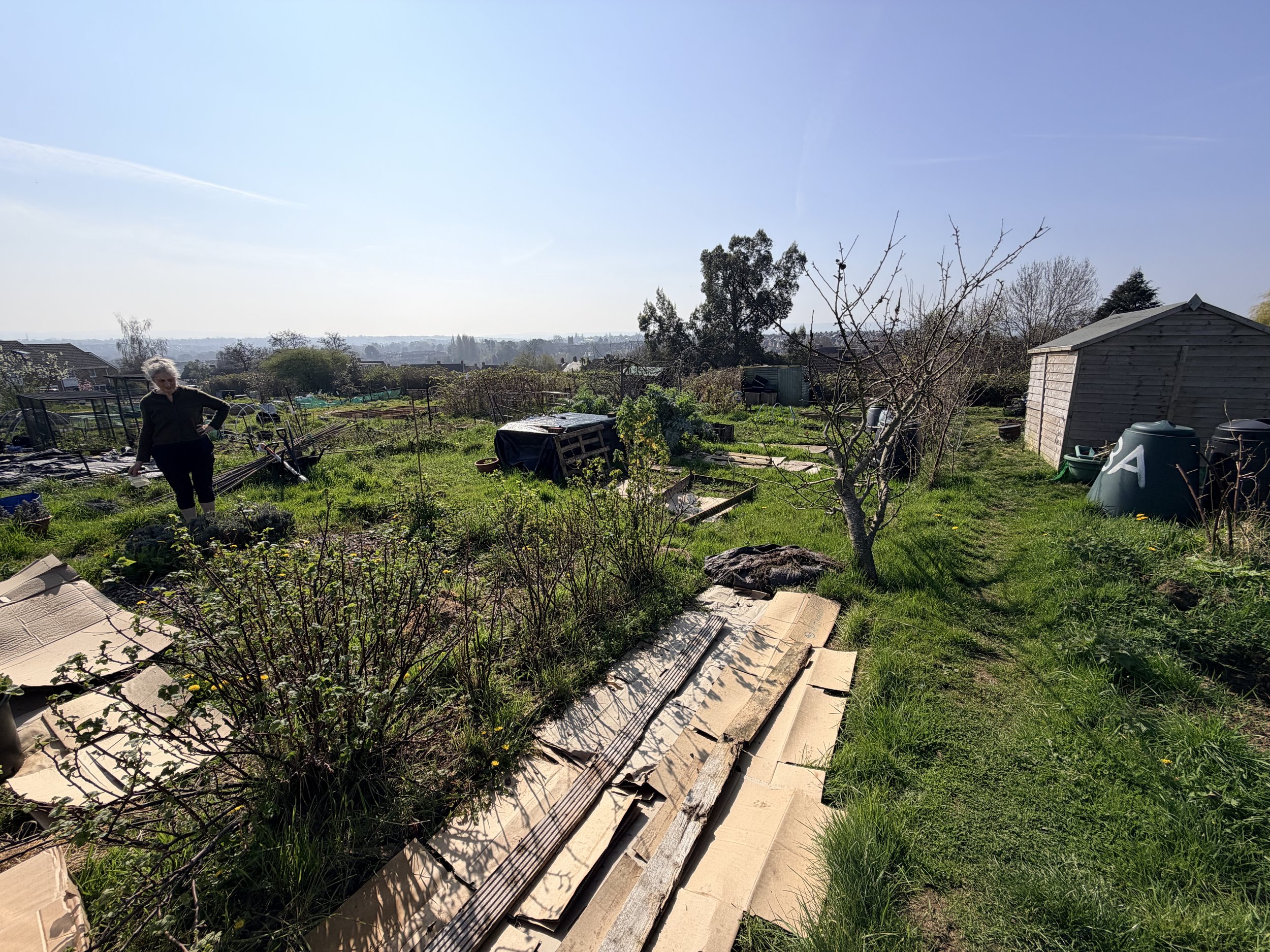
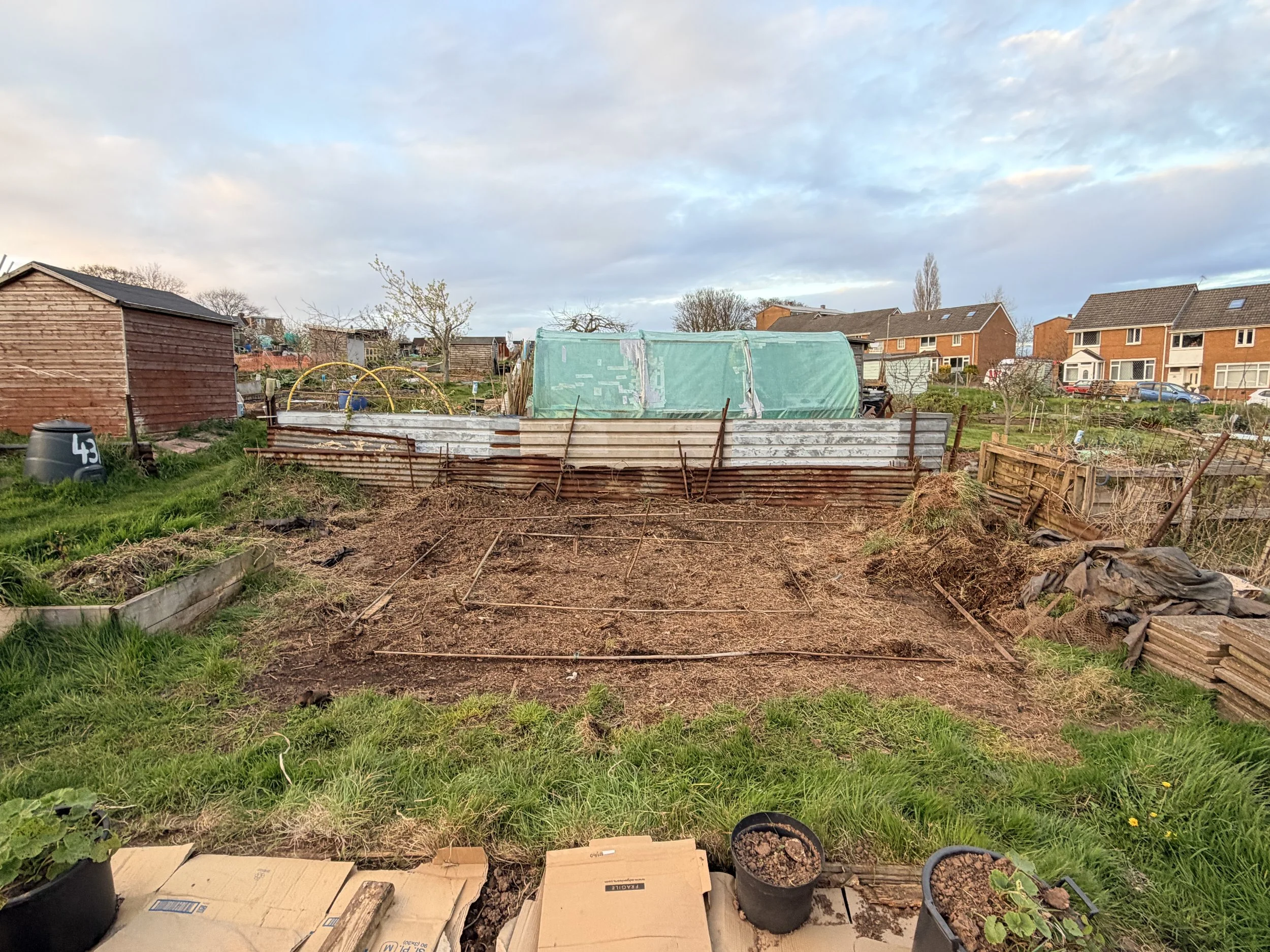
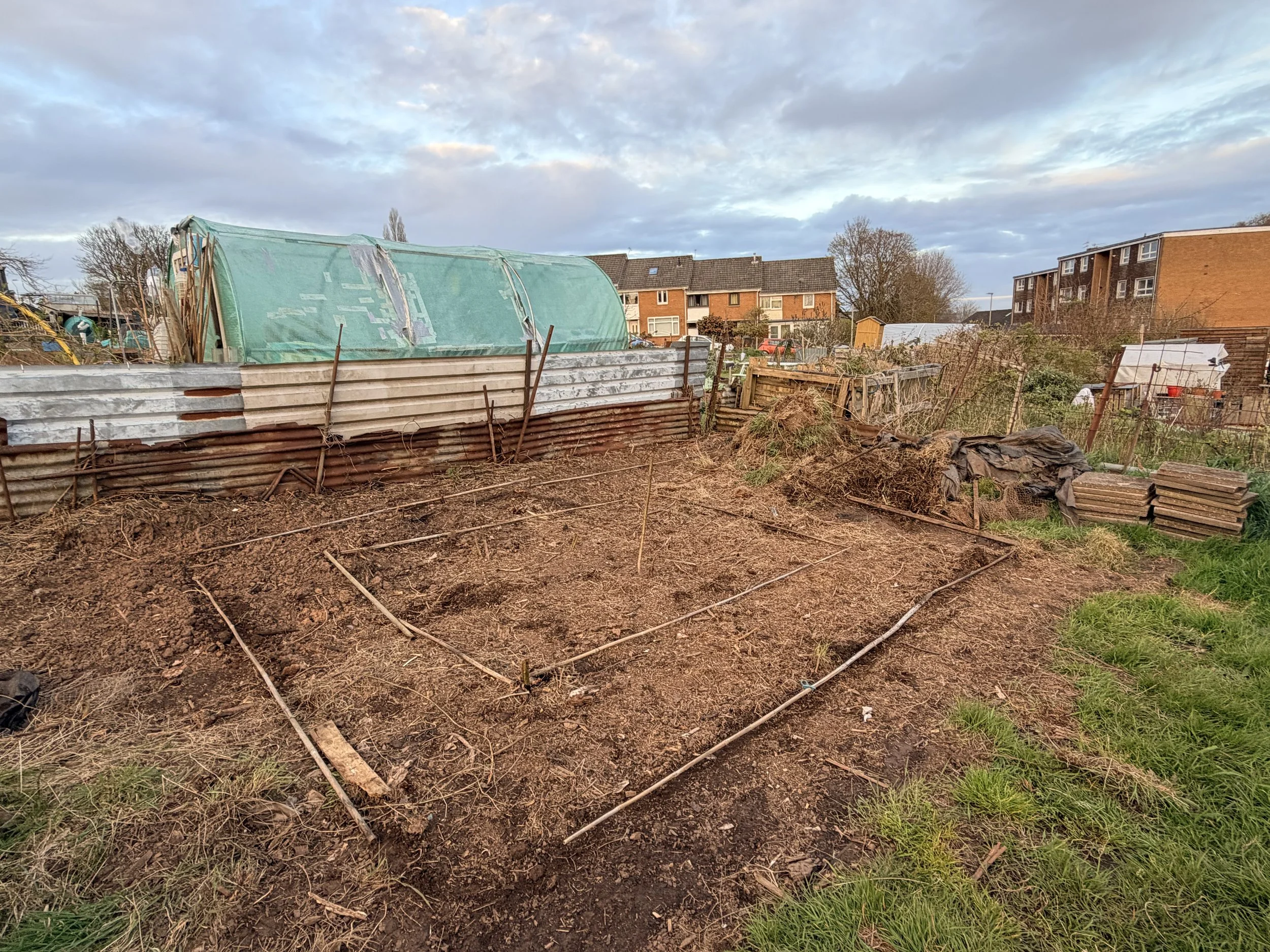
April 2026
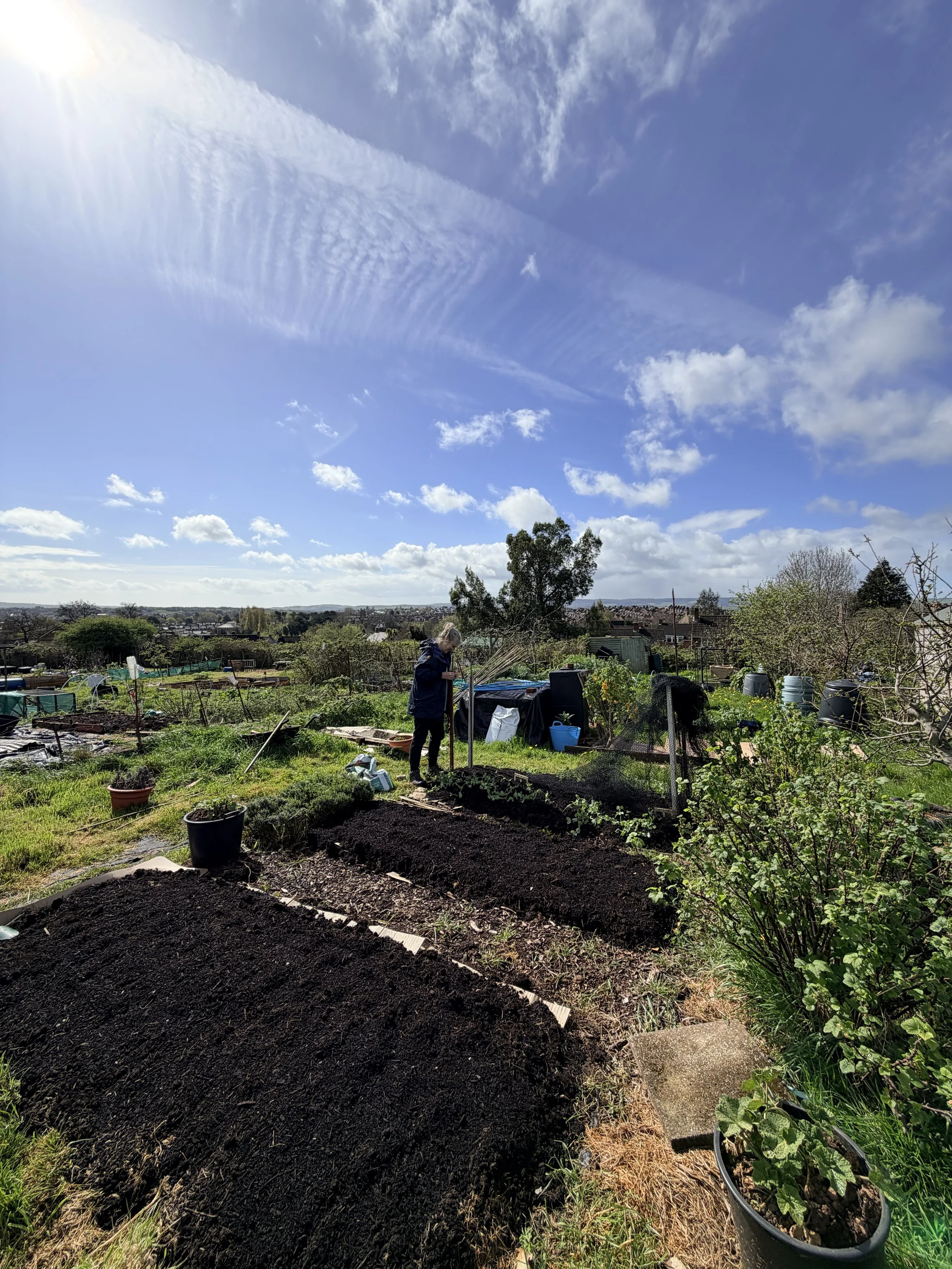
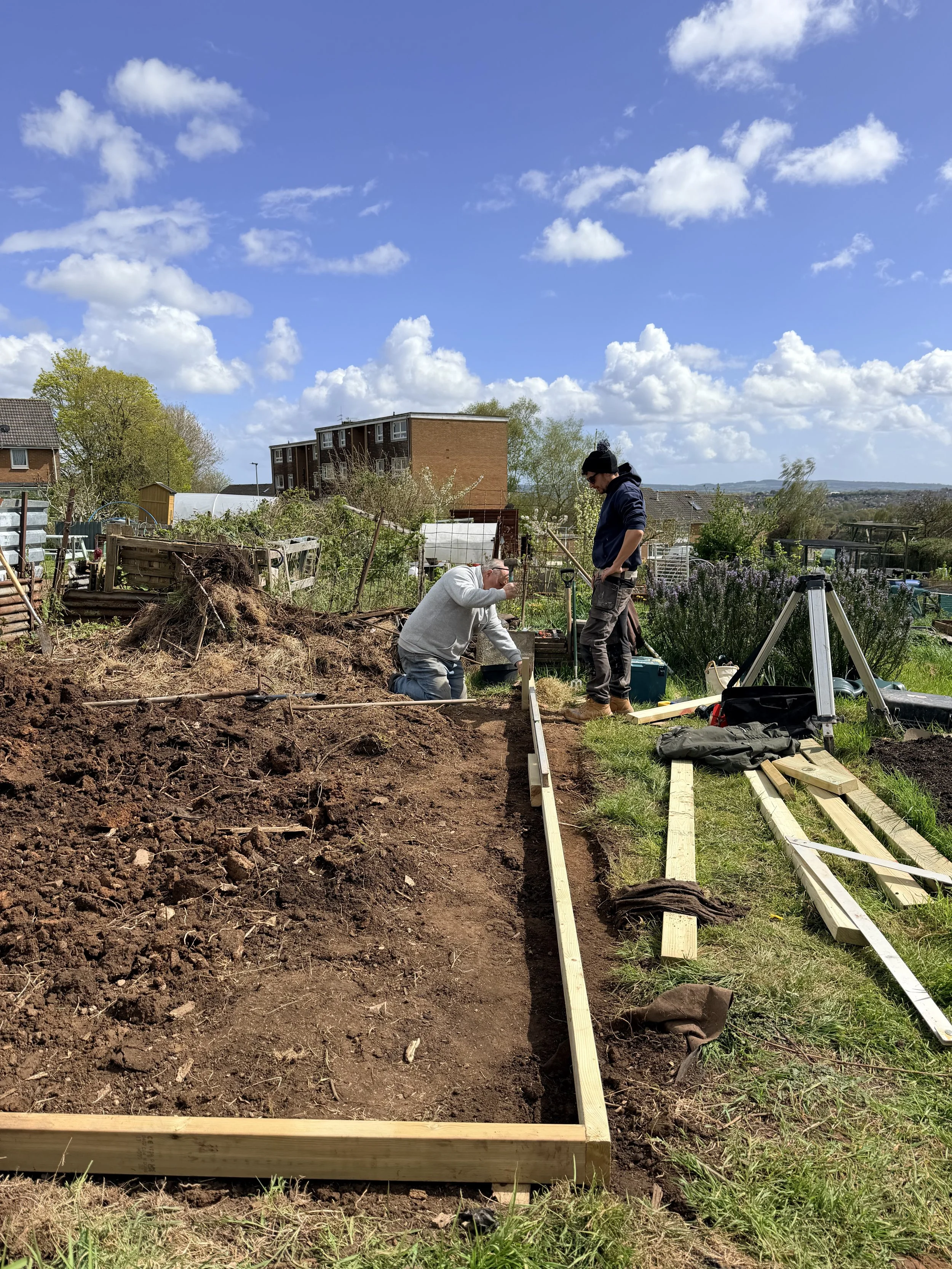
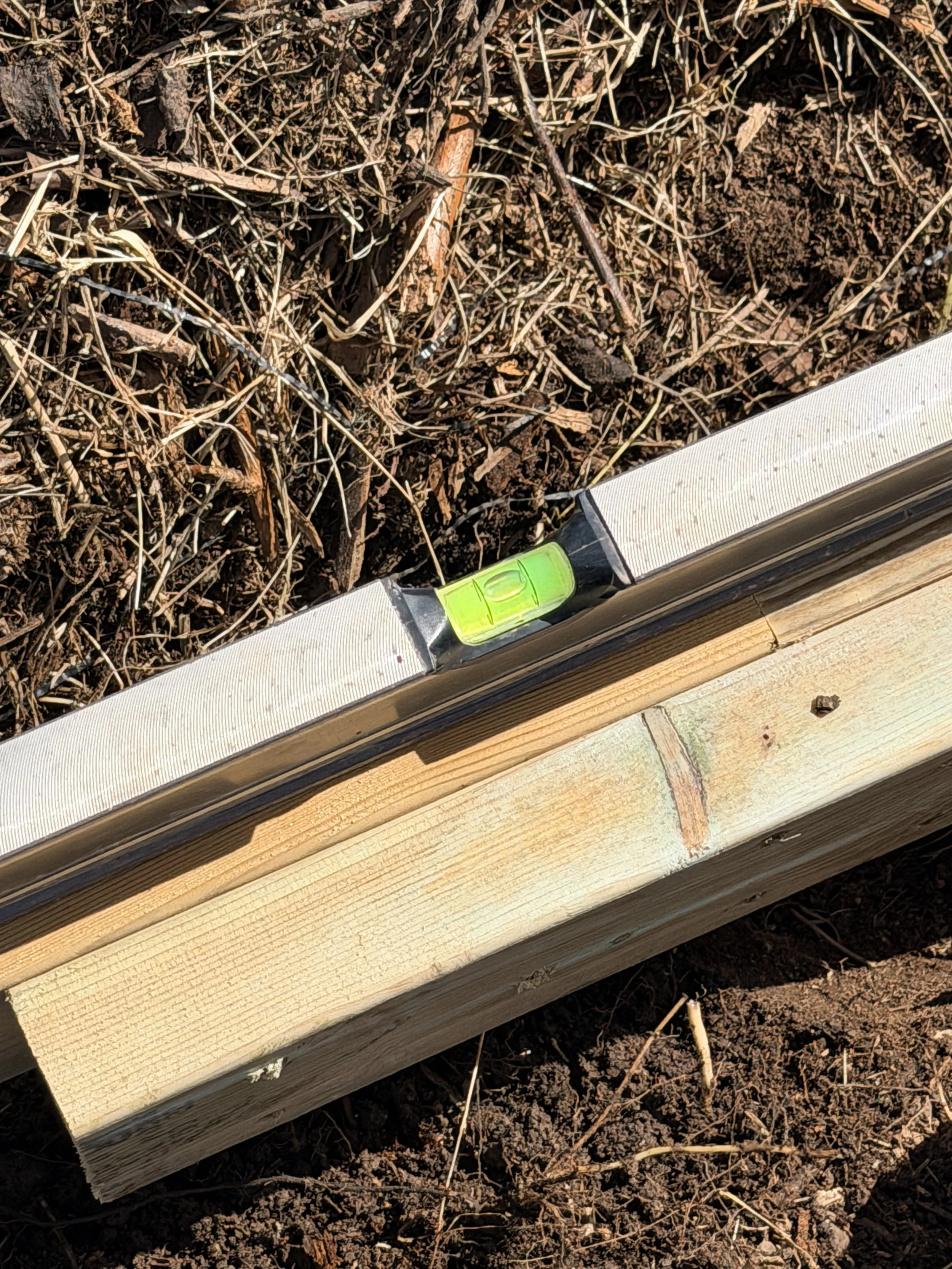
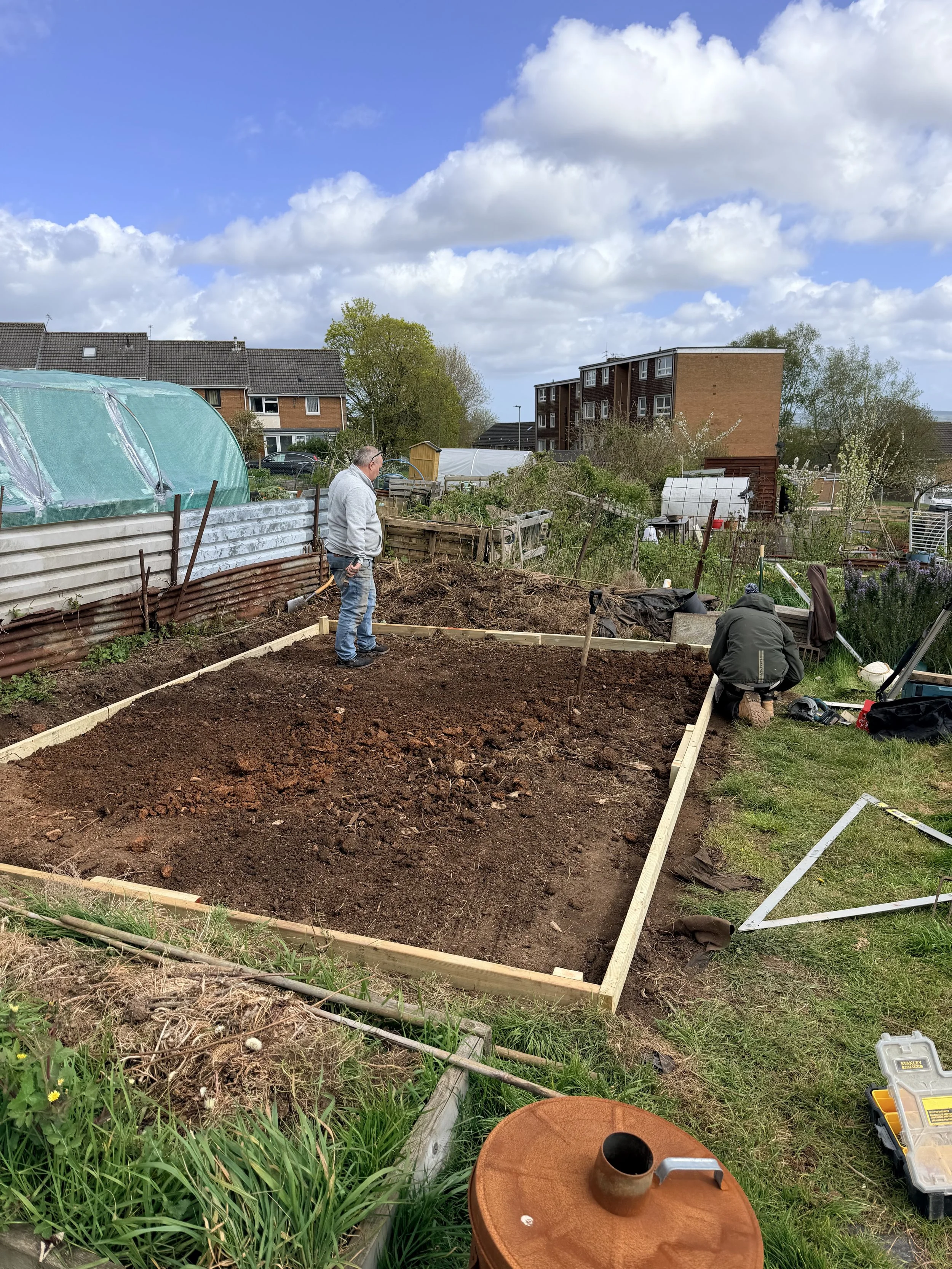
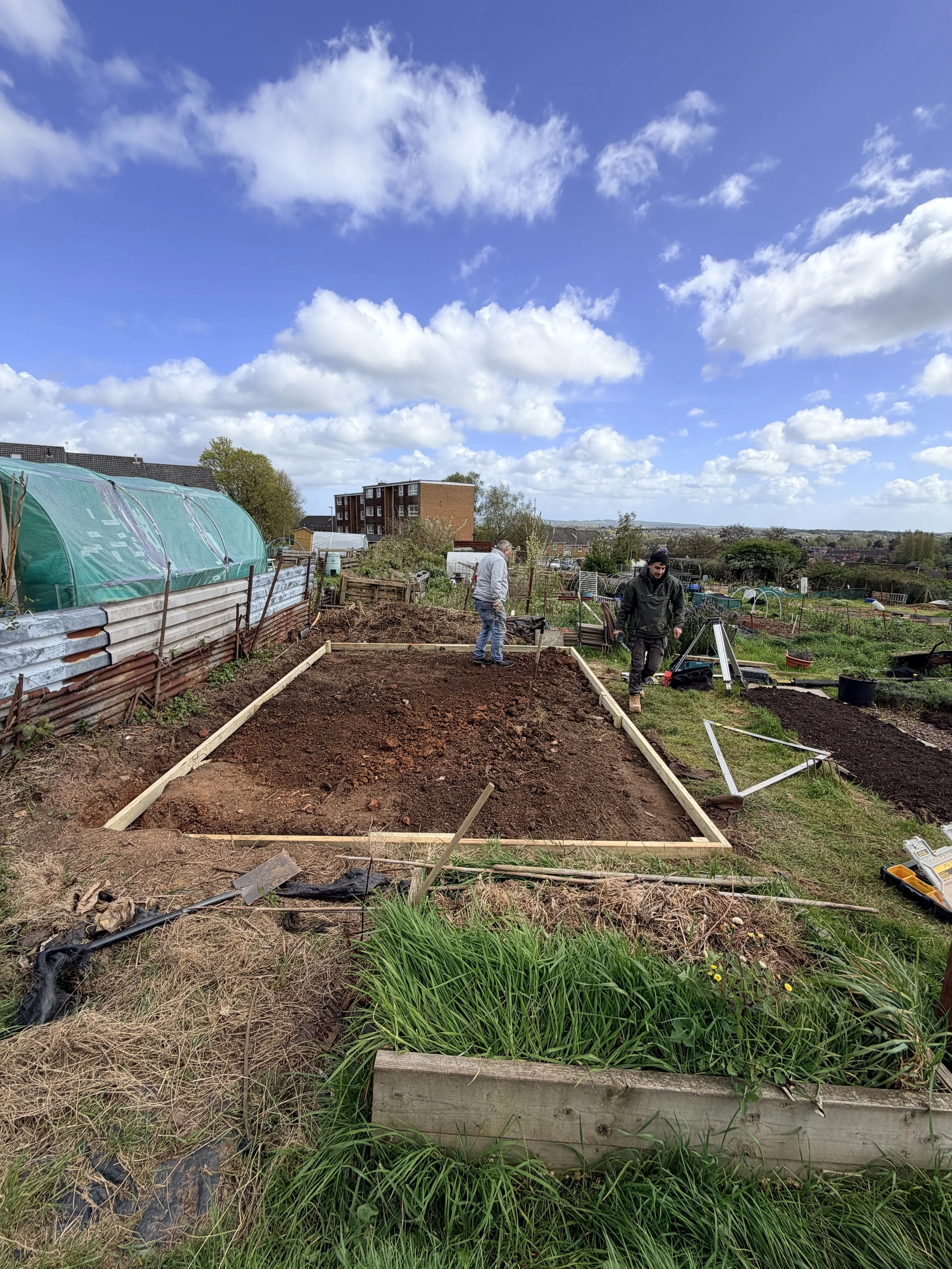
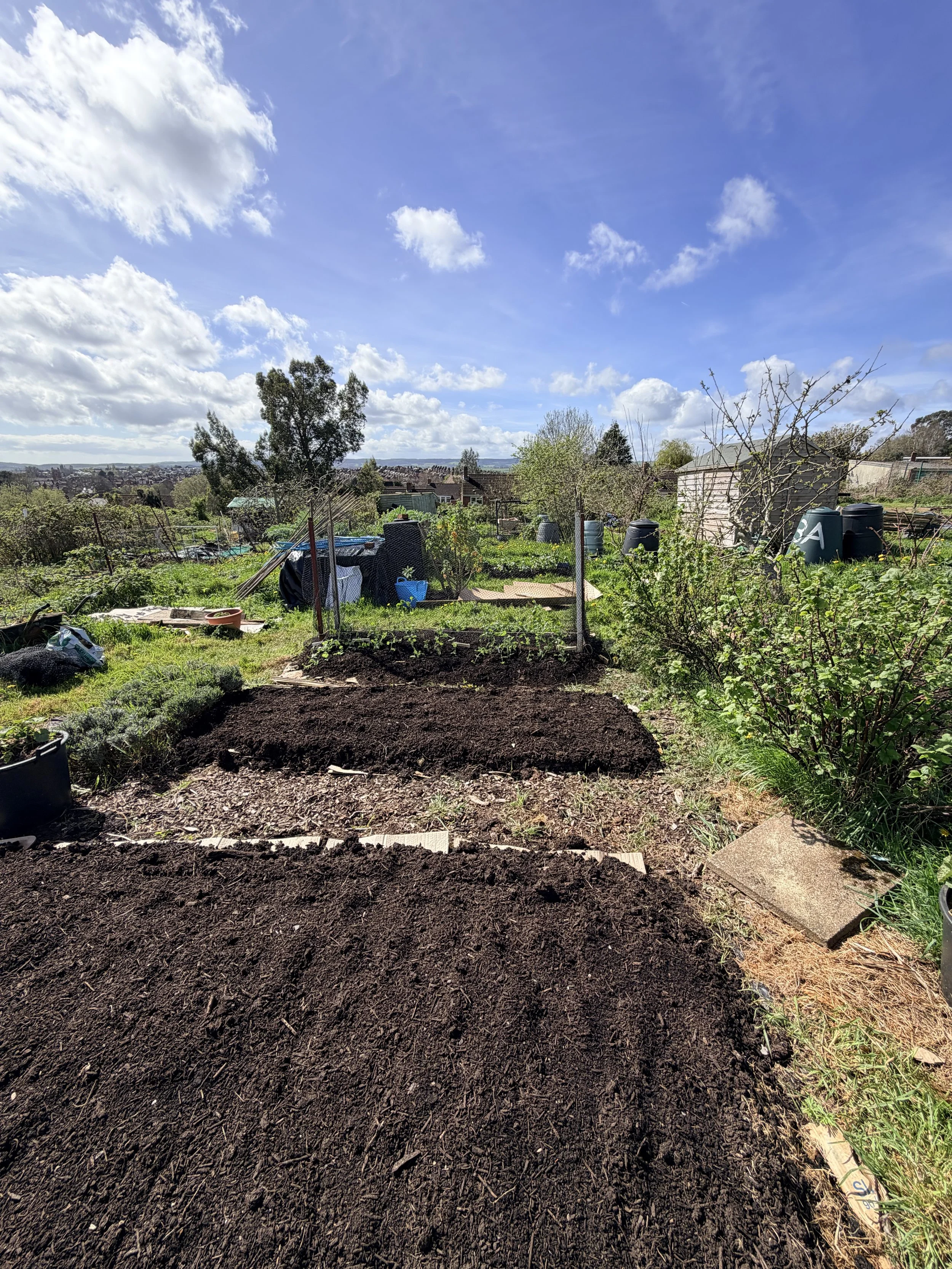
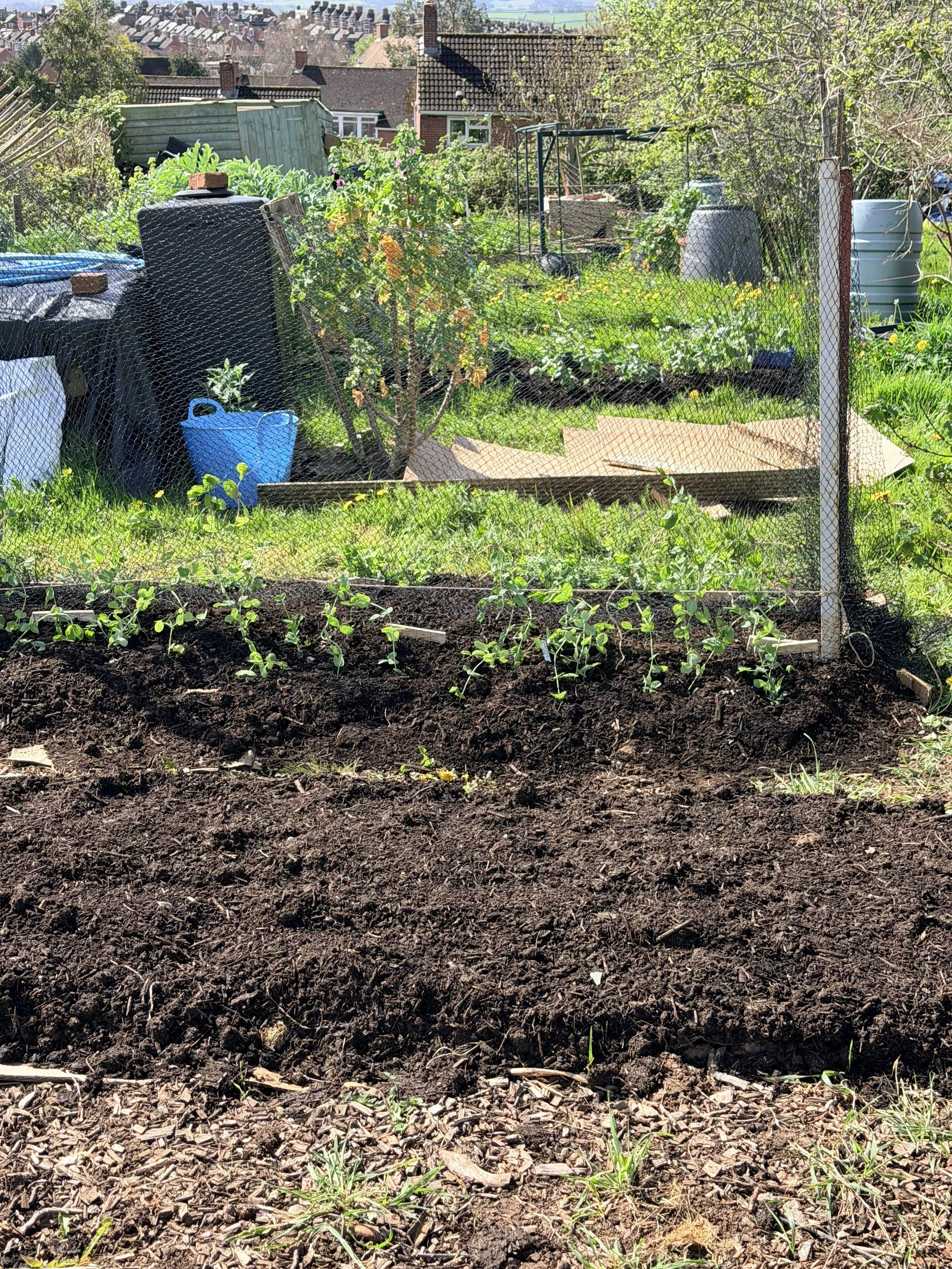
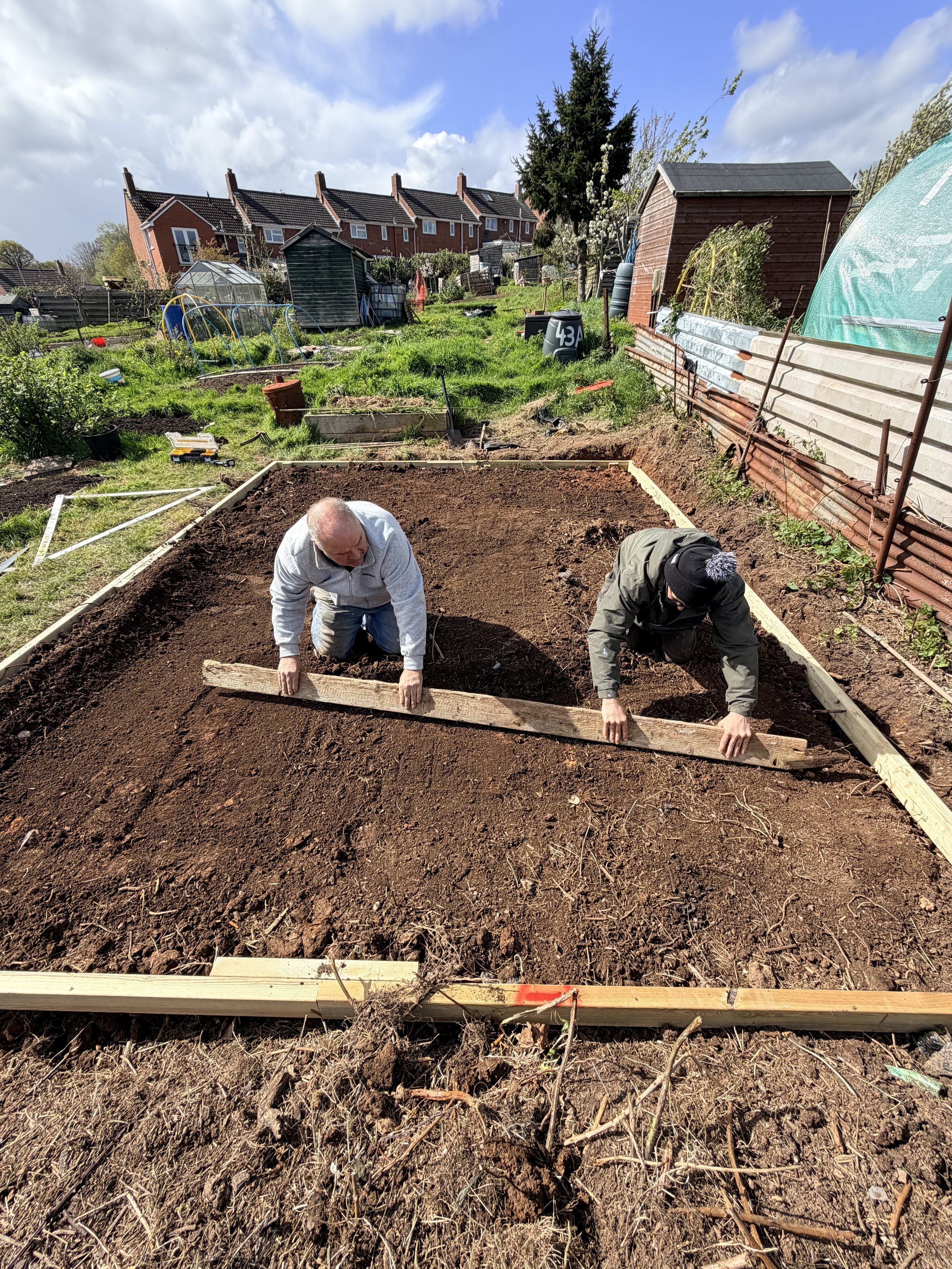
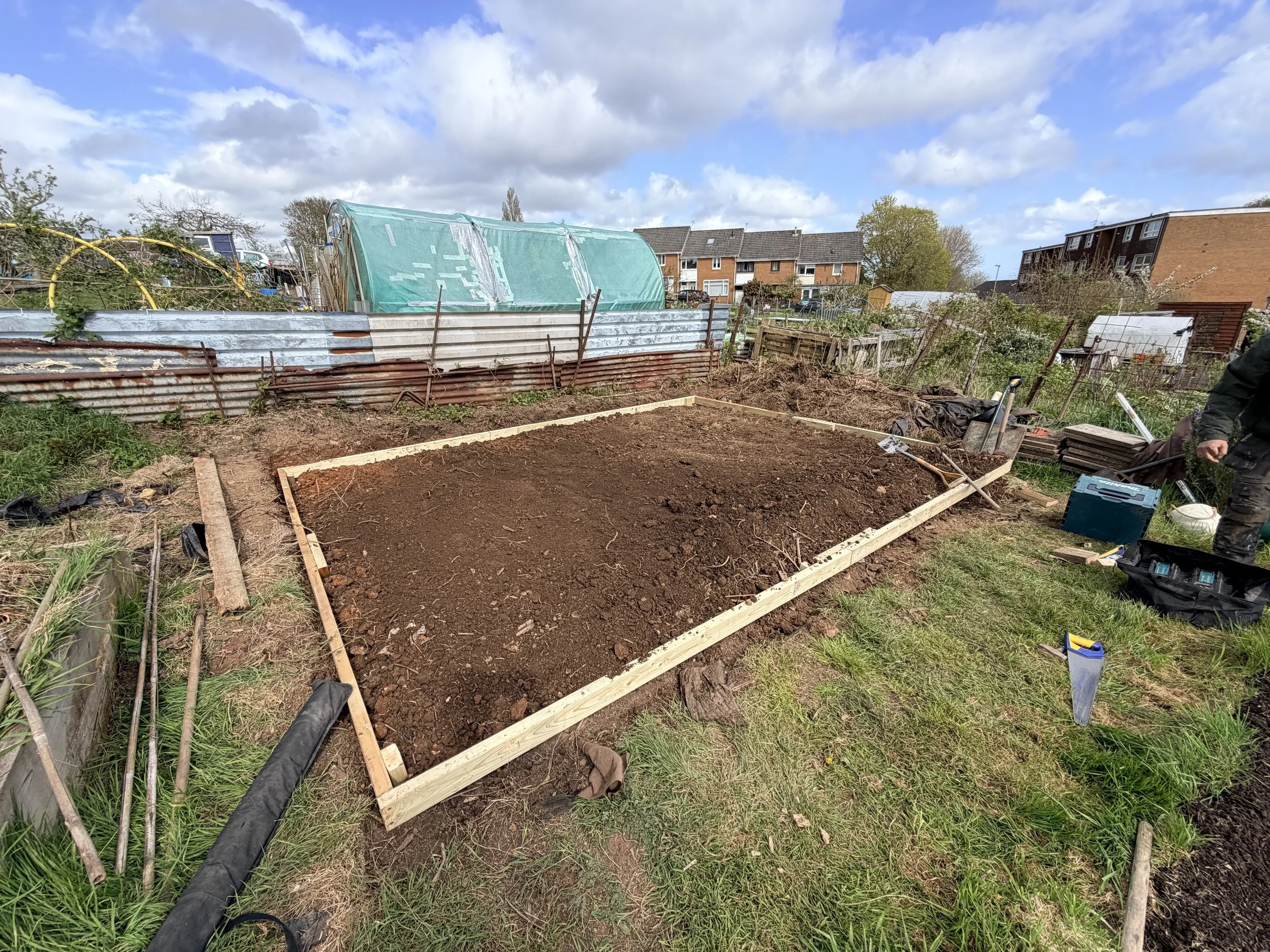
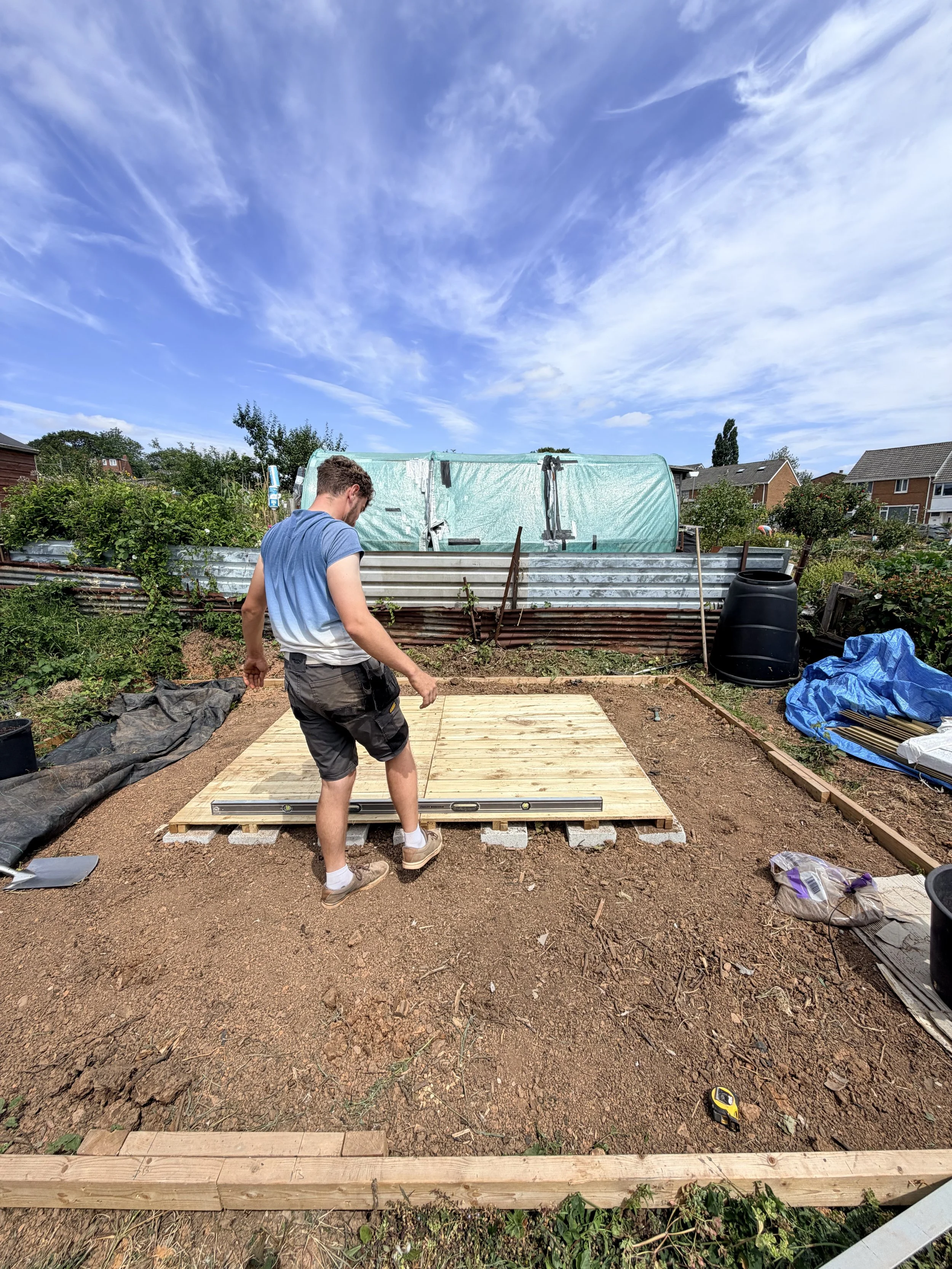
The ground for the shed started to be dug and levelled a bit more and a wooden perimeter frame was laid and, finally, the compost arrived to be able to start covering all the cardboard. We began building up the new beds, adding a bit of manure and home compost. We managed to get some plants in the ground too.
We also started meeting lots of new people at the allotment and becoming part of our new growing community.
May 2026
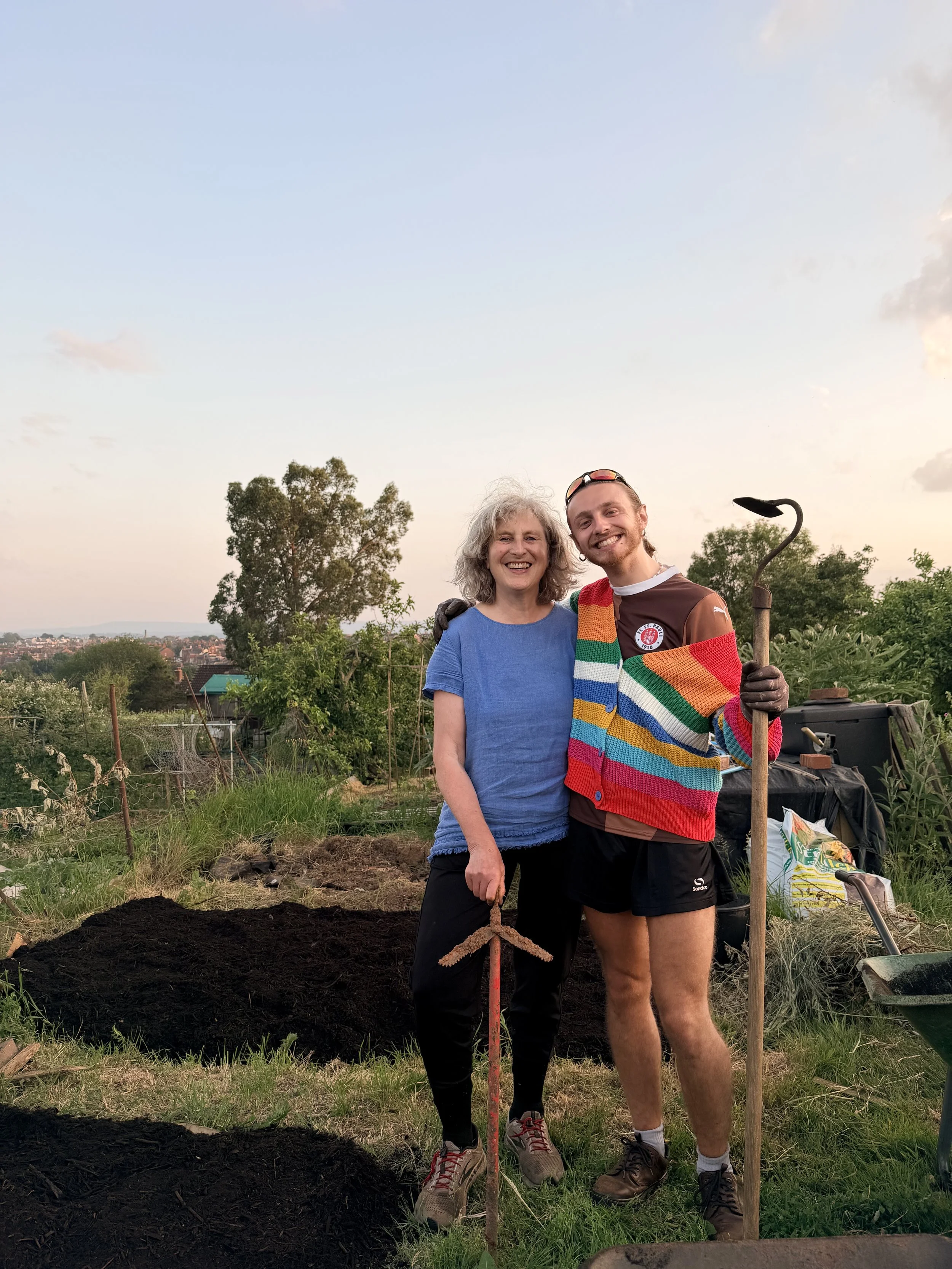
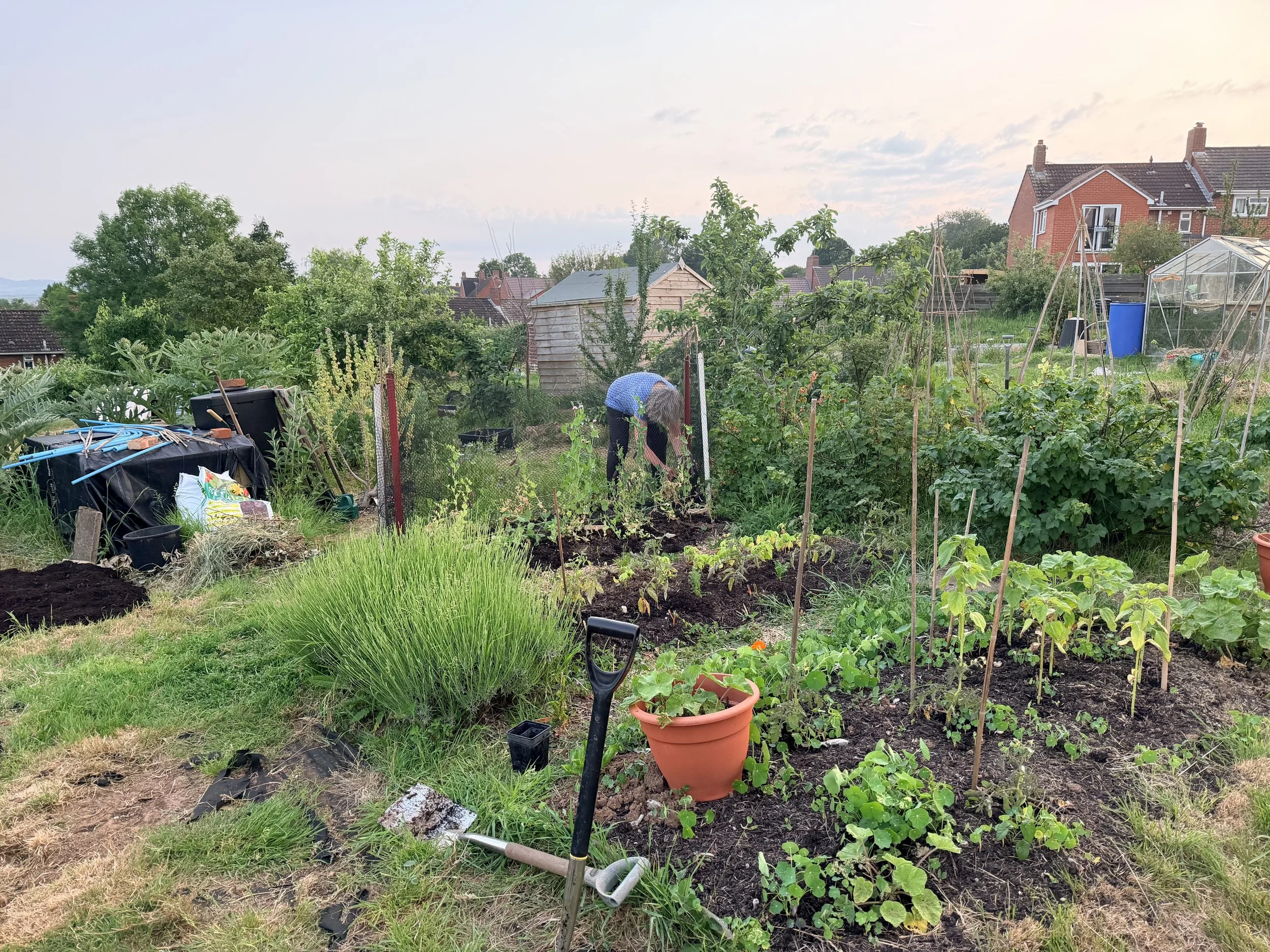
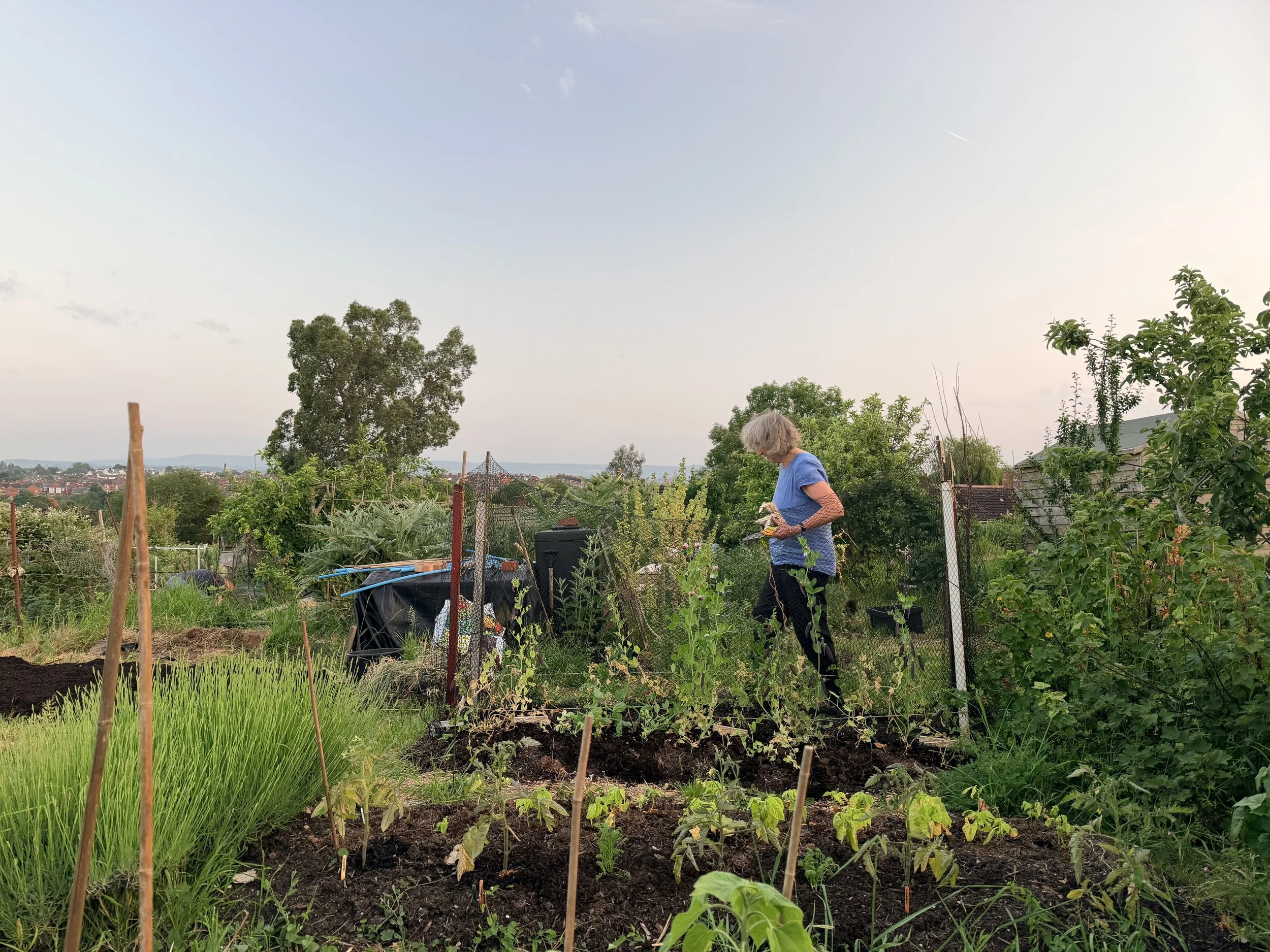
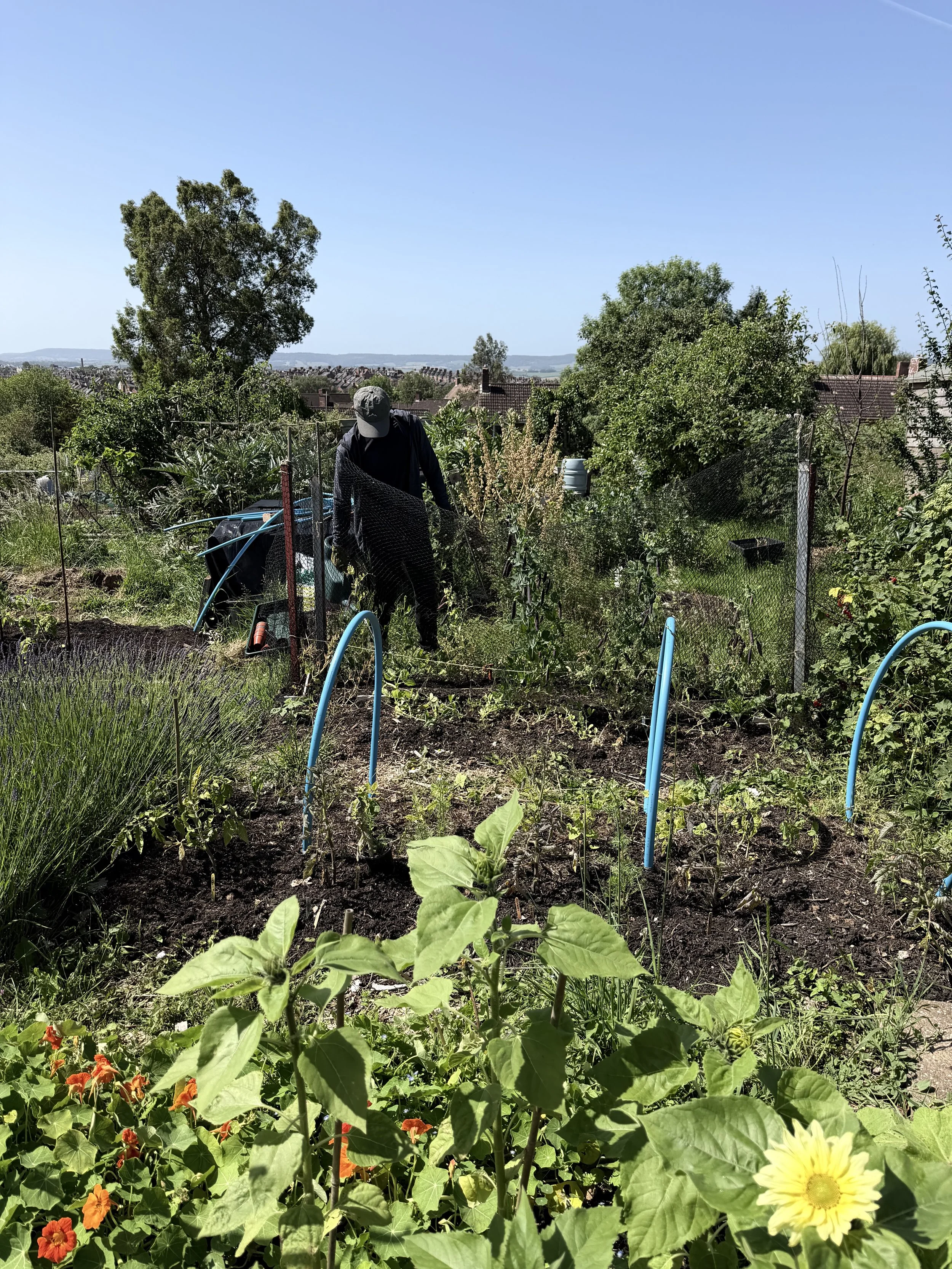
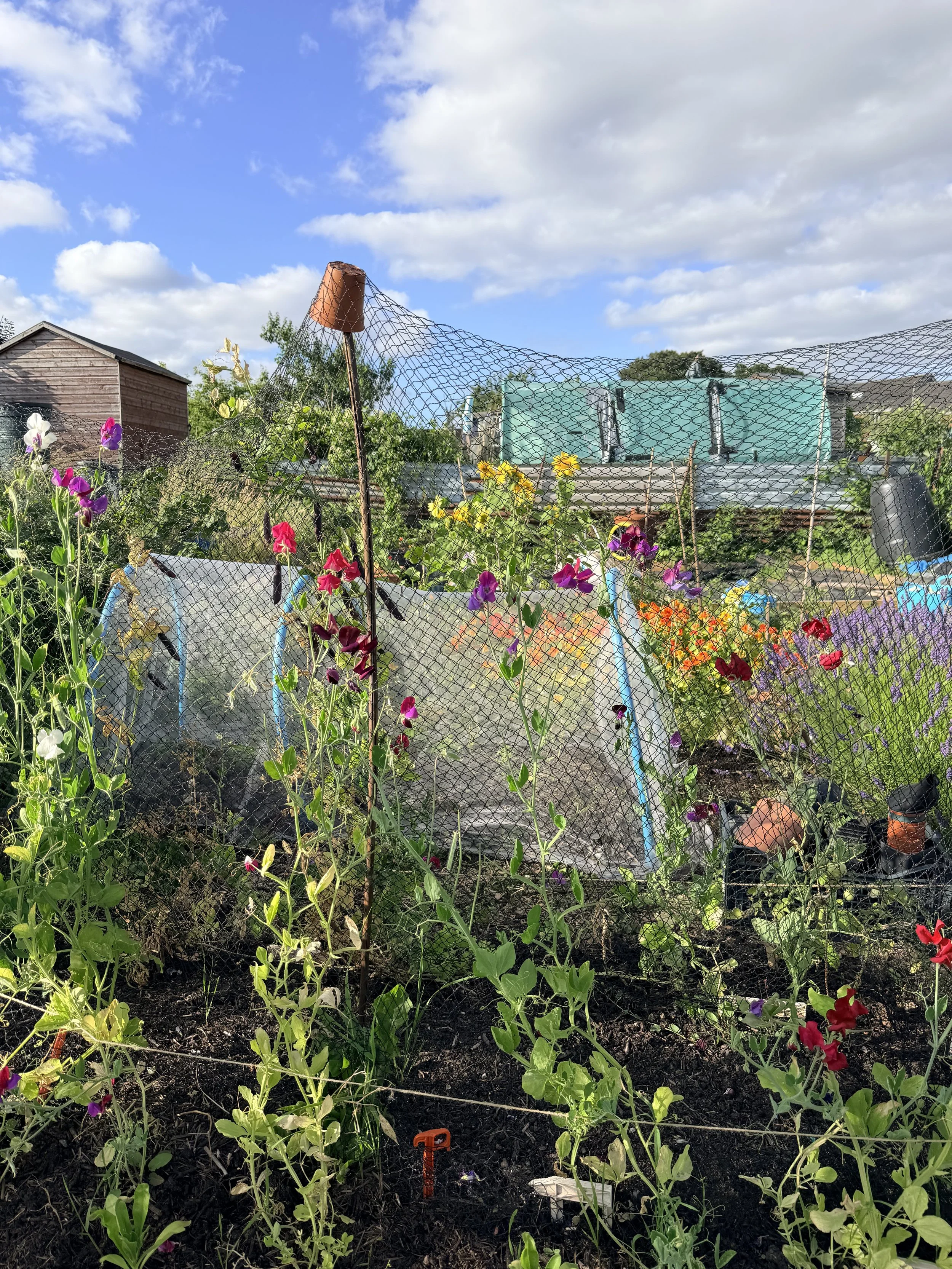
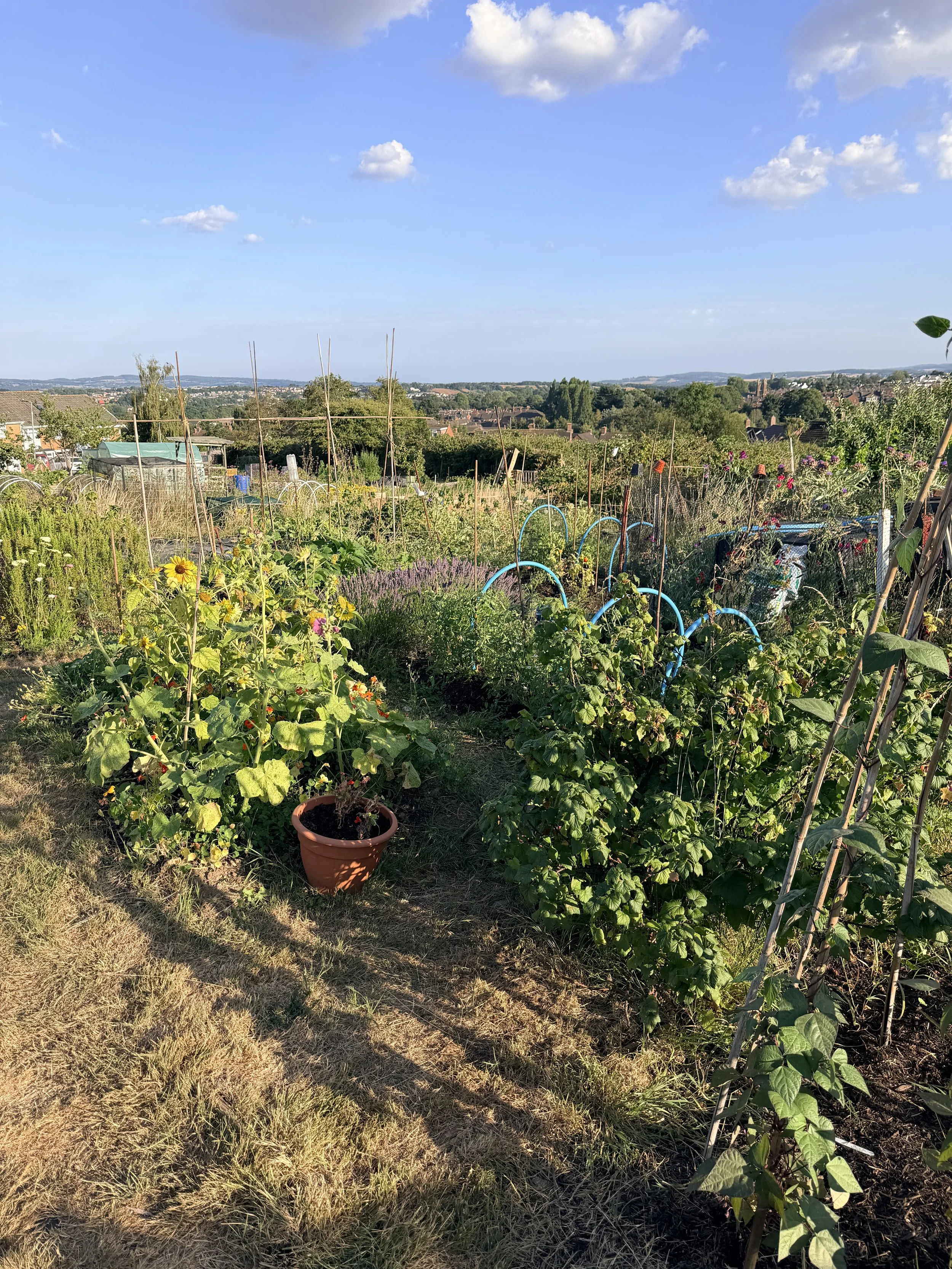
We set up a few more beds and added more cardboard and compost. The allotment was really beginning to take shape. Netting was added as the birds were getting a bit too bold. We think they were being drawn in by the ripening red current and black current bushes.
June 2026
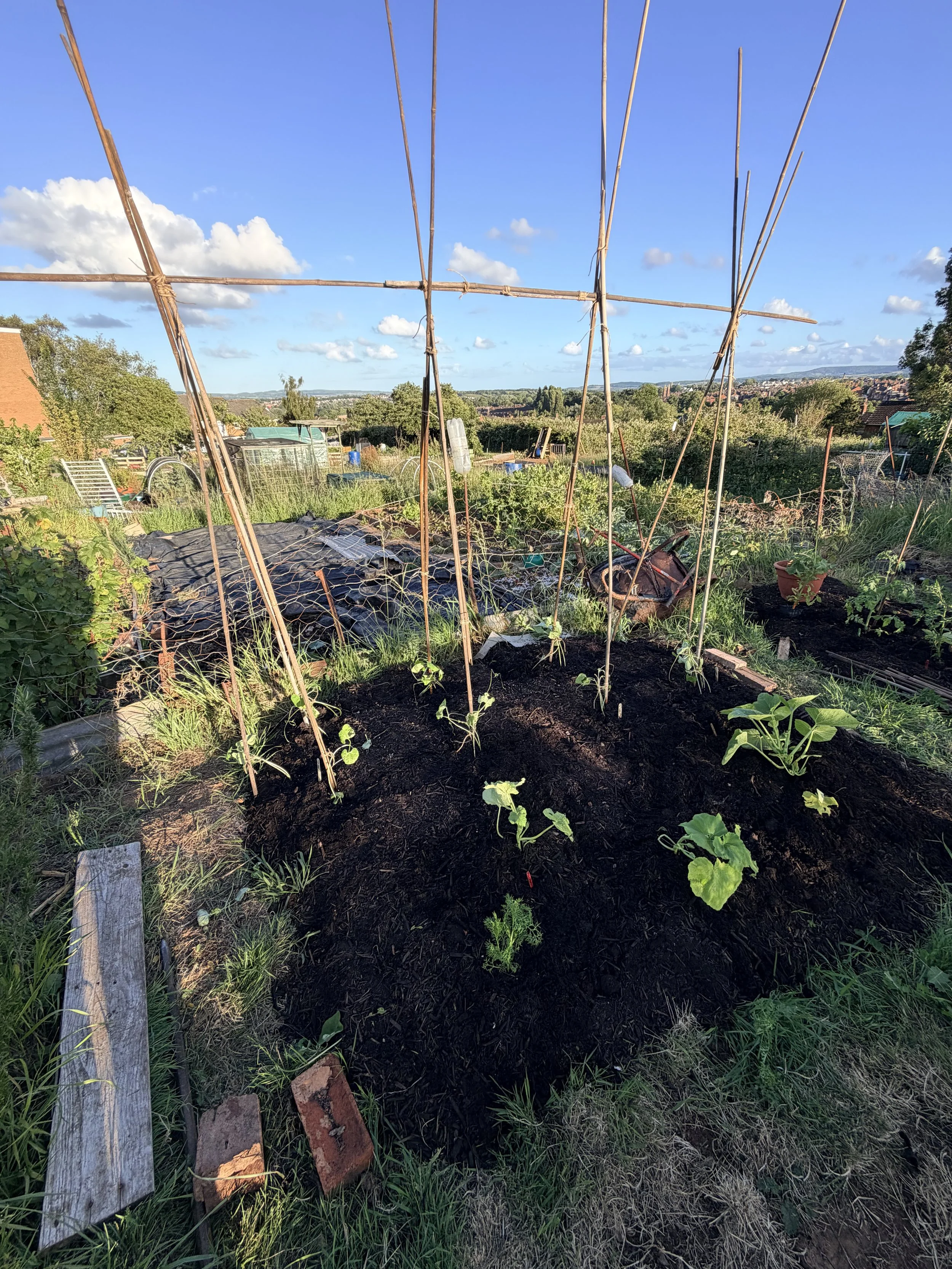
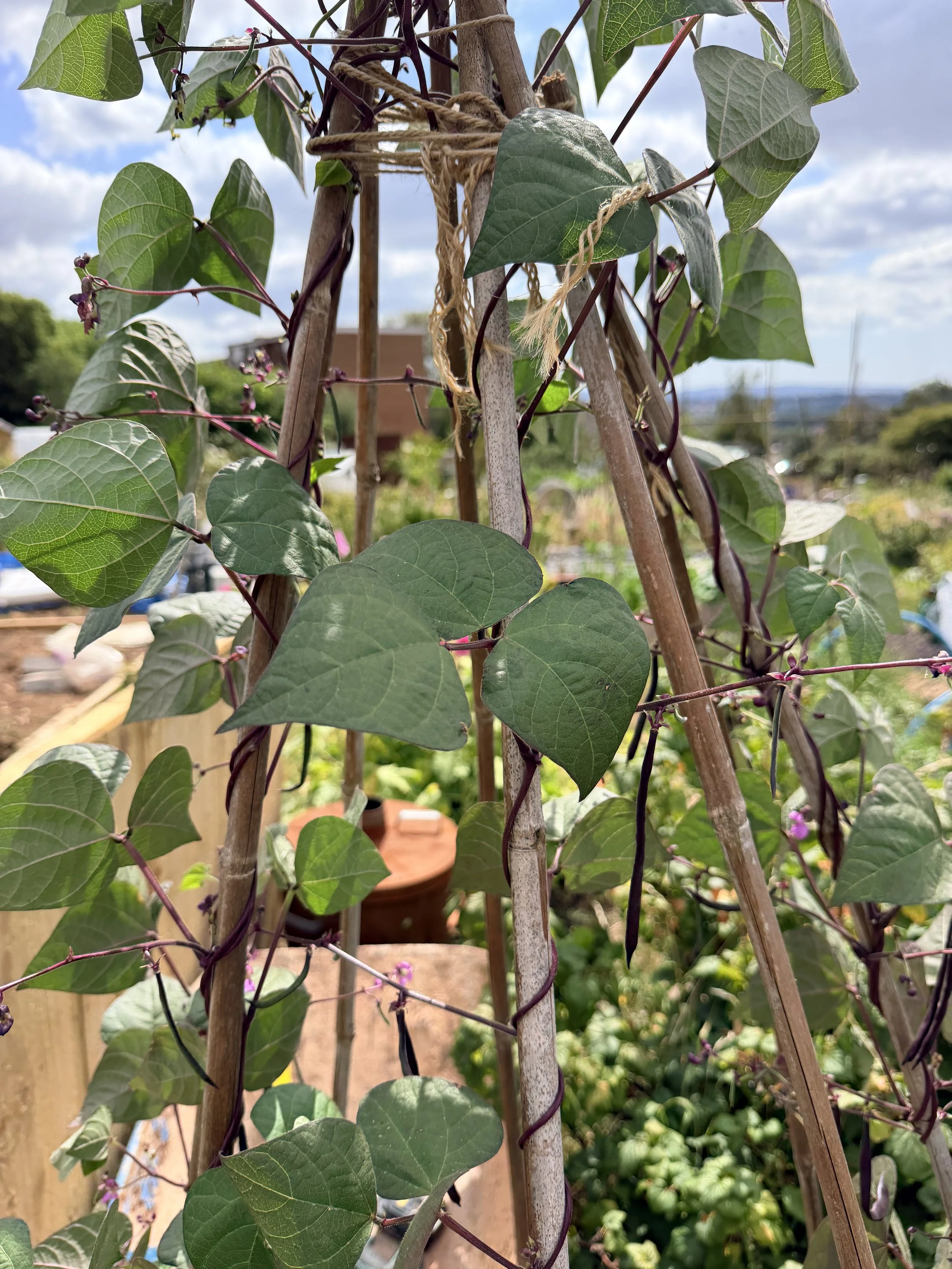
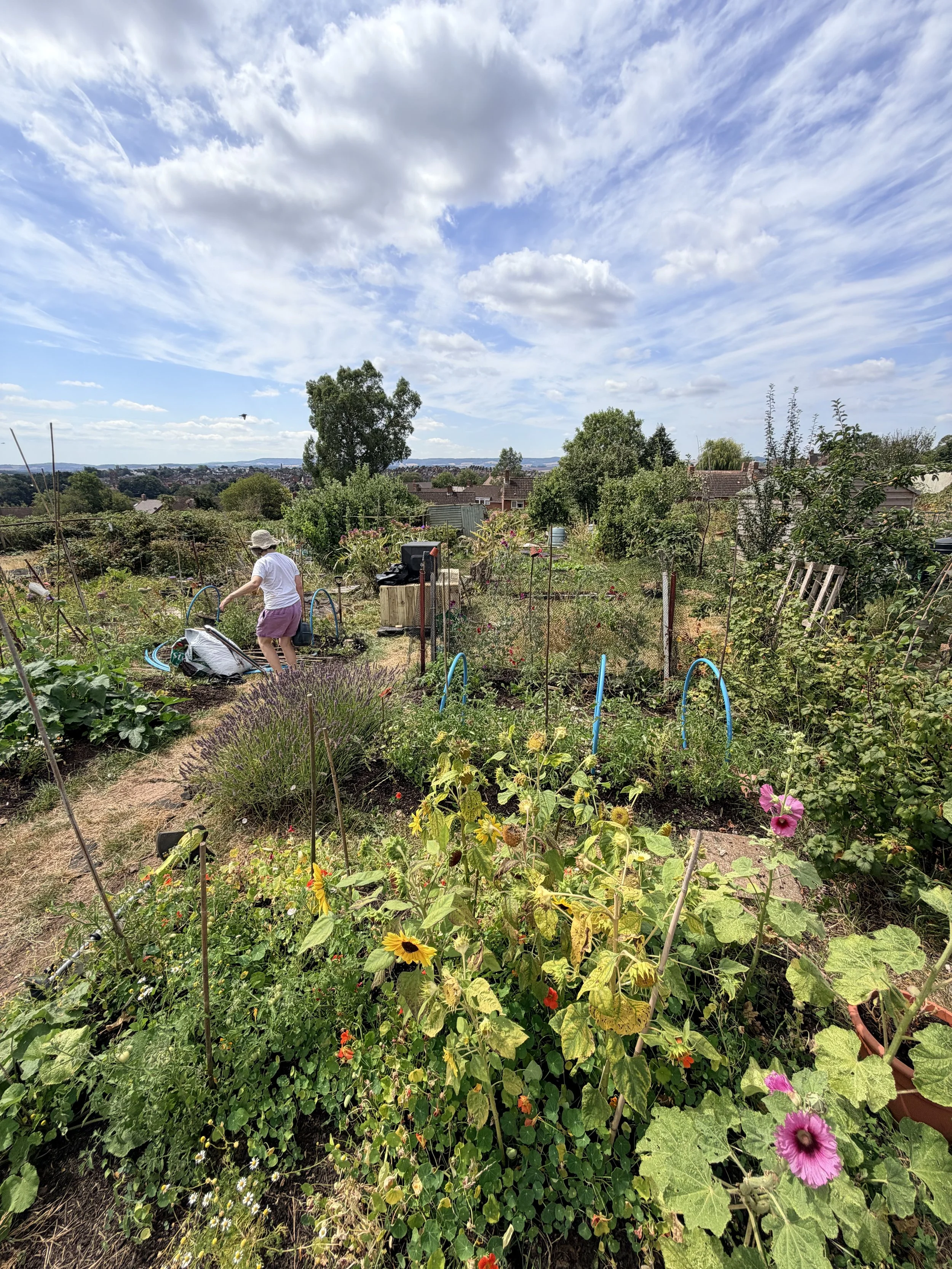
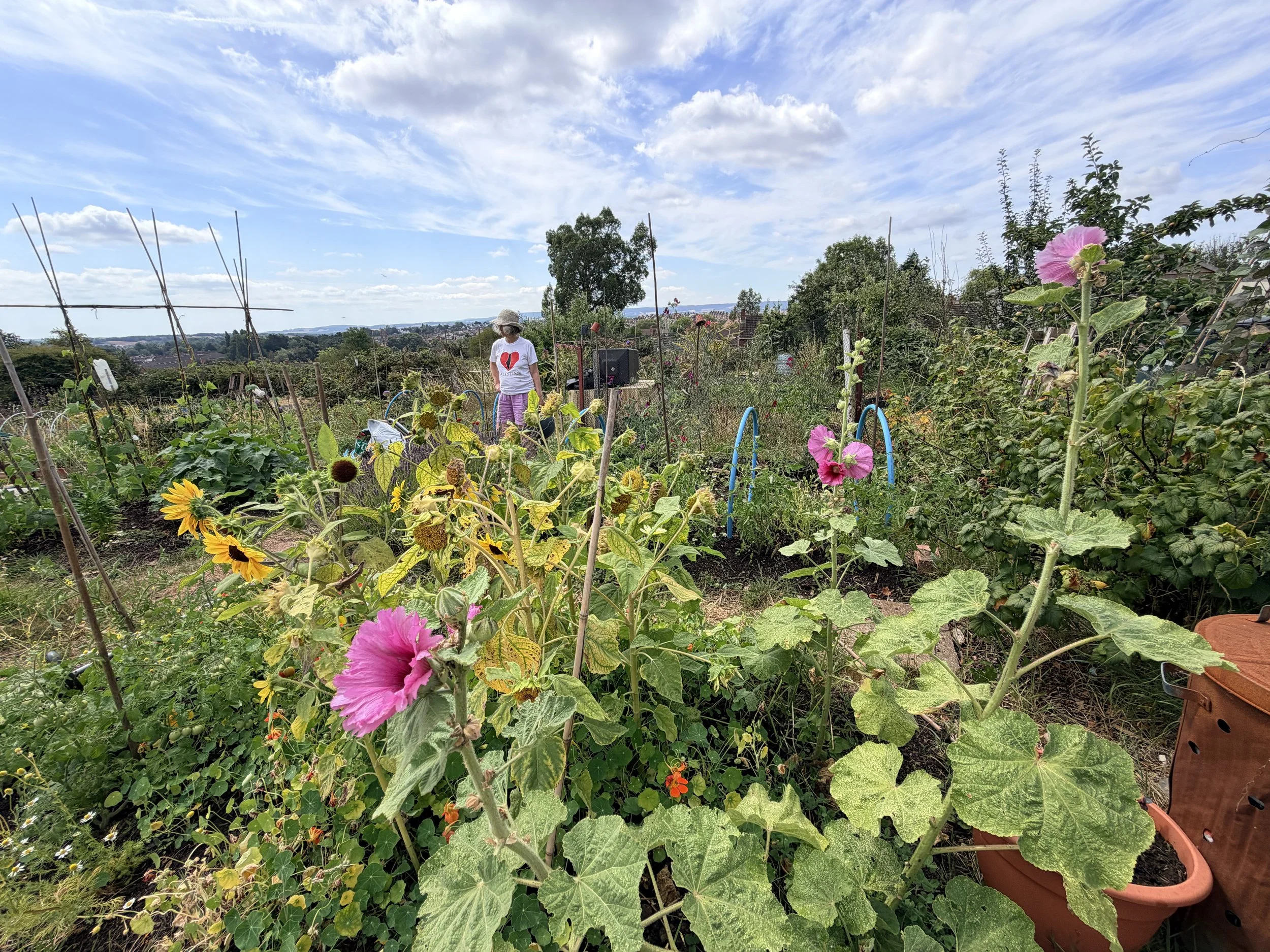
Squashes and beans were sown (again), and much of the allotment was starting to flourish. The growing season was well underway, with many of the plants beginning to take off. Bean poles were constructed.
July 2026
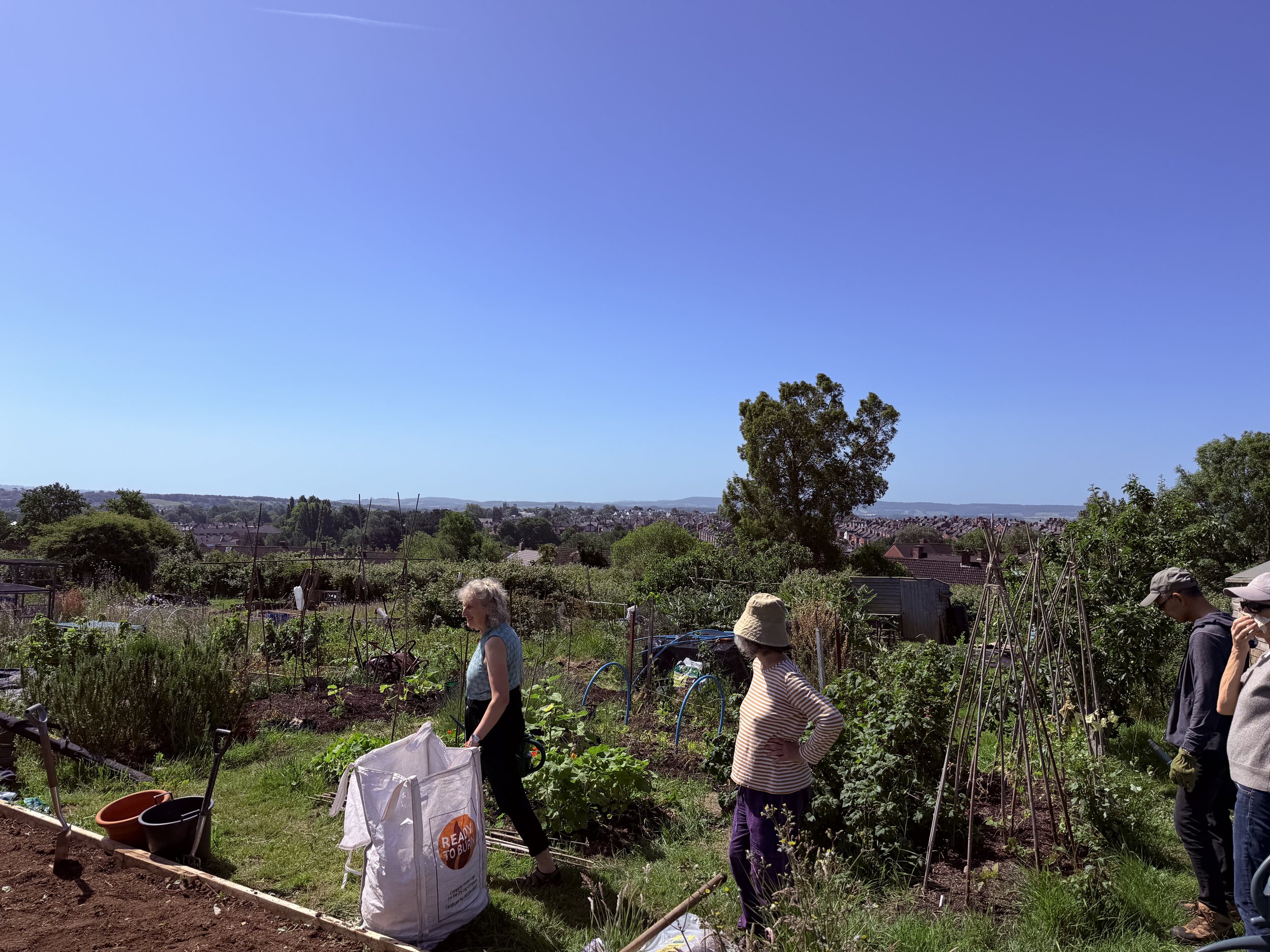
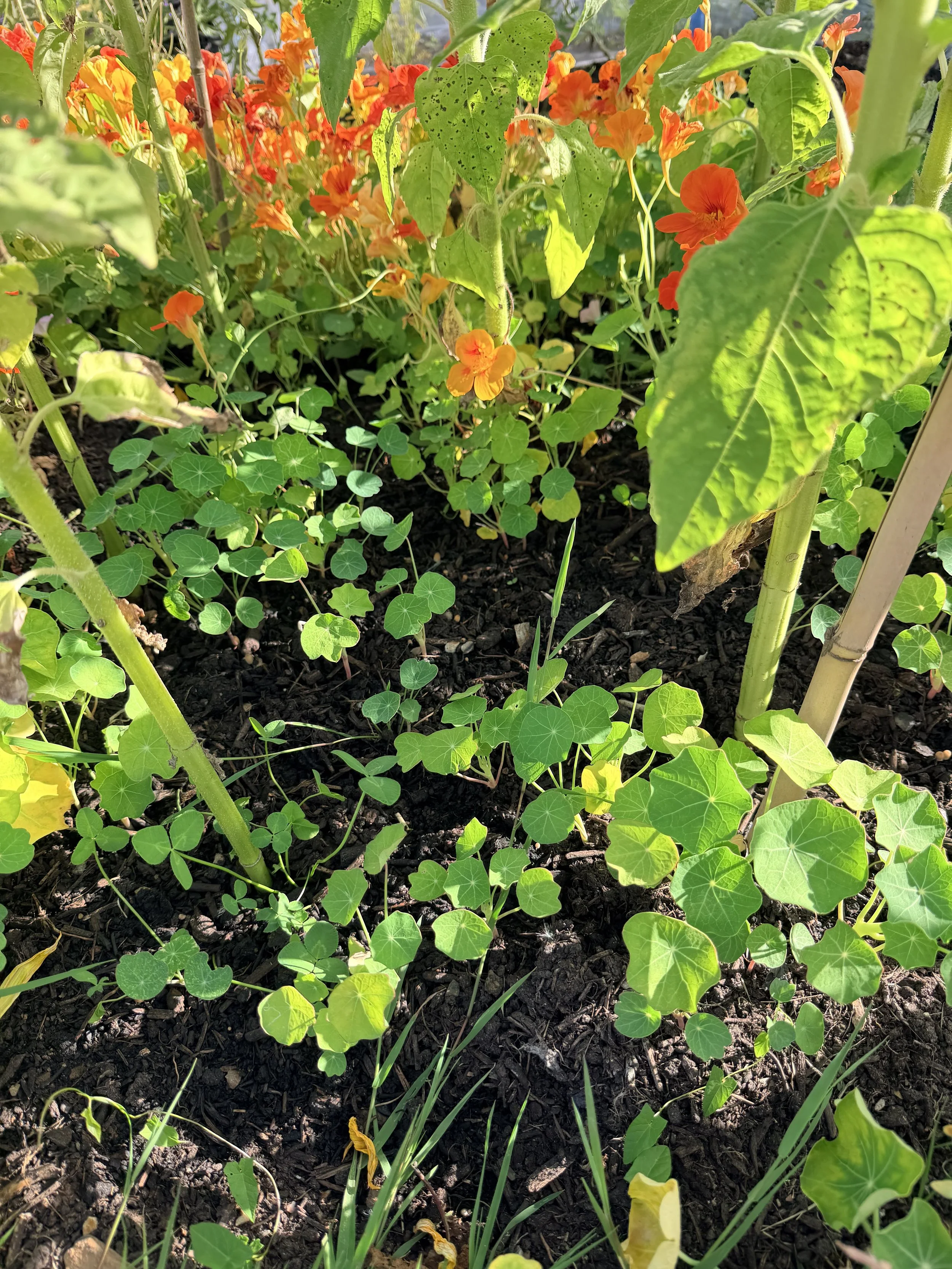
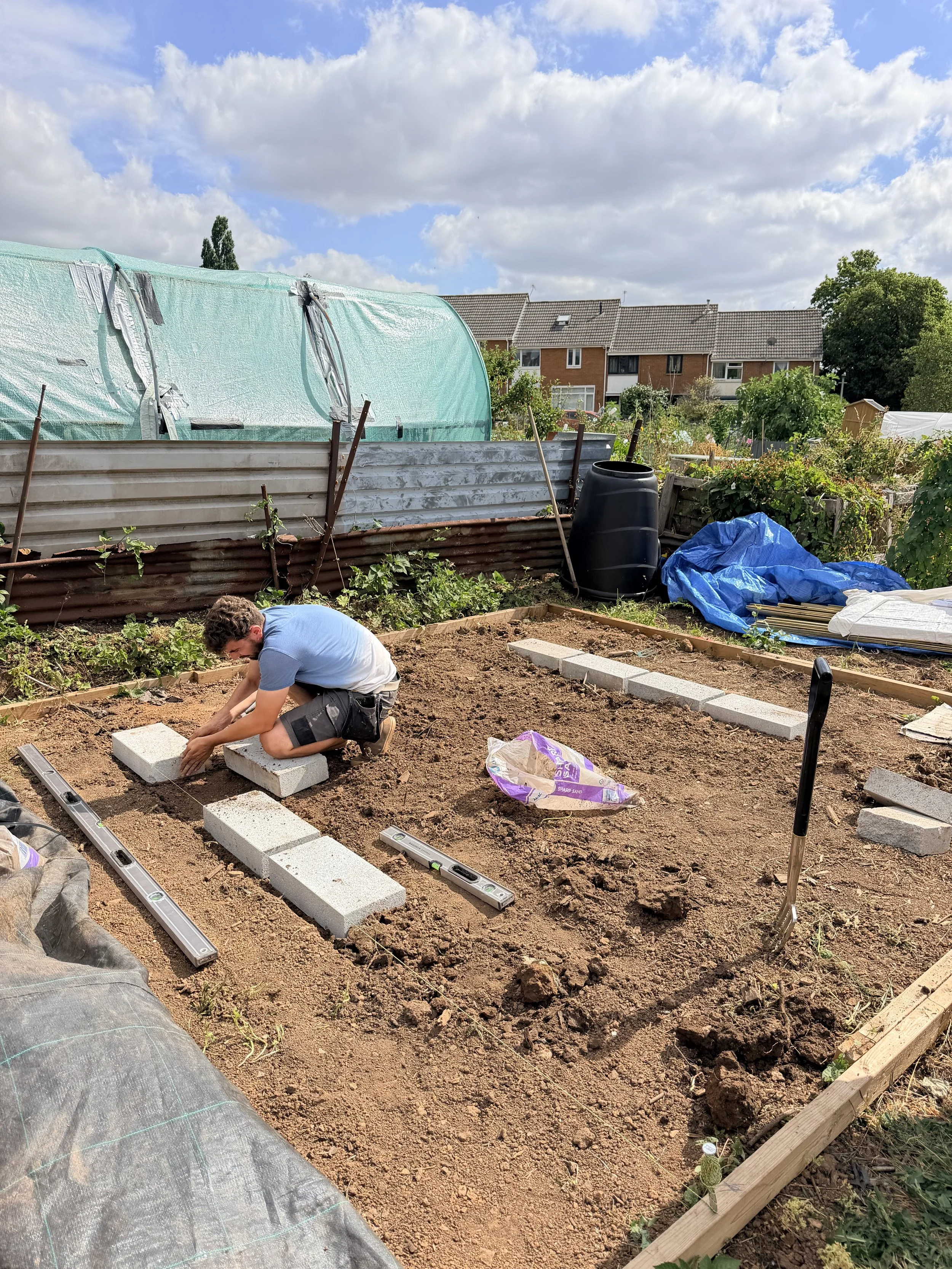
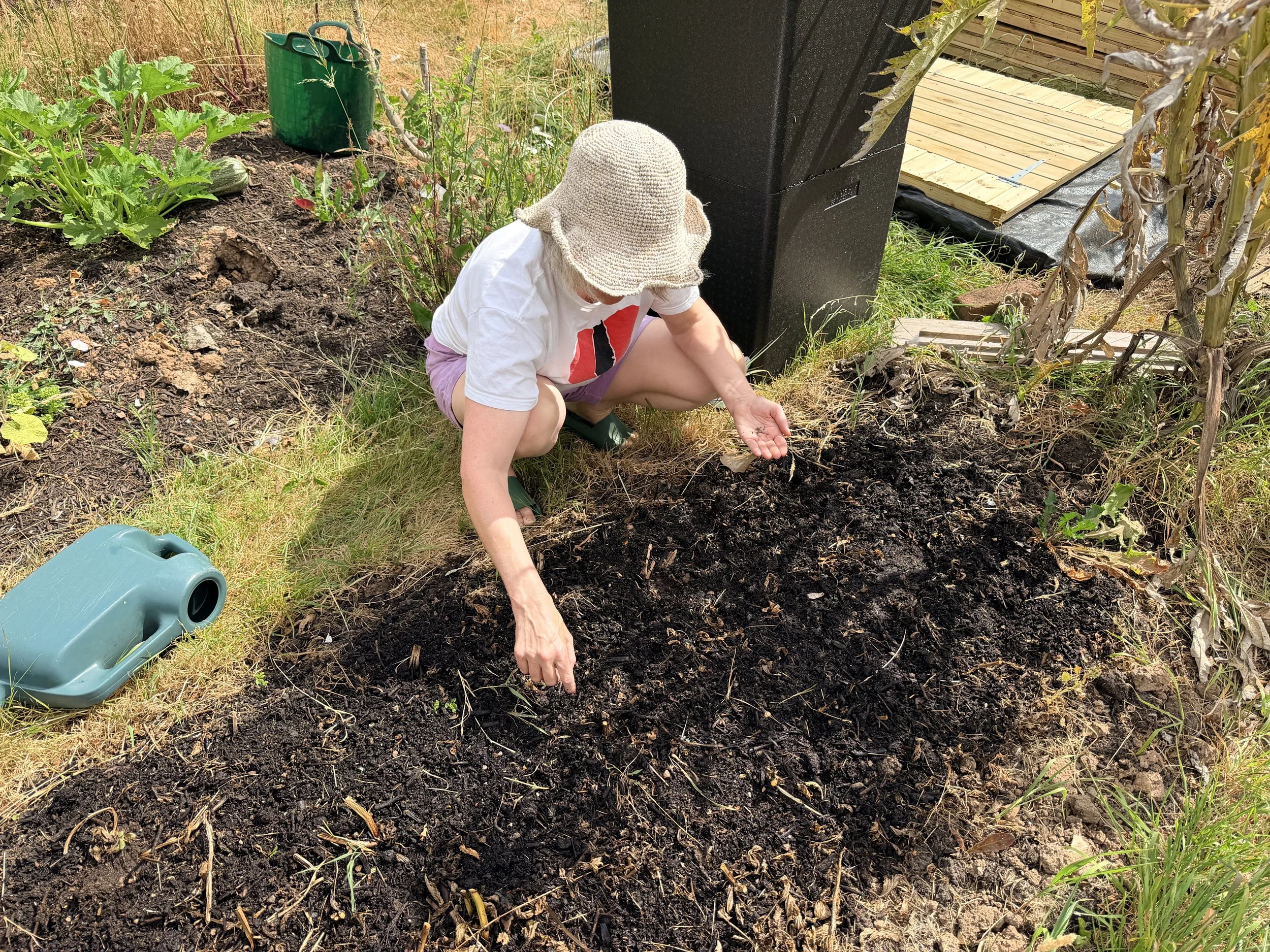
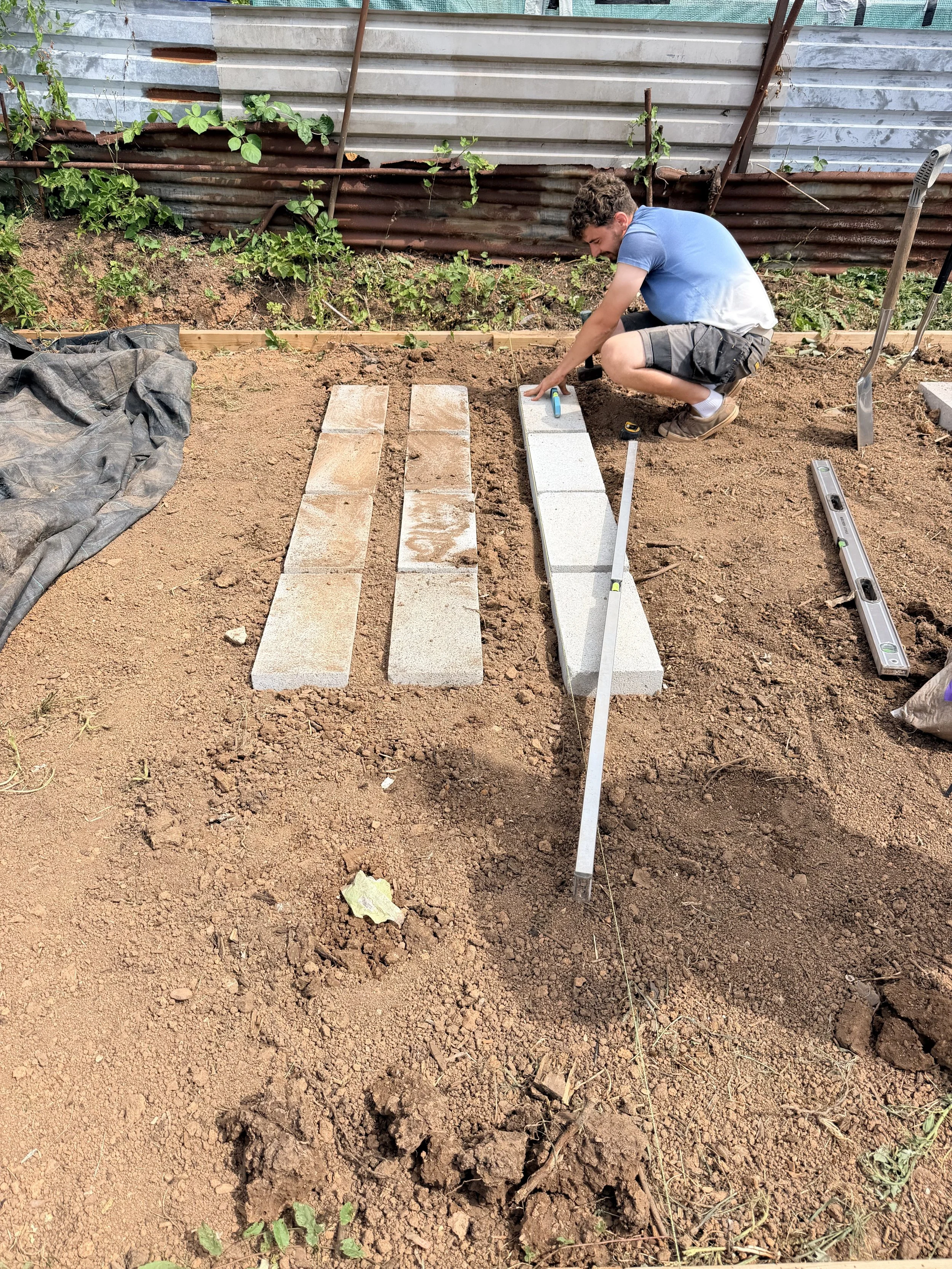
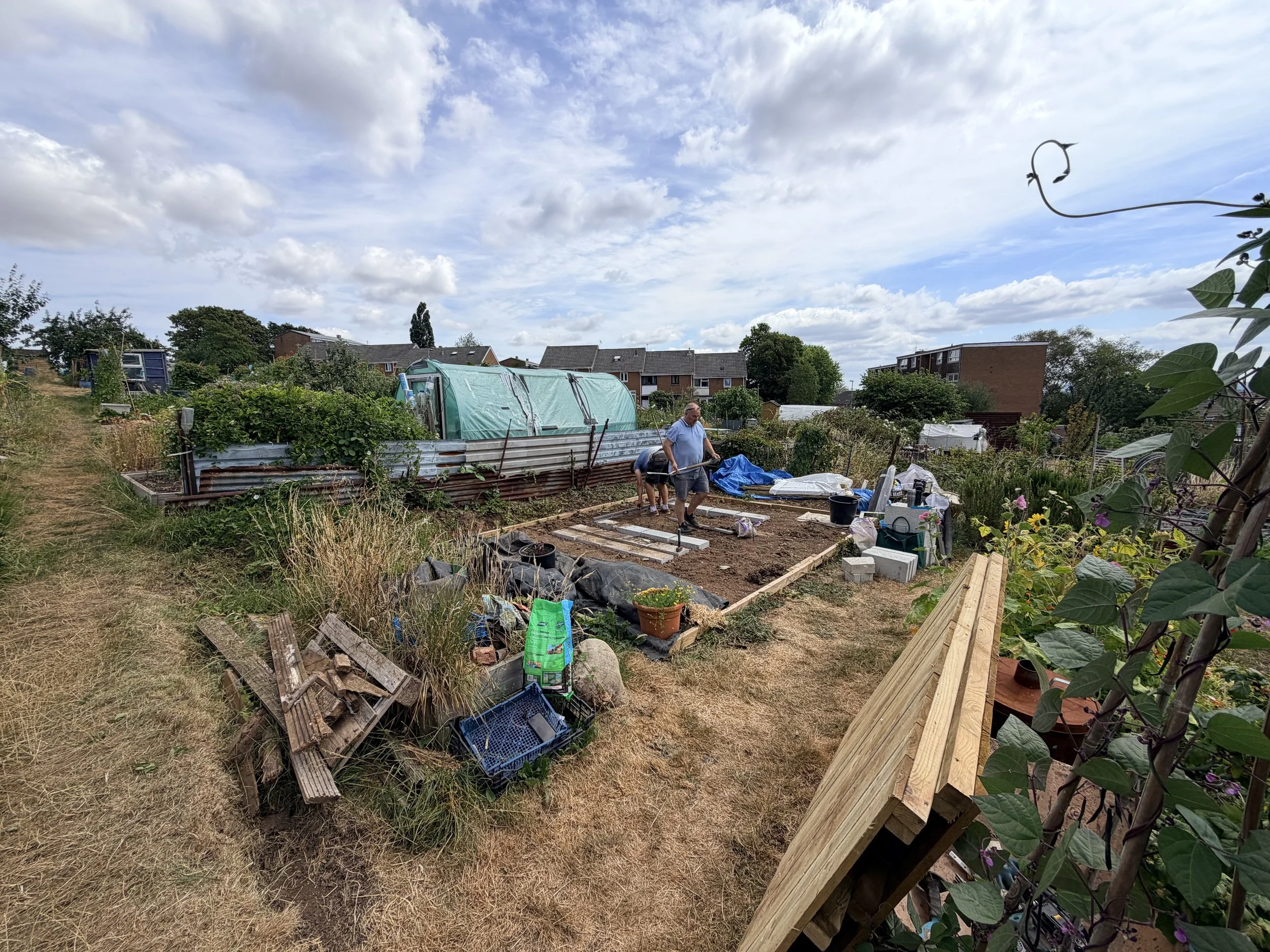
We sowed some collard greens to replace the Exeter broad beans, which had been picked out (we cut them at the base, leaving the root system in the soil). The blocks had arrived too, ready for the next stage in getting the shed base completed. Meanwhile, watering duty had well and truly set in!
August 2026
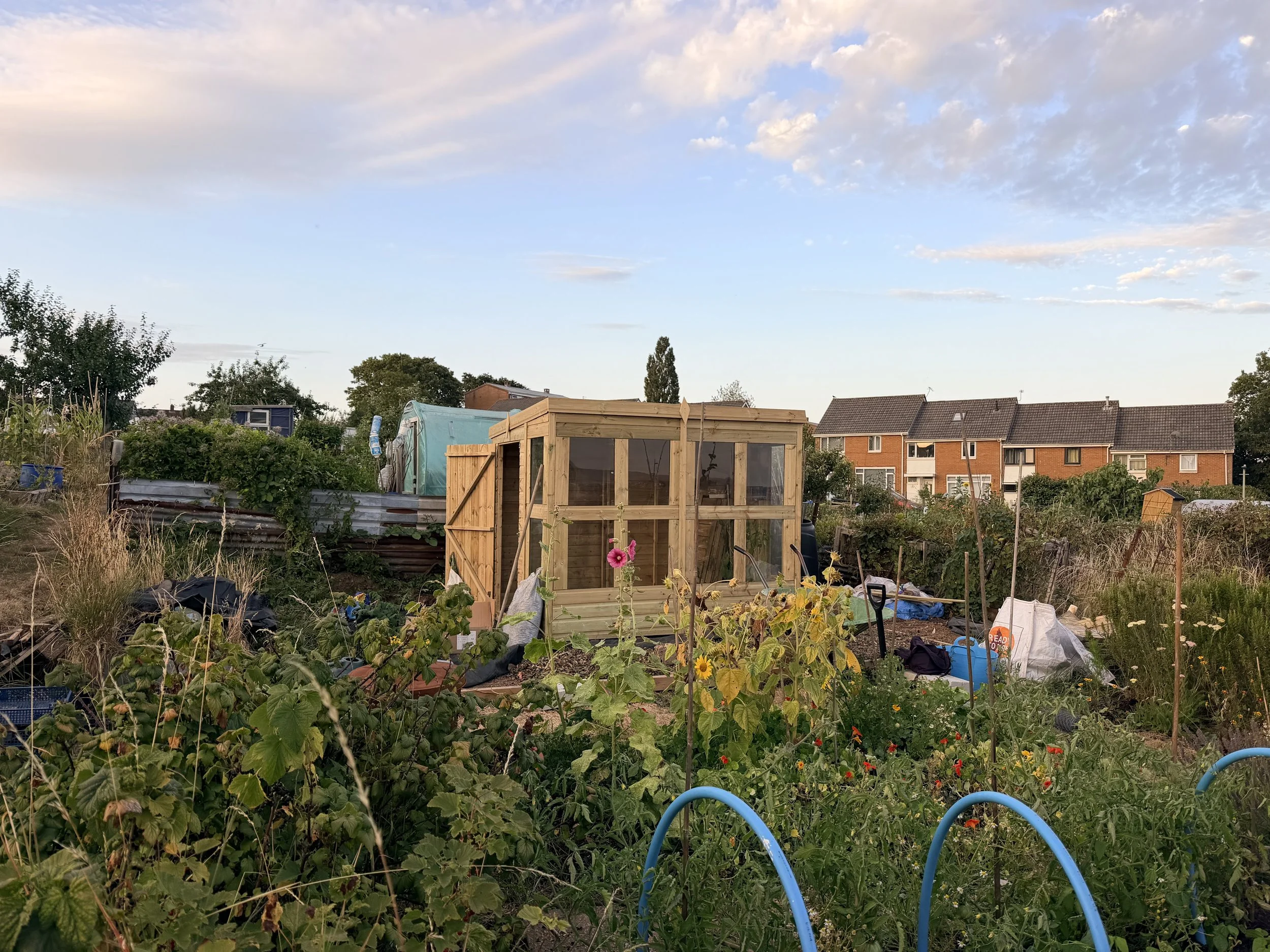
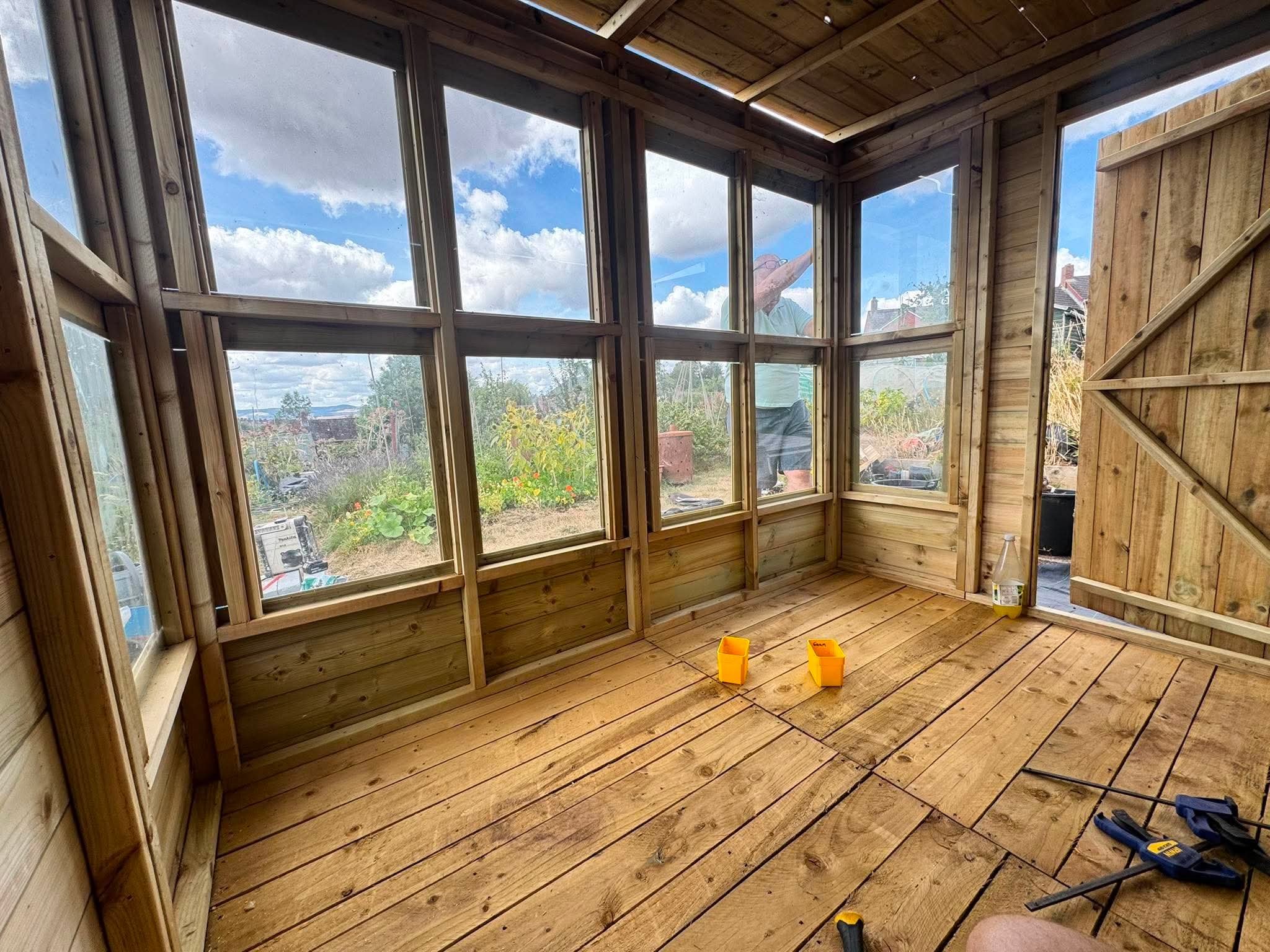
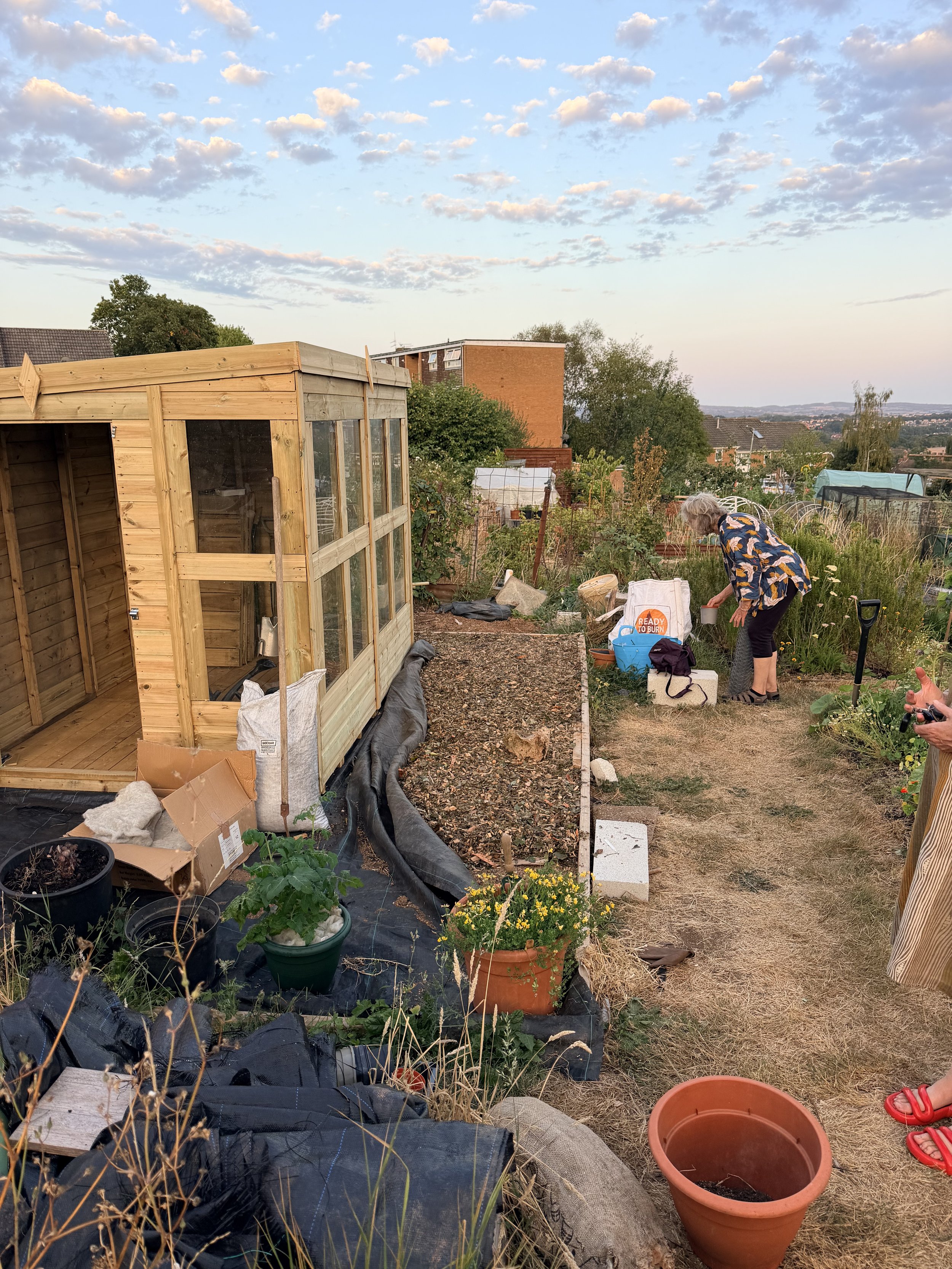
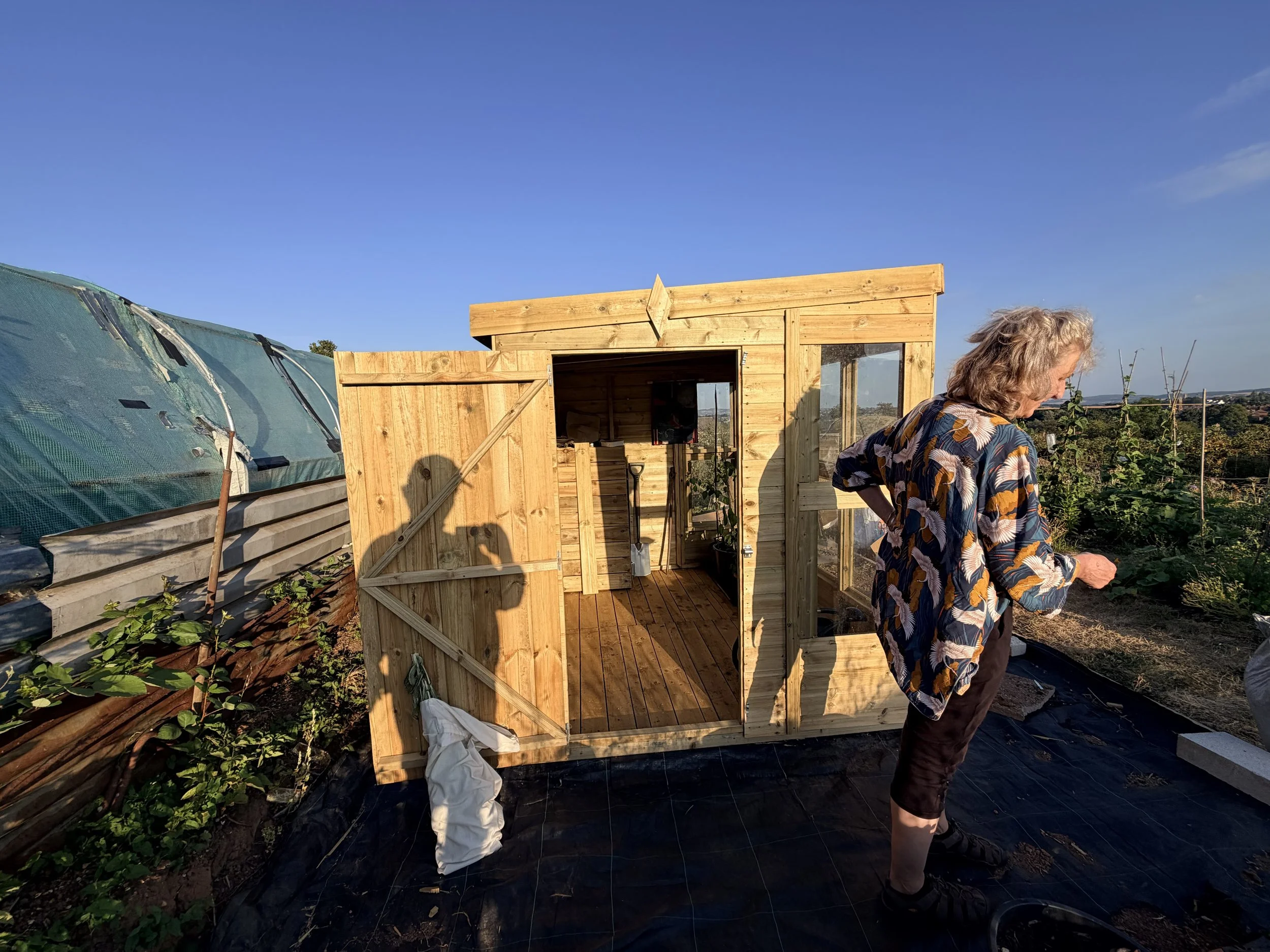
The shed was finally constructed, which has given us some much-needed dry storage space. We also started barking around the shed to create a level area where we can eventually add rainwater capture and have some space outside to process and clean seeds. Even enough space for a chair or two.
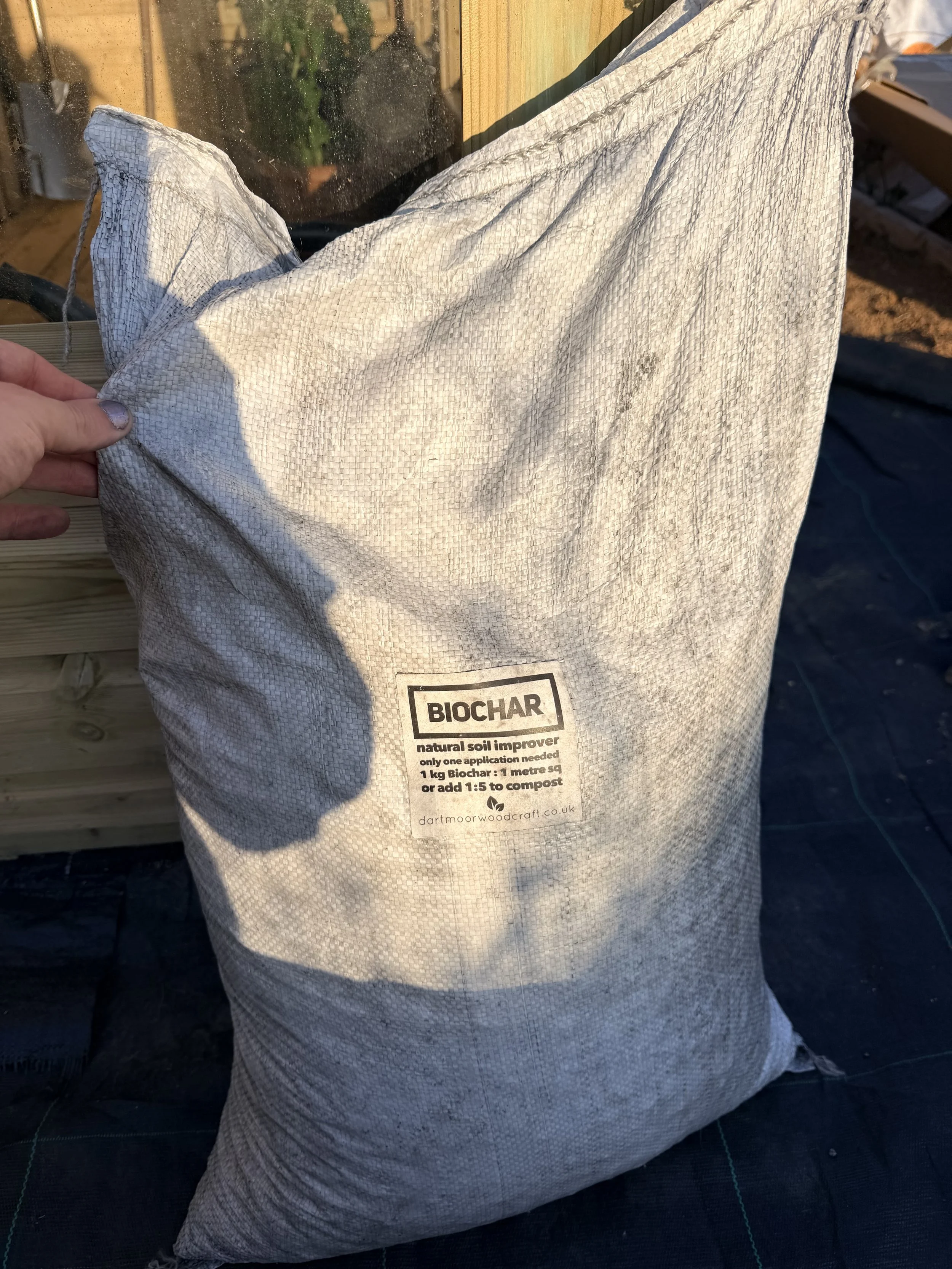
We also got some biochar to try out, which will be interesting to experiment with alongside some of the soil work we’ve been doing.
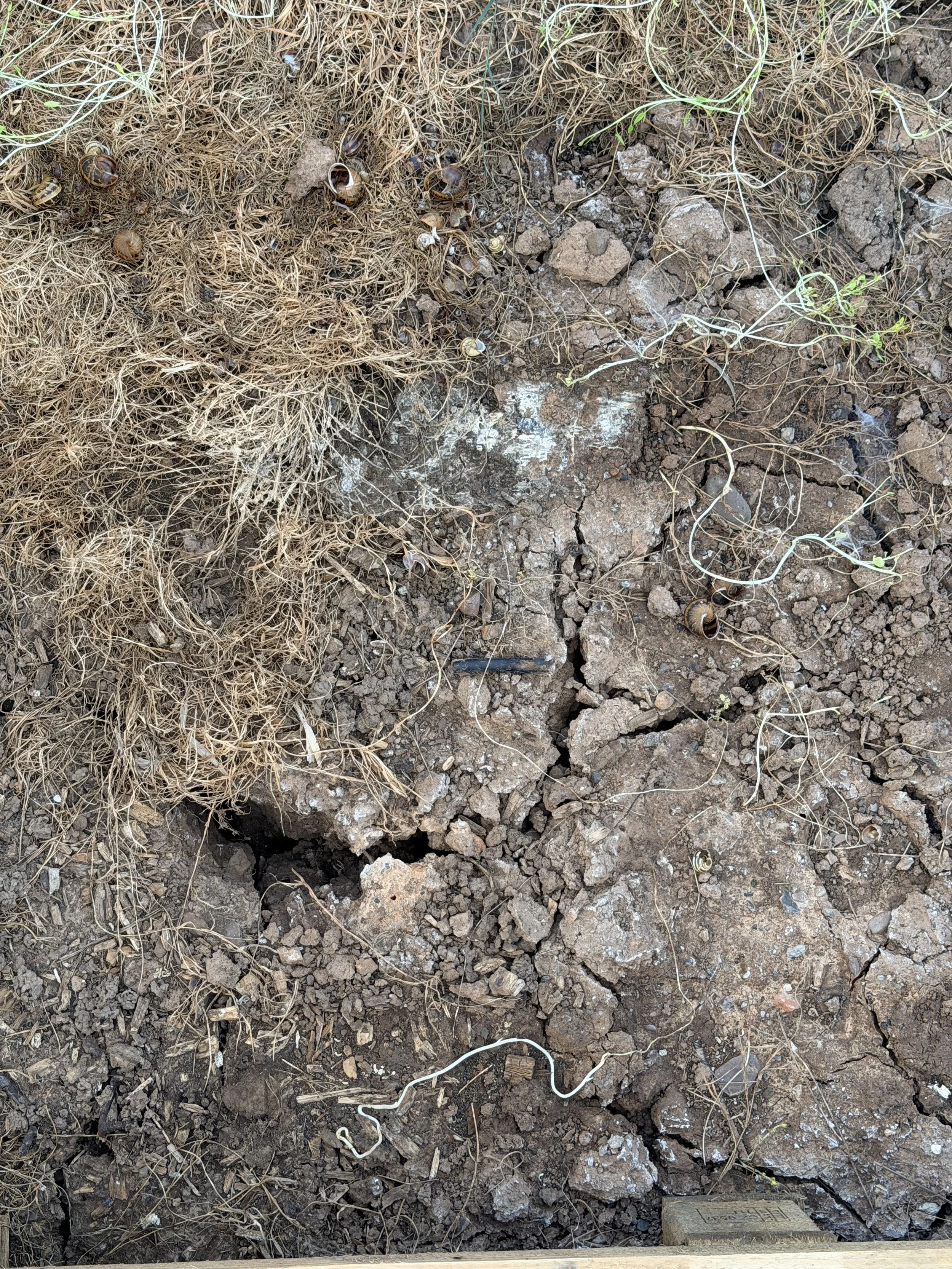
After moving and clearing some pallets at the other end of the plot (which we’ve worked on the less amount so far, and where we aim to set up our compost bays), we really saw the scale of impact the heatwaves has had on the earth. The ground was dry and cracked, showing just how much the soil had shrunk and been affected.
What is growing on the ESB Allotment?
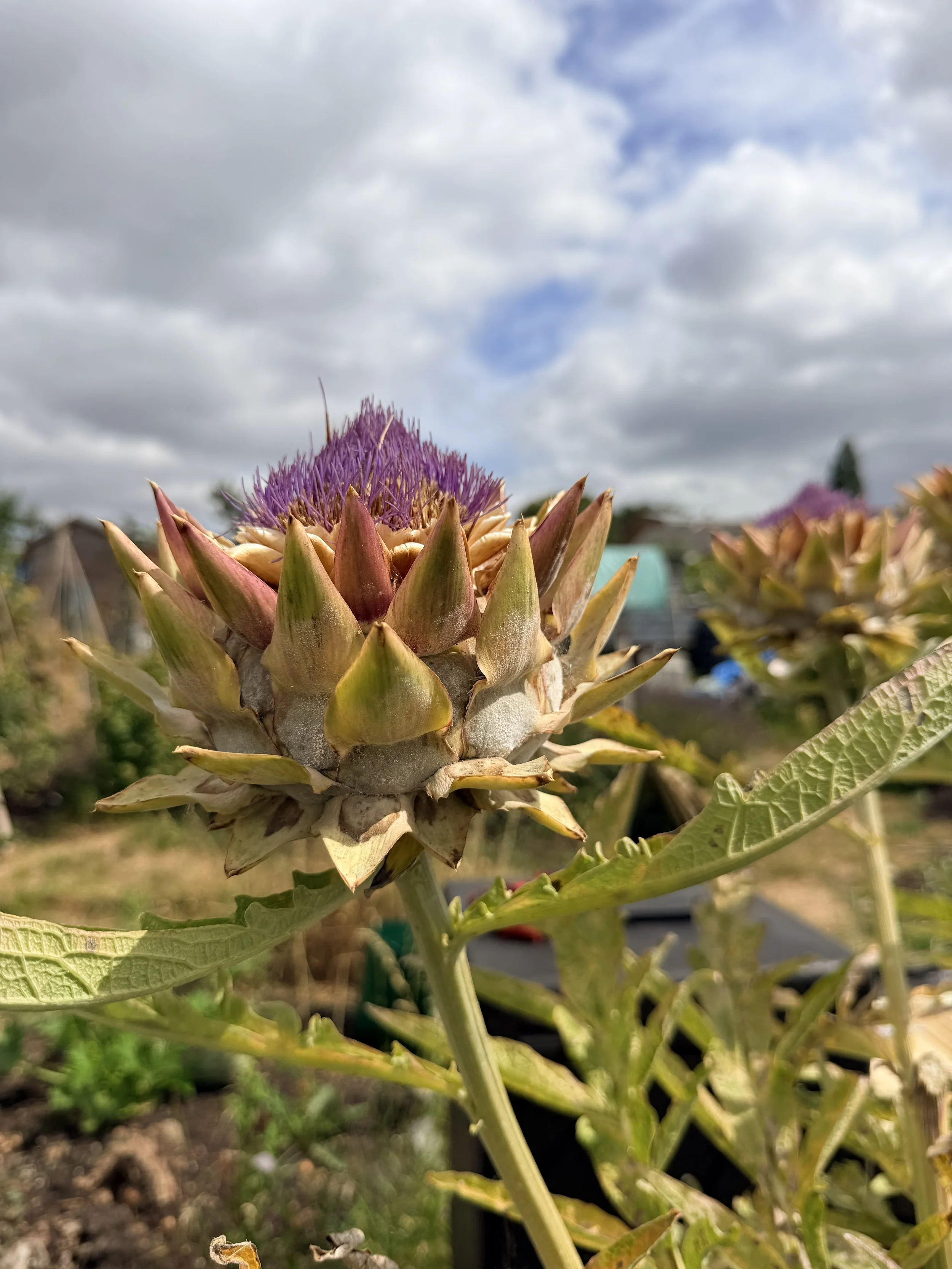
One of the most exciting things about the allotment is seeing our collection of plants grow. Many of the plants have come from seed donations and other community projects. Here are some of the plants we’re growing and looking forward to sharing at the Exeter Seed Swap in 2027.
Flowers and other plants
Sweet peas - seeds and plants from Stallcombe Community
Palestinian squash - variety unknown, from PLSB West Bank
Broad Bean Flock - second generation
Yarrow 'Berry Mix' - Vital Seeds
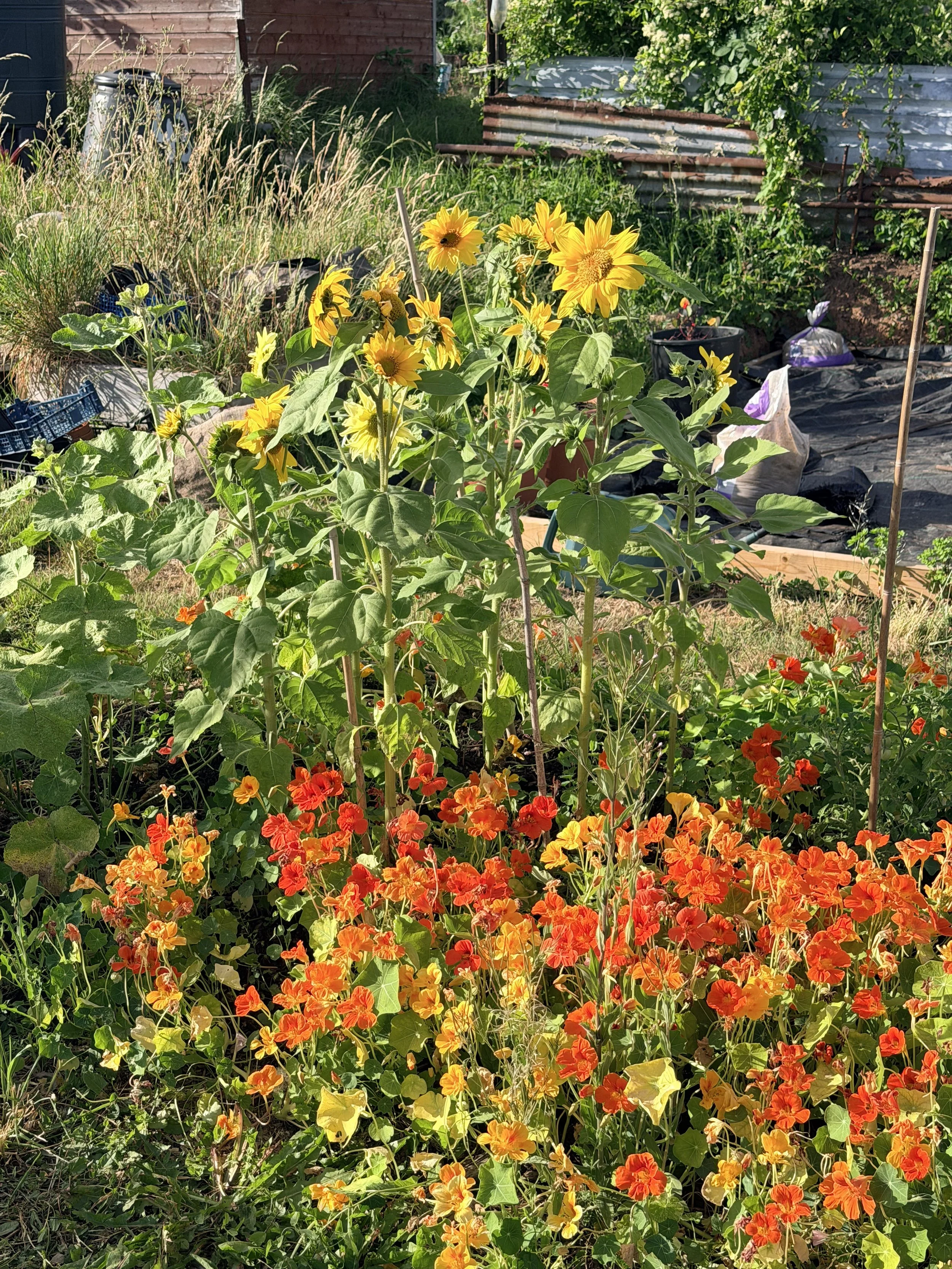
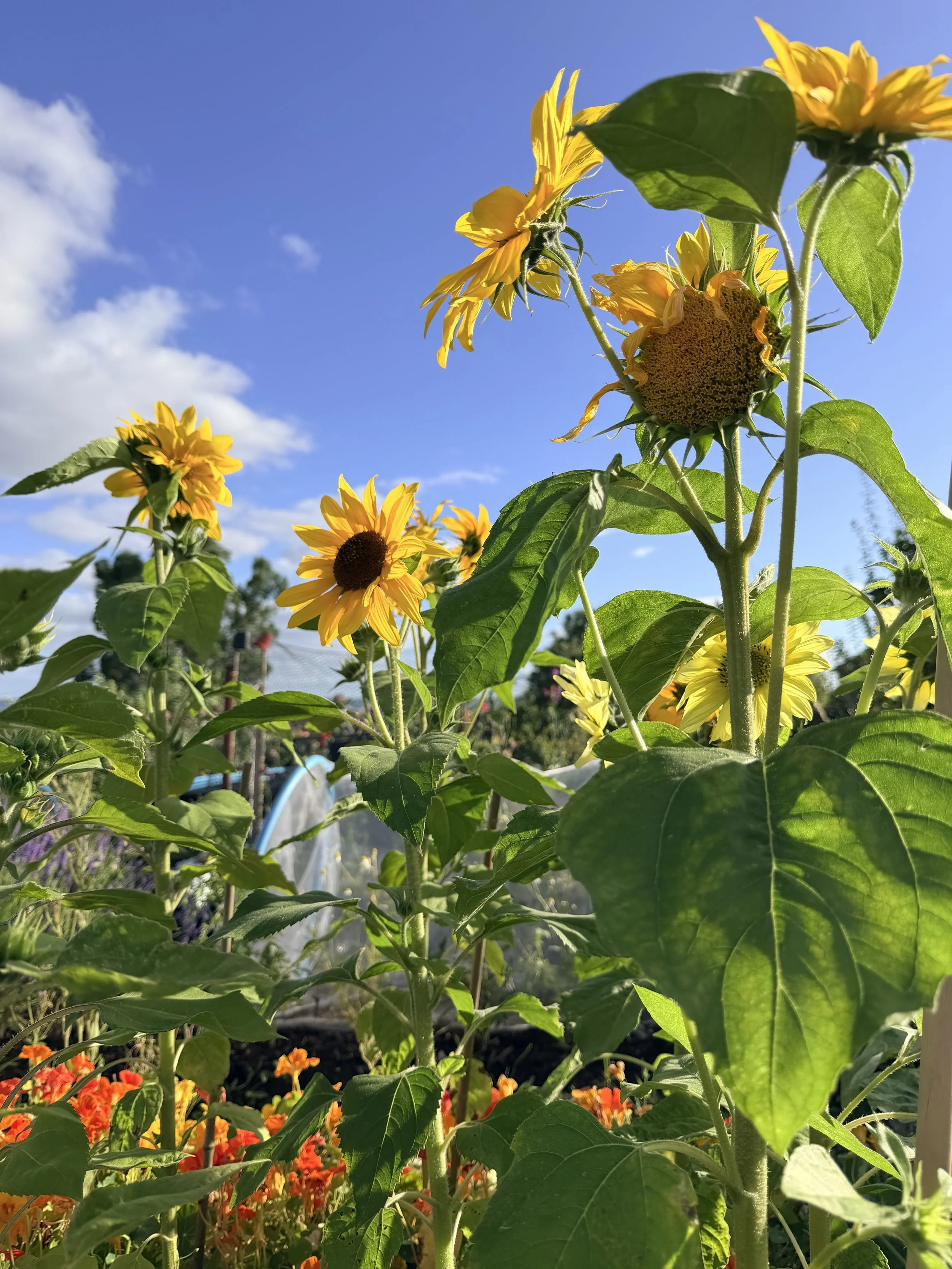
Empress of India nasturtium - deep orange, from Sid Hill's Dads Heritage Seed Company
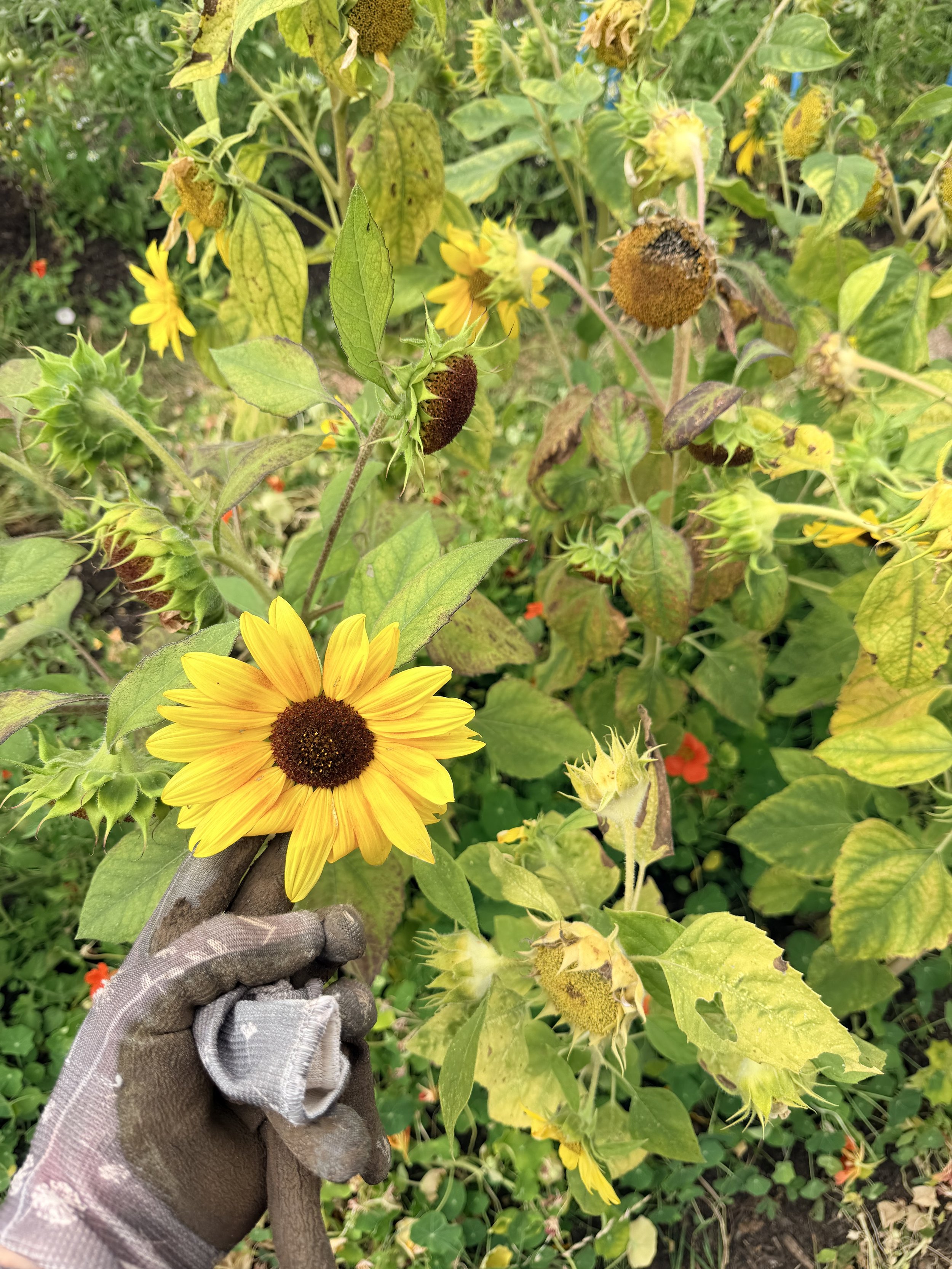
Dwarf sunflowers - Real Seeds
Birdsfoot trefoil - in a pot; plant from Lou's Wild Garden
Maternity hollyhock / the Exeter hollyhock - from Exeter Seed Bank
German camomile - recommended by Yazmin from Honeysuckle Herbal to support other plants. All the tomatoes and squash have one growing next to them.
Straw flowers - Exeter Seed Bank saved seed
Marigolds - Exeter Seed Bank saved seed
White cosmos - donated to the plant swap during Exeter Respect Festival
Beans
French bean 'Hyacinth' - Heritage Seed Library
French bean 'Cosse de Violette' - Heritage Seed Library
French bean 'Marvel of Venice' - Winnow Farm Seeds
Dwarf French bean 'Blooming Prairie' - Winnow Farm Seeds
Bush bean 'Ugandan Jade Green' - donated to Exeter Seed Bank
Peas
Uncle Fred's peas - a local family heirloom
Tomatoes
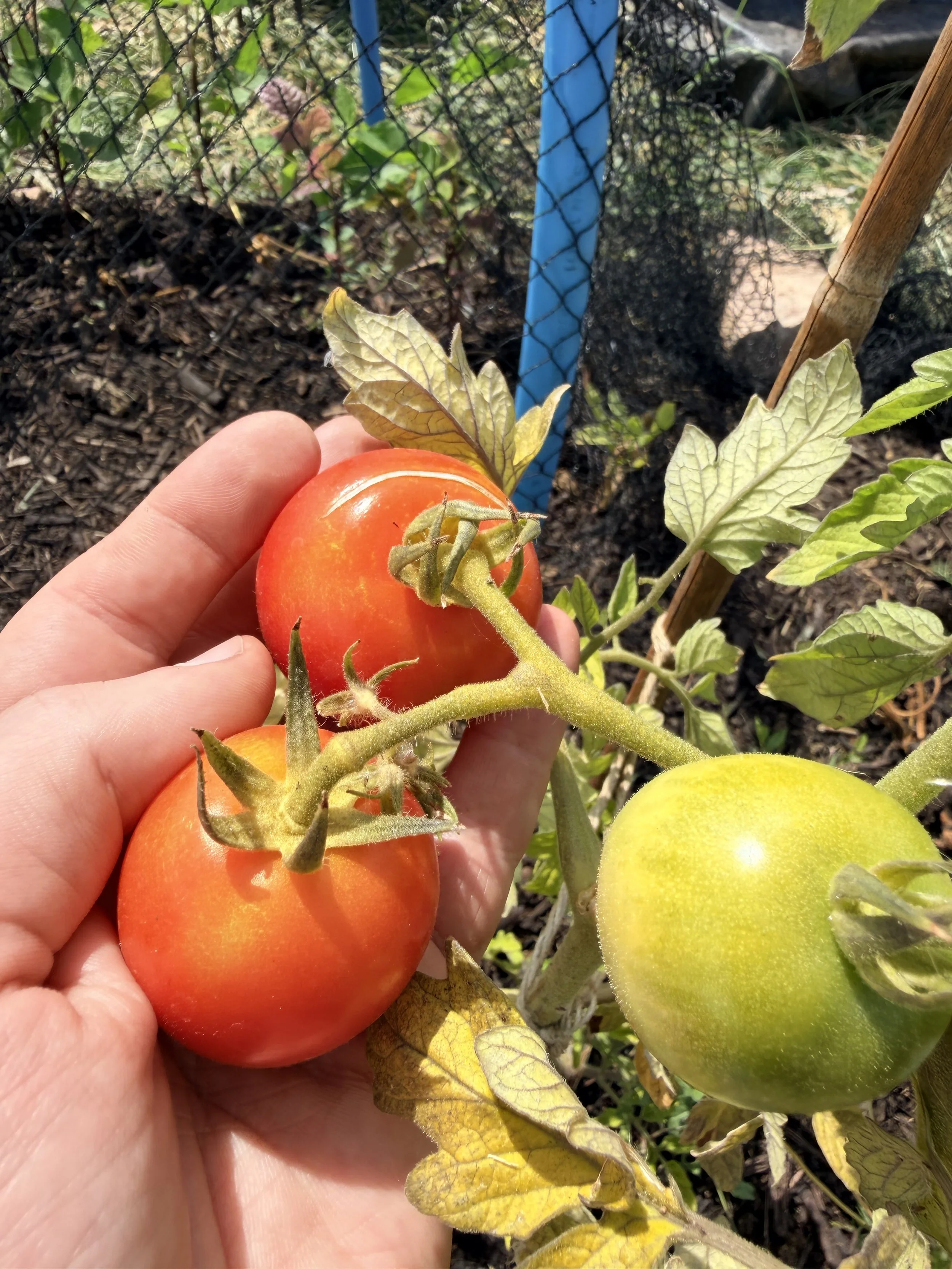
'Bristol Blighter' - blight-resistant; donated by Diane Holness at the Bristol Seed Swap
'Archie' - blight-resistant; donated by Diane Holness at the Bristol Seed Swap
'Prima Bella' - bush tomato, blight-resistant; originally from Real Seeds
'Jabaliye el Hob' - a Lebanese tomato from Buzuruna Juzuruna Farm, via Dan Fox / 2 Acre Farm
'House Tomato' - a small tomato suitable for pots, from Real Seeds
Chillies
Chilli plants - from Buzuruna Juzuruna Farm, via Dan Fox / 2 Acre Farm. These were moved into the potting shed once it was set up.
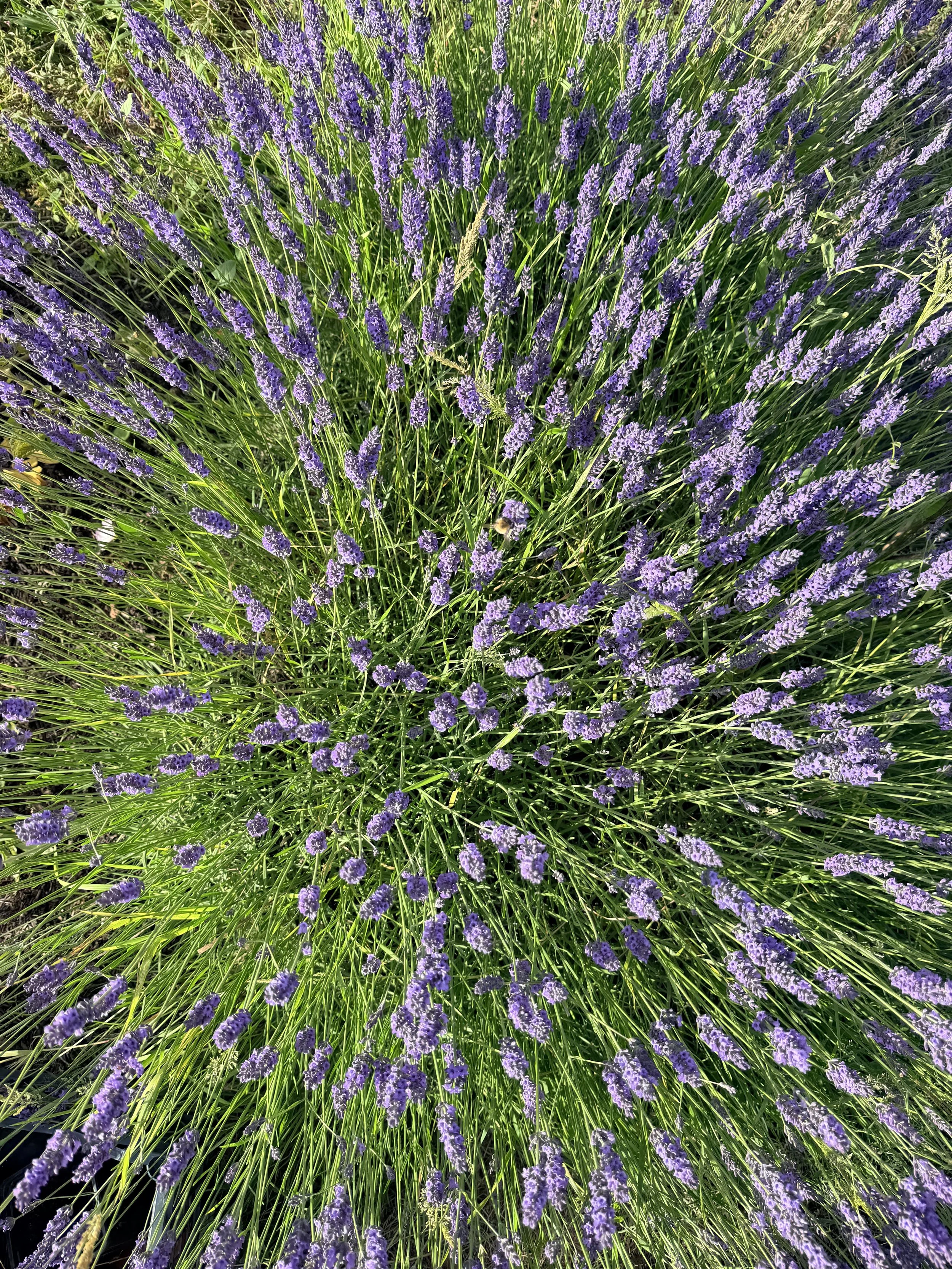
(We’re also growing blackcurrants, redcurrants, apples, lavender, rosemary and ragwort).
The new allotment is already becoming much more than just a place to grow plants. It’s a space for saving seeds, sharing knowledge, meeting people and building connections. We’ll be saving seeds with the hope of having plenty to share at the Exeter Seed Swap 2027.